There’s that sick feeling every gardener knows when they step outside after a cold night and see their once vigorous plants drooping, darkened or completely wilted. Frost can kill weeks of hard work in a single night. The good news? If you know what to do and when to do it, most frost damage can be completely avoided.
Whether you’re heading into fall, preparing for a late spring cold snap, or trying to salvage a garden bed you thought was safe, this guide will walk you through exactly how to protect your plants from frost. We’ll talk about the right materials to use, what plants can actually survive a cold snap and what to do the morning after a freeze. At the end you will have a clear action plan for each cold weather scenario.
Why Frost Protection Matters

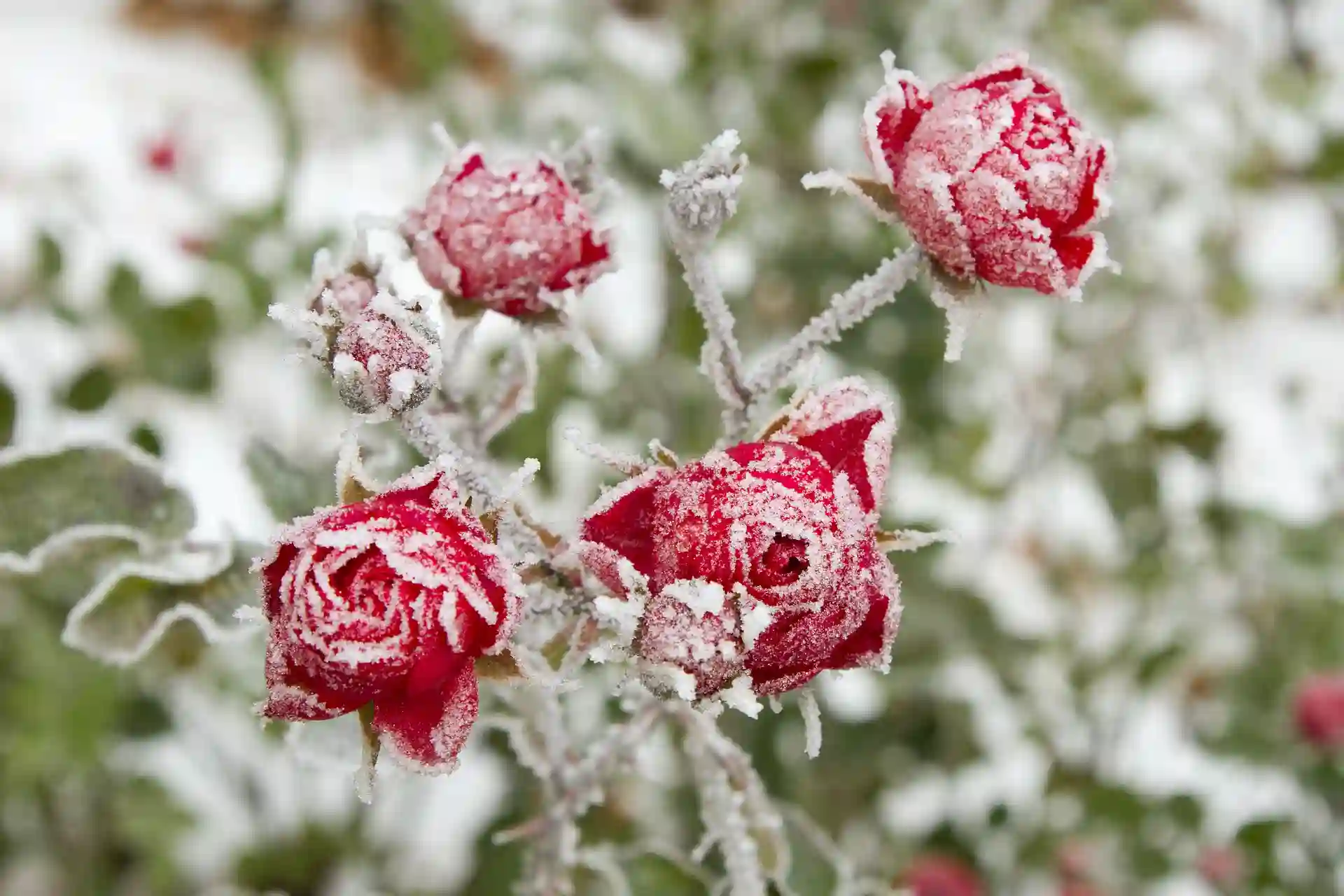
Frost is more damaging to plants than most people realize. When the temperature drops to 32° F (0° C) or below, the water inside the plant cells freezes and expands, bursting the cell walls. And that is what makes the mush you see in the morning after a cold night, that blackened tissue.
Crop losses from late spring frosts alone cost U.S. farmers and gardeners hundreds of millions of dollars each year, according to USDA. Ornamental plants, vegetable gardens and newly established shrubs are vulnerable.
And the damage is not always easy to spot. Sometimes, it may take 24 to 48 hours before you can see the full extent of frost damage. That delay is why so many gardeners are caught off guard, thinking the plants made it, only to realize 2 days later they didn’t.
Frost vs. Freeze: What’s the Difference
What is frost?
Frost and freeze are not the same thing, and treating them the same is a mistake most gardeners make. Frost occurs when surface temperatures drop to 32°F (0°C) and moisture in the air freezes on exposed surfaces. A freeze is when air temperatures fall below 32°F, affecting the plant tissue itself.
Here’s a simple breakdown:
| Condition | Temperature | Risk Level |
| Light frost | 29°F to 32°F | Low to moderate |
| Moderate freeze | 25°F to 28°F | High |
| Hard/killing freeze | Below 25°F | Severe |
A light frost might just nip tender leaf tips. A hard freeze can kill roots and woody stems. Understanding this distinction helps you choose the right level of protection each time.
Frost and Freeze Protection in the Fall
Fall is when most gardeners first start thinking about frost. The nights get longer, temperatures swing more dramatically, and that first unexpected cold snap can arrive before you’re ready.
Start monitoring local forecasts in early fall. The first frost date in your area is a useful guideline, but it’s just an average. Some years, frost arrives two weeks early. Others, it holds off well into November.
Here’s a practical fall protection checklist:
- Pot up tender plants. Any tropical or frost-sensitive plant growing in the ground should be dug up and potted before the first frost. Do this a few weeks before the expected date so the plant has time to adjust.
- Apply mulch to garden beds. A 2 to 4-inch layer of straw, shredded leaves, or wood chips insulates soil and protects roots even when tops freeze.
- Bring in potted plants. Any container plants that can’t handle freezing should move inside, a garage, shed, or even a covered porch can work for mild frosts.
- Water before a frost. Moist soil holds heat better than dry soil. Water your garden beds the afternoon before an expected frost.
Which Plants Need Frost Protection?
Plants that need frost protection are those that evolved in warm or tropical climates and lack the physiological adaptations to survive freezing temperatures. These include most annuals, tender perennials, tropical houseplants moved outdoors for summer, and many vegetable crops.
Here’s a quick breakdown by category:
Always protect:
- Tomatoes, peppers, eggplant, cucumbers, squash, basil
- Impatiens, petunias, begonias, geraniums
- Tropical plants like hibiscus, elephant ears, caladiums
- Newly planted perennials (their root systems aren’t established enough to handle cold)
Often need protection depending on your zone:
- Roses (particularly hybrid teas and grafted varieties — frost damage on roses is a common and costly problem)
- Citrus trees in containers
- Dahlias and cannas
Generally cold-hardy (check your zone):
- Hostas, coneflowers, black-eyed Susans, ornamental grasses
- Most established shrubs like lilac, forsythia, and viburnum
- Kale, spinach, carrots, and other cool-season crops
How to Cover Plants for the Winter: Best Materials
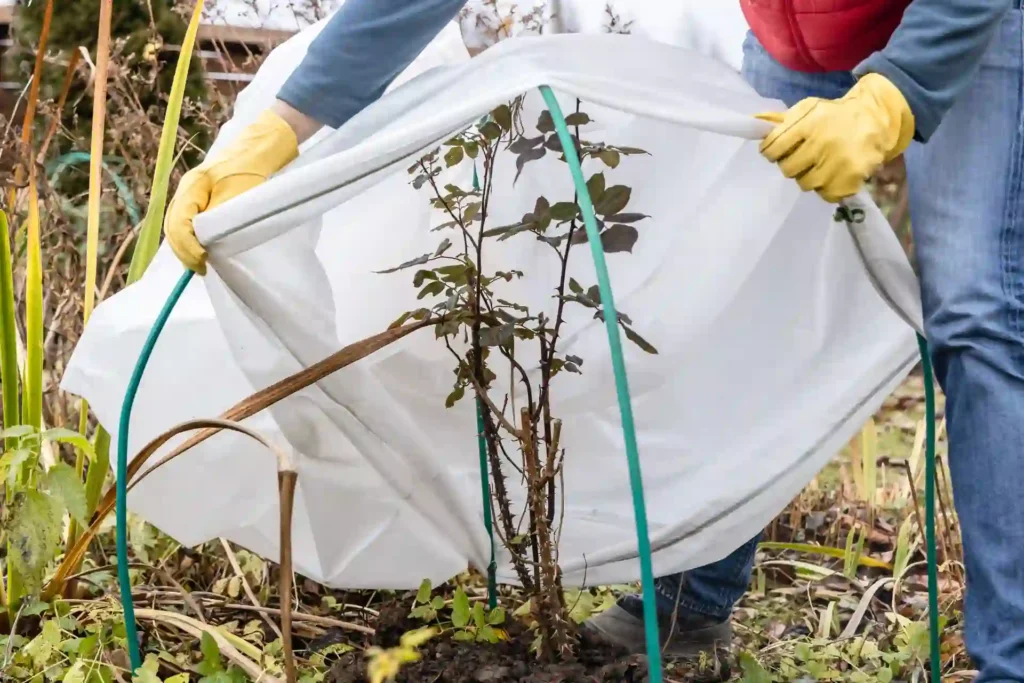
Covering plants is the most immediate and effective method of frost protection. But not everything you throw over a plant will work equally well. The material matters.
Frost Cloth (Row Cover Fabric)
It’s the most purpose-designed option. Frost cloth is also sold as floating row cover. This lightweight fabric traps heat radiating from the soil, but still allows for some air circulation. It comes in a couple of different weights ( 1.5 oz vs 3 oz per square yard ) and the heavier weights give you more protection .
Generally, a 1.5 oz row cover will protect plants down to about 28°F. A heavier 3 oz cover is good to about 24°F. You can buy them at garden centers and online.
Always remove or vent frostcloth on sunny days. It can overheat plants in direct sunlight, especially in spring, so turn it off.
Burlap
Burlap is ideal for covering larger shrubs and young trees. It’s breathable, inexpensive, and easy to work with. For small trees and shrubs, wrapping burlap loosely around branches (without crushing them) provides a good windbreak and frost buffer.
Old Bed Sheets and Blankets
These work surprisingly well for overnight frost protection. They’re thick enough to trap ground heat and cover irregular shapes. The key is to drape them over the plant all the way to the ground so ground heat stays trapped underneath. Don’t use plastic sheeting directly on plants because it transfers cold to the leaves.
Plastic Sheeting
Plastic works if it doesn’t touch the plant. Use stakes or hoops to create a tent over the plant, then drape the plastic over that frame. Weight the edges with rocks or soil to keep it from blowing off. Remove it first thing in the morning.
Garden Cloches and Cold Frames
Glass or plastic cloches placed over individual plants trap heat and create a mini greenhouse effect. Cold frames (essentially bottomless boxes with a transparent lid) are excellent for protecting seedlings and low-growing plants across an entire season.
Frost and Freeze Protection in the Spring
Spring frosts are the ultimate heart breakers of the garden. Your plants are awakening, sap is flowing, tender flower buds are swelling.
One late frost can wipe out an entire season’s fruit production on apples or peaches or berry bushes in a few dark hours. Monitor the late-season forecast and be prepared to put on your protective gear even if it seems like winter has already left the building.
5 Ideas on How to Protect Plants from Frost During Freezing Temperatures
When a major cold snap approaches, you need practical, field-tested tactics to pull your landscape through the night. These five strategies work together to form an effective shield against cold damage.
1. Hydrate the Soil Ahead of Time
Soak your garden beds thoroughly during the afternoon before a freeze. Wet soil absorbs and retains significantly more heat from daytime sunlight than bone-dry dirt. Overnight, that moisture slowly releases heat upward around your plants, creating a microclimate that can keep the air around the foliage just warm enough to survive.
2. Mulch Heavily Around the Base
Spread a fresh, loose layer of wood chips, straw, or clean shredded leaves around the root zones. A thick layer acts like a thermal blanket for the underground root system. It keeps the soil temperatures stable and prevents frost from penetrating deep into the dirt where it can kill the core of the plant.
3. Construct Supportive Cover Frameworks
Drive tall wooden stakes or PVC pipes into the ground around your prize plants before draping your frost cloths. This structural skeleton prevents heavy, wet fabric from resting directly on fragile branches. It creates a small, protected air tent that prevents mechanical breakage and ice contact burns on the uppermost leaves.
4. Create Geothermal Heat Tents
When applying a garden plant cover, ensure the fabric drops straight down to the soil line rather than wrapping around the plant stem like a lollipop.
     CRITICAL ERROR                  CORRECT TECHNIQUE
       (Lollipop)                       (Heat Tent)

          /\                               /\
         /  \                             /  \
        |____|                           /____\
          ||  <--- Bare stem exposed    | |  | | <--- Ground heat
          ||       to cold wind         | |  | |      trapped inside
   =======||=======              =======|======|=======
The lollipop method exposes the trunk and allows cold air to circulate underneath. The tent method seals in the natural warmth rising from the earth’s surface.
5. Utilize Supplemental Heat Sources
For exceptionally sensitive specimen plants, string a line of old-fashioned, incandescent holiday lights through the interior branches beneath your fabric cover. Avoid modern LED lights, as they generate zero heat. The small warmth emitted by incandescent bulbs inside a sealed fabric tent can raise the internal temperature by several critical degrees.
Identifying Frost Damage Symptoms
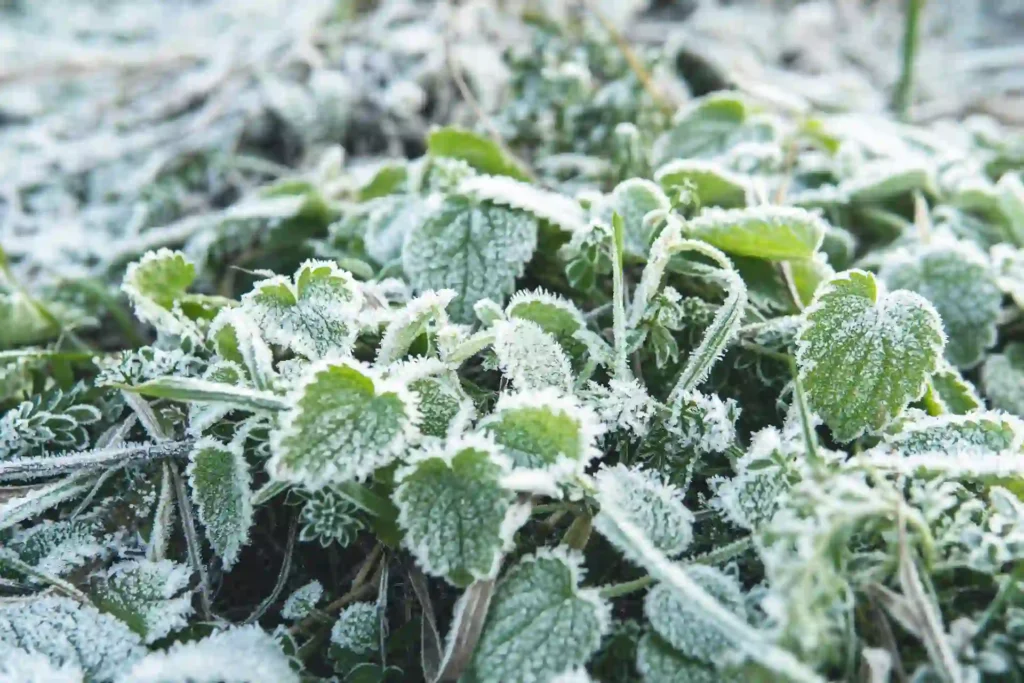
It is vital to recognize what frost damage actually looks like so you do not make mistakes during the cleanup process.
Early Warnings
Within 24 hours of a freeze, affected leaves will appear soft, droopy, and dark green or black. They will lose their crisp structural rigidity and feel distinctly water-logged between your fingers.
Late Stage Symptoms
Over the next week, those damaged areas will completely dry out, turning brittle and paper-thin. The color will transition from dark black to a pale brown or straw-colored hue as the dead tissue degrades.
What to do after frost damage:
Don’t prune immediately. Wait until the threat of frost has fully passed. Damaged growth actually provides some insulation for the tissue below it. Premature pruning removes that buffer and can expose healthy tissue to further cold.
Once the weather stabilizes, prune back to healthy, green wood. On woody shrubs, scratch the bark with your fingernail green underneath means alive.
Frost Risk Planning and Plant Hardiness Zones
The USDA Plant Hardiness Zone Map divides North America into 13 zones according to average annual minimum winter temperatures. It’s the No. 1 tool for determining which plants will survive your winters.
But the hardiness zone map is about winter survival, not spring or fall frost dates. That’s two different calculations. You can grow a Zone 7 plant in your zone through the winter, but if you plant it too early, you could get a late freeze in May that kills it.
Farmer’s Almanac and NOAA both have searchable frost date databases by zip code. These provide average last spring frost and first fall frost dates, the two most important numbers for any gardener.
One thing to remember: climate patterns are changing. In many areas, the dates of the first frost have shifted by one to two weeks in the past few decades. Local agricultural extension offices often have the most current, location-specific information.
What Garden Plants Are Least Susceptible to Frost?
If you want a garden that practically takes care of itself in cold weather, focus on frost-tolerant species from the start.
Frost-hardy plants have adapted to handle freezing temperatures, often by going dormant, producing antifreeze compounds in their cells, or having thick waxy leaf coatings.
Top frost-tolerant plants for the home garden:
Vegetables: Kale, Brussels sprouts, collard greens, carrots (the cold actually sweetens them), parsnips, beets, leeks, Swiss chard, and most members of the cabbage family.
Flowers: Pansies, violas, snapdragons, alyssum, dianthus, and ornamental kale.
Perennials and shrubs: Sedum, ornamental grasses, hostas (die back but return), coneflowers (echinacea), black-eyed Susans, and butterfly bush.
Trees: Most established deciduous trees handle frost without any help. Crabapples, oaks, maples, and birches are among the hardiest.
If you’re starting from scratch with a garden in a cold climate, building around these species first and then adding tender plants as accents is a smart approach. It reduces the amount of protection work you’ll need to do each season.
Why Choose Us
We don’t simply take care of landscapes at Robert’s Complete Care; we protect them all year long. We assist homeowners in preventing expensive replacements and long-term damage by giving them hands-on experience with seasonal plant care.
Our Landscaping Maintenance in Whittier service protects, keeps healthy, and gets plants ready for every season for homeowners who require professional support.
Conclusion
One of the best things you can do to maintain your landscape healthy and growing year after year is to learn how to keep your plants safe from frost. You can keep your plants alive even on the coldest nights and avoid expensive damage by covering them with the right materials, watering them wisely, and having a good frost risk plan. Frost protection doesn’t have to be hard; it just has to be thought about, planned for, and taken care of regularly.
Contact us immediately to set up professional landscaping help and make sure your plants are safe, healthy, and attractive all year long.
FAQs
What is the difference between freezing and frost?
Frost affects the surface of plants, but freezing affects the whole plant, including the roots.
When should I cover my plants before frost hits?
To keep ground heat in, cover plants before the sun goes down.
What kinds of things work best to keep plants safe from frost?
The best and safest choices are frost cloth, sheets, and burlap.
Can you water plants to keep them safe from frost?
Yes. Wet soil keeps heat better and protects against frost damage.
Which plants can handle frost and which ones can’t?
Kale and other vegetables can handle it, but tropical plants and roses can’t.