You already know your outdoor space could look better. Maybe it feels flat, too quiet, or just missing something you can’t quite put your finger on. If that’s the case, you’re not alone. Thousands of homeowners feel the same way, and many of them found the answer in a water feature. So, what are the benefits of having a water feature? The short answer: it changes how your home looks, sounds, and feels, all at the same time.
In this guide, we’ll walk through every real benefit, from stress relief and wildlife attraction to property value and air quality. Whether you’re thinking about a small garden fountain or a full koi pond, by the end of this post, you’ll know exactly what a water feature can do for your space and your wellbeing.
What Is a Water Feature?
A water feature is any decorative or functional element that incorporates water into a landscape or interior space. This includes garden fountains, ponds, waterfalls, streams, birdbaths, reflecting pools, and indoor water walls.
They come in every size and style. A small tabletop fountain works perfectly on a balcony. A large natural stone waterfall becomes the centerpiece of an entire backyard.
10 Benefits of Having a Water Feature?
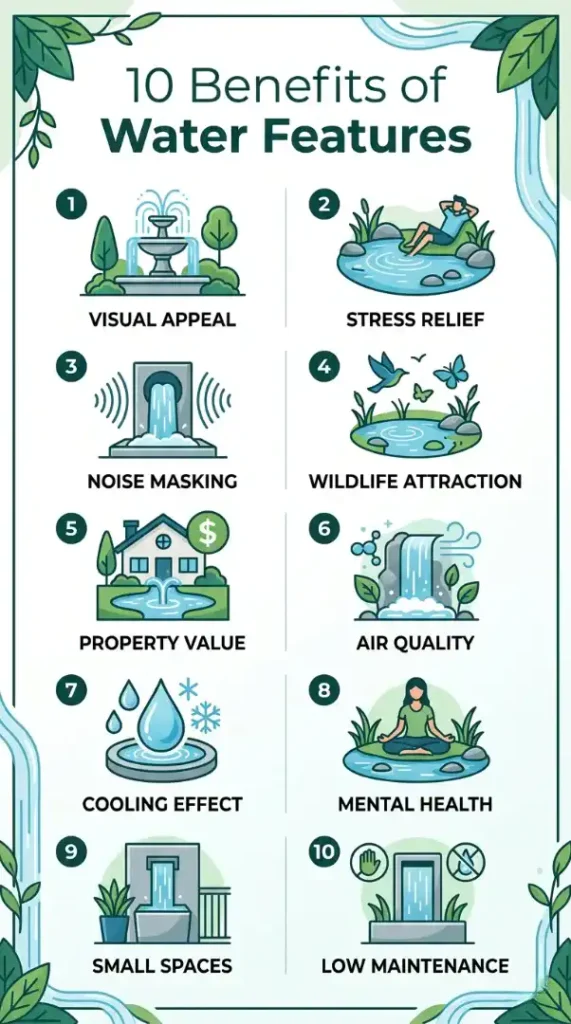
1. It Makes Your Landscape Stand Out
A well-placed water feature instantly adds visual depth, texture, and movement to any outdoor space. It takes a flat garden and gives it a focal point that draws the eye and holds attention. Most landscapes without one look static by comparison.
From a small outdoor fountain tucked between garden beds to an elaborate waterfall cascading over natural boulders, the aesthetic effect is hard to replicate with plants or hardscaping alone. Water creates a living, moving element that changes with the light, the season, and the time of day.
Think of it like this: a landscape without water is like a room without a window. It works, but something always feels missing.
2. Reduces Stress and Promotes Relaxation
The sound of flowing water has a proven calming effect on the nervous system. Research published in the International Journal of Environmental Research and Public Health found that natural water sounds significantly lower cortisol levels, the body’s primary stress hormone.
That’s why spas, meditation studios, and healing gardens all use water as a core element. You don’t need to book a retreat. A garden fountain or backyard pond gives you the same sensory experience right outside your door.
If you’ve ever sat near a stream and felt your shoulders drop, that’s exactly what we’re talking about.
3. Masks Unwanted Outdoor Noise
Water features act as a natural sound barrier. The steady sound of flowing water covers traffic noise, loud neighbors, and street sounds more effectively than fences or hedges alone.
This makes them especially valuable in urban and suburban properties where external noise is constant. It’s not just about relaxation. It makes your outdoor space actually usable for conversation, reading, or simply sitting quietly.
4. Attracts Birds and Wildlife
A pond, birdbath, or stream gives local wildlife a clean water source. This naturally attracts birds, dragonflies, butterflies, and frogs to your garden, supporting biodiversity in your local ecosystem.
Watching a robin splash in a birdbath or a dragonfly hover over a pond isn’t just enjoyable. It tells you your garden is healthy. Wildlife activity is one of the best signs of a balanced, thriving outdoor environment.
If you add fish like koi to your pond, the whole dynamic shifts into something even more engaging. Many homeowners say it becomes the most-visited spot in the entire garden.
5. Increases Property Value and Curb Appeal
A professionally designed water feature can increase a property’s perceived value and curb appeal. Real estate agents consistently note that well-maintained outdoor features, including water elements, attract more buyer interest and support higher asking prices.
It’s not just about buyers either. A beautiful water feature makes your home feel like a premium space every single day you live in it.
6. Improves Air Quality
Water features act as natural humidifiers. They release fine water droplets into the surrounding air, which helps reduce airborne dust particles and improves moisture levels in dry environments.
This is particularly useful in arid climates or during dry summer months. Homes near a garden fountain or pond often have measurably fresher outdoor air. It’s a passive, maintenance-free way to improve the quality of the air you breathe outdoors.
7. Creates a Natural Cooling Effect
In hot climates, outdoor temperatures can make your backyard unusable during peak summer hours. Water evaporation from fountains and waterfalls creates a local cooling effect that brings down the ambient temperature in the surrounding area.
It won’t replace your air conditioning indoors, but it makes spending time outside during summer significantly more comfortable.
8. Supports Mental Health and Mindfulness
Spending time near water features supports mindfulness and mental wellbeing. The combination of visual movement and rhythmic sound gives the mind something soft to focus on, which naturally quiets anxious or racing thoughts.
This is why water is a core feature in therapeutic and healing garden design. Sensory gardens for people with anxiety, dementia, or PTSD almost always include some form of moving water.
You don’t need a clinical reason to benefit from it. Simply having it nearby gives your brain a chance to rest.
9. Works for Small Spaces and Balconies
One of the biggest misconceptions is that water features require a large yard. They don’t. A compact wall-mounted water feature, a tabletop bubbler, or a small self-contained fountain works perfectly on a balcony, patio, or even indoors.
The key is choosing the right scale for your space. Size doesn’t determine impact. Even a small fountain produces the calming sound and visual interest that makes water features so valuable.
10. Low Maintenance Once Installed
Modern water features use recirculating pumps that move the same water in a continuous loop, which dramatically reduces algae growth and evaporation loss. Most setups require minimal upkeep, typically a monthly pump wipe-down and occasional algaecide drops.
This surprises many homeowners who assume water features are high-effort. With the right installation and setup, they’re one of the lower-maintenance landscape features you can add.
Types of Water Features to Consider
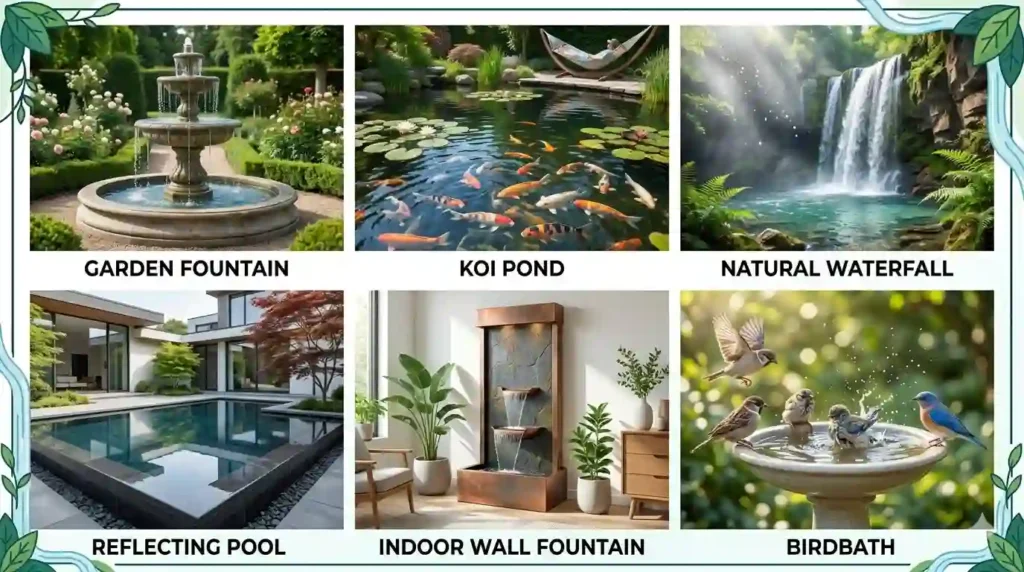
Choosing the right type depends on your space, budget, and goals. Here’s a quick overview:
- Fountains – The most common option. Range from tabletop to large statement pieces. Perfect for any size garden.
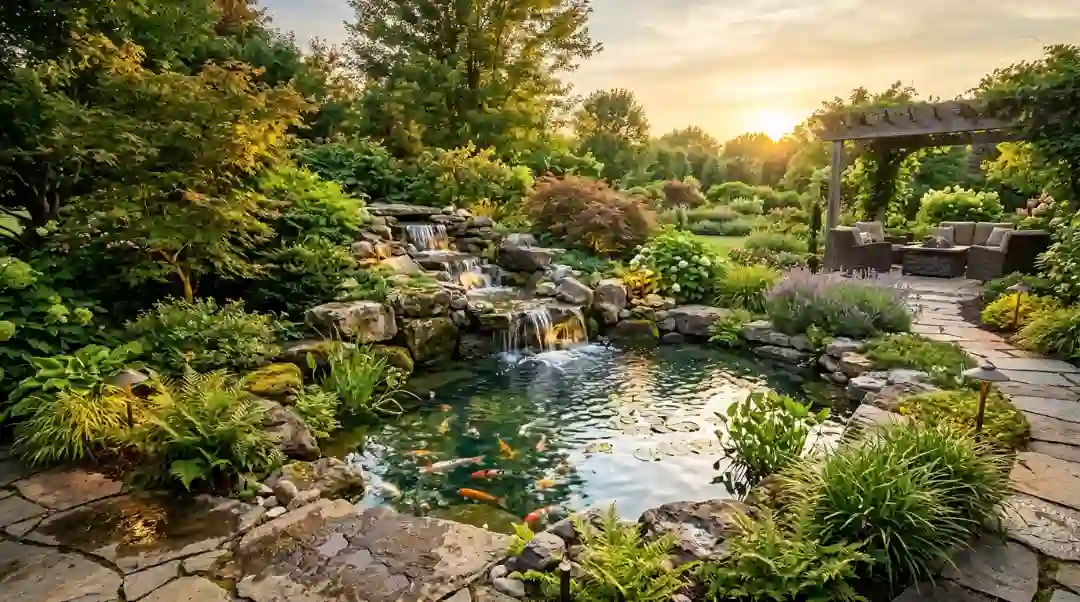
- Ponds and Koi Ponds – Great for wildlife, fish keeping, and creating a natural focal point.
- Waterfalls – Best suited to properties with a slope or elevation change. Visually striking and acoustically rich.
- Streams and Creeks – Simulate a natural watercourse. Often connect two ponds or flow through a garden bed.
- Reflecting Pools – Shallow, mirror-like pools. Ideal for formal or modern garden designs.
- Water Walls – Vertical features made from glass, stone, or metal. Popular in contemporary outdoor and indoor spaces.
- Rain Curtains – Thin vertical streams falling from an overhead bar. Used as decorative dividers or statement pieces.
- Birdbaths – Simple, affordable, and effective at attracting local birds.
- Indoor Water Fountains – Self-contained units for living rooms, offices, or entryways.
Transform Your Home with an Indoor Water Fountain
Indoor water features don’t get enough attention. A compact indoor fountain placed in a living room, home office, or entryway adds the same calming benefits as an outdoor setup, without requiring any garden space at all.
They help with dry indoor air, especially in winter when heating systems strip moisture from your home. The soft sound of flowing water also helps mask background noise indoors, which is useful if you work from home or struggle to concentrate.
Indoor water walls made from glass or slate have become particularly popular in modern home design. They’re functional, visually striking, and surprisingly easy to maintain.
Why Water Features Have Become Popular in Modern Landscaping
Homeowners today want outdoor spaces that do more than look good on a sunny afternoon. They want spaces that feel like an extension of the home, a place to relax, connect with nature, and actually spend time in.
Water features answer that need directly. They add sensory depth (sound, movement, reflection), support wildlife, improve the micro-climate, and make a landscape feel designed with intention.
Landscape designers also report that water features are one of the most requested additions in residential projects, consistently ranked alongside outdoor kitchens and lighting in terms of client demand.
4 Reasons to Add a Water Feature in Your Backyard Right Now
If you’re still on the fence, here are four practical reasons to move forward:
- It pays back in property value. Curb appeal and outdoor living features directly influence buyer perception and asking price.
- It costs less than most think. A quality self-contained fountain starts at a few hundred dollars. A professionally installed koi pond is a bigger investment, but the long-term value holds.
- Installation is faster than expected. Many water features can be installed in a single day by a professional landscaping team.
- You’ll use your outdoor space more. Homeowners with water features consistently report spending more time outdoors. That alone makes it worth it.
How to Maintain a Water Feature
Good maintenance keeps a water feature looking clean and running quietly. Here’s what’s actually involved:
- Check the pump monthly. Wipe it down with a cloth to remove debris or mineral buildup.
- Top up water regularly. Evaporation is normal, especially in summer. Most features just need a hose top-up once a week.
- Add algaecide when needed. A few drops in stagnant or slow-moving sections keeps water clear and fresh.
- Clean out leaves and debris. Especially important in autumn when leaf fall increases. A net cover over a pond helps significantly.
- Winterize in cold climates. In areas with hard freezes, draining or insulating the pump prevents damage.
Most homeowners find that 15–20 minutes per month is enough to keep a standard water feature in excellent condition.
Are Water Features Safe for Kids and Pets?
Most water features are safe with simple precautions. Shallow features like birdbaths, wall fountains, and bubblers pose minimal risk. Deeper ponds need a safety grill or fence if young children or pets have unsupervised access to the area.
For families with toddlers, a pondless waterfall (where water flows over rocks into a hidden underground reservoir) is an excellent option. It gives you all the visual and sound benefits of a waterfall without any open water.
Pets, particularly dogs, are often drawn to water features. Most will simply drink from or splash in them. Adding a pet-safe algaecide (check the label) keeps the water safe if your dog treats the fountain as a water bowl.
Irrigation and Water Features Can Work Together
A healthy landscape depends on balance. Water features improve the atmosphere, while irrigation systems support lawn and plant health behind the scenes.
Homeowners planning outdoor upgrades often combine fountains, ponds, and planting beds with professional irrigation planning. Proper drainage and water management help protect both hardscape and softscape areas long term.
For homeowners looking to improve overall landscape performance, Irrigation System Services in Whittier, CA from Robert’s Complete Care can help create a more efficient and visually balanced outdoor environment.
Final Thoughts
So, what are the benefits of having a water feature? The list is longer than most people expect. Better aesthetics, lower stress, cleaner air, cooler outdoor temperatures, higher property value, and a garden that actually supports local wildlife.
Whether you go for a modest birdbath or a full natural stone waterfall, the impact on how you feel in your outdoor space is real and immediate.
If you’re ready to take the next step, contact Robert’s Complete Care today. Our team will help you choose and install the right water feature for your home, budget, and landscape. Reach out for a free consultation and let’s build something worth coming home to.
Frequently Asked Questions
Are water features high maintenance?
No. Modern water features use recirculating pumps that reduce algae growth and water loss. Most setups need nothing more than a monthly pump check, occasional algaecide, and a quick debris clear. It takes under 20 minutes a month for most homeowners.
Do water features add value to a property?
Yes. Well-designed water features improve curb appeal and are viewed positively by buyers. Landscaping improvements including water elements can support a 10–15% increase in property value according to industry data from the National Association of Realtors.
What is the best water feature for a small garden?
A wall-mounted fountain, compact bubbler, or self-contained pondless waterfall works well in small spaces. They deliver the sound and visual appeal of larger features without requiring significant ground area.
Do water features attract mosquitoes?
Moving water does not attract mosquitoes. Mosquitoes breed in still, stagnant water. A recirculating pump keeps the water moving, which actively discourages mosquito breeding. If you have a still pond, a small pump or aerator solves the problem immediately.
How much does a water feature cost to install?
Costs vary widely. A self-contained garden fountain starts from around $200–$500. A professionally installed waterfall or koi pond typically ranges from $3,000 to $15,000+ depending on size, materials, and site conditions.
Are water features good for mental health?
Yes. The sound of flowing water reduces cortisol levels and supports a calming mental state. Water features are regularly used in therapeutic and healing garden design for exactly this reason.