Most homeowners only think about tree care when something goes wrong a storm-damaged limb hanging over the roof, a dead tree leaning toward the fence, roots cracking the driveway. Then the pressure is on to hire fast, and that’s exactly when bad decisions happen. Knowing how to choose a tree service company before you need one puts you in a position of control, not desperation.
Here’s the short answer: look for a company with ISA-certified arborists, valid insurance, local references, and written estimates. But the full picture matters just as much, and this guide walks through every factor worth checking so you’re not left with a blown budget, damaged property, or a half-finished job.
Why Hiring the Right Tree Service Company Matters
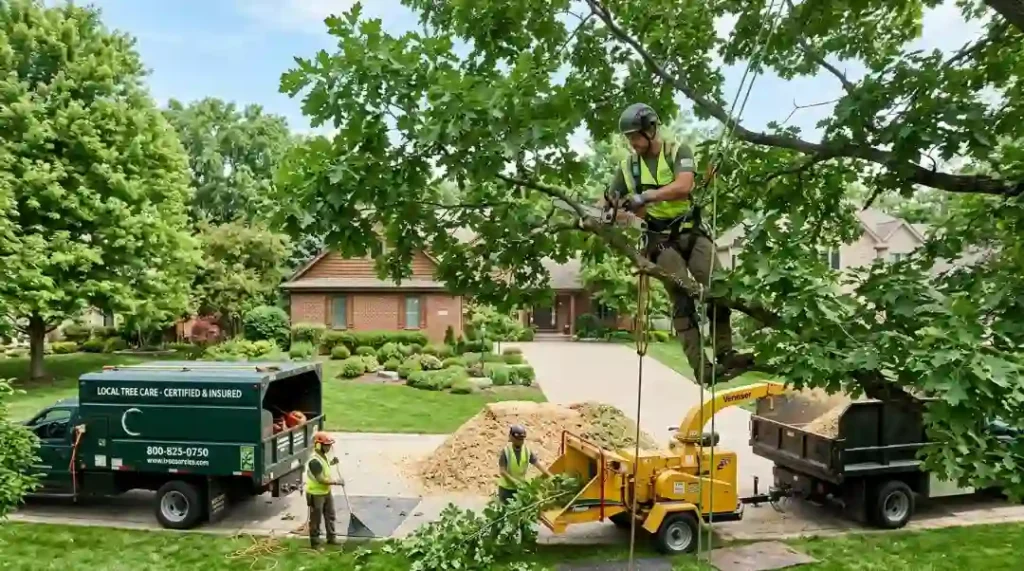
Hiring the wrong tree service company can cost you far more than the job itself. Uninsured crews, improper pruning, and negligent removals lead to property damage, liability claims, and dead trees that could have been saved. The stakes are higher than most people realise.
A tree is a long-term investment in your property. Mature trees can add 10 to 15 percent to a home’s market value, according to the Council of Tree and Landscape Appraisers. Damage one through bad pruning, and that value disappears fast. Hire an unlicensed crew, and if someone gets hurt on your property, your homeowner’s insurance may not cover it.
This is not a job to hand off to whoever shows up with a chainsaw after a storm.
Certified Arborist vs Tree Service Company What’s the Difference?
A certified arborist is a trained professional who has passed rigorous exams covering tree biology, safety protocols, and diagnosis, while a general tree service company might simply own chainsaws and trucks without any formal education in tree health.
Think of a certified arborist as a specialized doctor for your landscape. They study tree anatomy, soil chemistry, and pest management. They know exactly how a specific cut will affect the health of a mature oak or pine years down the road.
On the flip side, a basic tree cutting service focuses mostly on the physical labor of cutting and clearing wood. While they might be great at hauling away logs, they often lack the knowledge to spot deep structural rot or systemic disease. For simple removals, a basic crew might suffice, but any structural pruning or health diagnosis requires an arborist’s eye.
Essential Credentials Every Tree Service Company Must Have
Every legitimate tree service company operating in the U.S. should carry general liability insurance and workers’ compensation coverage. Without these two things, any accident on your property becomes your financial problem.
Here’s what to ask for before signing anything:
- Proof of general liability insurance (at least $1 million in coverage)
- Workers’ compensation insurance for all crew members
- Business license valid in your state or county
- ISA Certification for any arborist performing diagnostic or consulting work
- TCIA Accreditation (Tree Care Industry Association) — not required, but a strong trust signal
Don’t just ask if they’re insured. Request a certificate of insurance from their provider directly. Any honest company will hand it over without hesitation. If they dodge that requesمt, walk away.
Some states also require specific licensing for pesticide application, tree work near power lines, or jobs on commercial properties. Check your local requirements, because what’s required in Texas differs from what’s needed in Oregon.
How to Verify a Tree Service Company’s Experience and Reputation
The fastest way to verify a tree service company’s reputation is to check their Google reviews, ask for references from jobs in the last 12 months, and look them up on the Better Business Bureau. Credentials on paper mean little if the execution is poor.
Start online. Search the company name plus your city. Look at one-star reviews closely — not to disqualify the company, but to spot patterns. One complaint about billing is a red flag. Fifteen complaints about the same thing is a clear signal.
Then go local. Ask neighbors who’ve had tree work done recently. Word-of-mouth from someone who’s seen the crew in action carries more weight than any website claim.
Specific things to verify:
- Years in business five or more years is a reasonable baseline for complex jobs
- Portfolio of past work photos of completed removals, stump grinding, or pruning
- References from similar jobs if you need a large oak removed, ask for references from large removal jobs, not just hedge trimming
- Membership in professional associations like TCIA or your state’s arborist association
Tree Service Pricing Explained What Impacts the Cost?
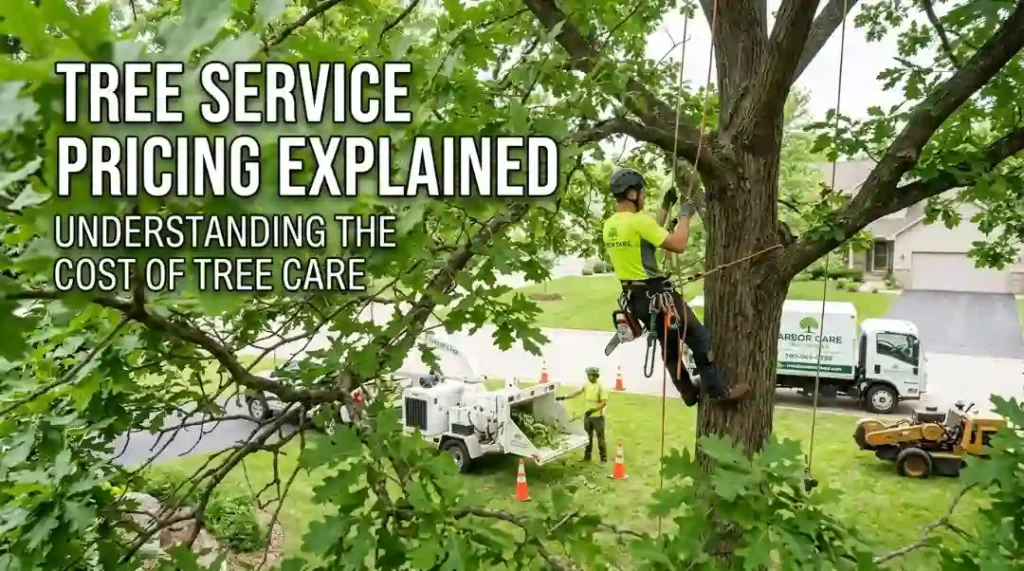
One of the most common questions is: how much does professional tree service cost? The honest answer is: it depends. Here’s a general breakdown:
| Service Type | Estimated Cost Range |
| Small tree removal (under 30 ft) | $150 – $500 |
| Medium tree removal (30–60 ft) | $500 – $1,000 |
| Large tree removal (60+ ft) | $1,000 – $2,500+ |
| Tree pruning and trimming | $200 – $900 |
| Stump grinding | $75 – $400 per stump |
| Emergency / storm damage cleanup | $300 – $3,000+ |
Is It Cheaper to Remove a Tree Yourself?
In theory, yes. In practice, it’s rarely worth it. DIY tree removal without proper equipment and training is genuinely dangerous. Falls, power line contact, and uncontrolled tree drops cause serious injuries every year. For any tree larger than a small ornamental, professional removal is worth every dollar.
Beware of Unusually Low Estimates
If one company quotes $300 and everyone else quotes $900 for the same job, that gap is a warning sign. Low-ball estimates often come from unlicensed, uninsured operators who cut corners on safety and cleanup. You could end up paying more to fix the problems they leave behind.
Equipment, Safety Standards and Professional Practices to Look For
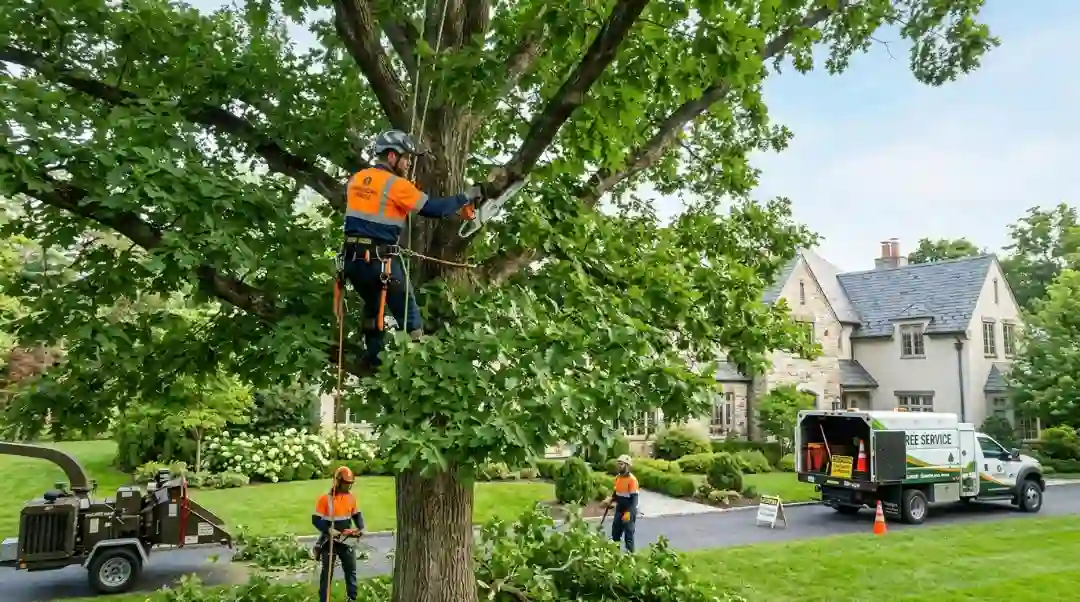
Professional tree service companies use industry-standard equipment including bucket trucks, chippers, rigging systems, and proper PPE (personal protective equipment) for every crew member on-site. If the crew shows up without harnesses, helmets, or eye protection, that’s a problem.
The American National Standards Institute (ANSI) A300 standards govern tree care practices in the U.S. Ask if the company follows ANSI A300 pruning guidelines. A company that knows what you’re talking about is already more trustworthy than one that goes blank.
Things to look for when the crew arrives:
- Helmets, gloves, eye protection, and chainsaw chaps for every worker
- Rope and rigging systems when lowering large sections near structures
- A spotter on the ground when the climber is up the tree
- Cleanup equipment including a chipper and blower
Also watch how they treat your property. Do they lay down plywood or matting to protect the lawn from heavy equipment? Do they discuss where debris will go before they start? Small things reveal a lot.
Warning Signs of a Bad Tree Service Company
Spotting a shady contractor before they start cutting can save you thousands of dollars in property damage and legal headaches. Trust your instincts when something feels off during the initial consultation.
Door-to-door solicitation: Avoid people who knock on your door after a big storm claiming they “just happened to be in the area” with leftover equipment.
Demanding cash upfront: Reputable businesses do not ask for full payment before a single branch hits the dirt.
Recommending tree topping: Topping removes the entire top section of a mature canopy, which permanently ruins the structural integrity of the tree.
Vague, verbal estimates: If a contractor refuses to put the explicit scope of work down on paper, walk away immediately.
High-pressure sales tactics are another massive red flag. If an estimator tells you a price is only good if you sign a contract right that second, they are likely trying to stop you from comparing prices with competitors.
Local Tips for Choosing a Tree Service Company in Your Area
A local tree service company brings advantages that out-of-town operators can’t match. They know local tree species, common pests, soil conditions, and your city’s permit requirements. They have a reputation to protect in your community, and you can even drive by past job sites to see their work firsthand.
If you’re in Southern California, local knowledge matters a great deal. For homeowners in the area, Tree and Shrub Services in Whittier, CA by Robert’s Complete Care is a strong example of this kind of local expertise, a team that understands what your specific trees need to stay healthy and safe year-round.
Check Local Permits
Many cities require permits for removing trees above a certain size, especially protected or heritage species. A professional local tree care company will know your city’s rules and handle the permit process, or at minimum advise you on what’s required.
Ask Your Neighbors
Word of mouth is still one of the best ways to find a great local tree service. If you see a well-maintained yard on your street, ask who takes care of it. Personal recommendations carry far more weight than any online ad.
Conclusion
If you’re ready to work with a reliable and professional tree care team, contact Robert’s Complete Care today. Our experienced specialists are happy to answer your questions, assess your trees, and recommend safe, effective solutions for your property. Reach out now to schedule your consultation and protect the health and safety of your landscape.
Frequently Asked Questions
How do I know if a tree service company is reputable?
Check verifiable online reviews across multiple platforms, ask for references, confirm their licensed and insured status, and make sure they employ at least one ISA-certified arborist. A reputable company also provides a written estimate without pressure.
Should a tree service company be licensed and insured?
Yes, always. General liability insurance protects your property, and workers’ compensation insurance protects you from being sued if a worker is injured on your property. Ask for a certificate of insurance directly from the insurer.
What is an ISA-certified arborist?
An ISA-certified arborist has passed a comprehensive exam through the International Society of Arboriculture covering tree biology, pruning, risk assessment, and tree health. It is the industry’s most recognized professional credential.
What red flags should I avoid when hiring a tree company?
No proof of insurance, no written estimate, large upfront cash demands, recommending tree topping, no certified arborist on staff, high-pressure sales tactics, and no verifiable local business address.
How much does professional tree service cost?
Small removals start around $150–$500. Large tree removals can reach $2,500 or more. Always get at least three written estimates and be cautious of unusually low bids.
Can a tree service company damage my property?
Yes, if they’re not properly trained or equipped. This is exactly why verifying liability insurance matters. A legitimate company’s insurance covers accidental damage. An uninsured company leaves you with no recourse.