You’re not alone if you’ve ever stood in your yard wondering how much is a yard of river rock and whether it’s really worth the cost. Most people who own homes agree on one thing: landscaping rocks look great, but the prices can be hard to understand. The right choice for your home isn’t just the sticker price; it’s also how you plan to use it, how much coverage you need, and how much value it will have in the long run.
I promise to explain river rock prices in simple terms and give you real numbers you can trust in this guide. You’ll find out how much a yard of river rock costs on average, how much coverage you get, how much it costs to deliver and install it, and how to save money. At the end, you’ll know exactly how much river rock you need for your yard and how to plan for it with confidence.
Average Cost of River Rock Per Cubic Yard in 2026
River rock costs $50 to $160 per cubic yard for bulk material, with a national average of around $85 per cubic yard. Standard mixed-color or gray river rock sits at the lower end. Specialty options like black river rock, Mexican beach pebbles, or polished varieties push costs toward the upper end or beyond.
Here’s a quick breakdown by rock type and color:
| Rock Type | Cost Per Cubic Yard |
|---|---|
| Standard gray/brown river rock | $50 – $90 |
| Mixed-color river rock | $60 – $100 |
| Black river rock | $90 – $140 |
| White river rock | $100 – $160 |
| Mexican beach pebbles | $150 – $300+ |
| Polished river rock | $100 – $200 |
| Large decorative boulders | $200 – $600+ |
A few factors push prices higher or lower:
Rock size matters a lot. Small pebbles (under 1 inch) and large rocks (6+ inches) both cost more than medium-sized river rock in the 1–3 inch range, which is the most common and cheapest to source.
Color and rarity drive specialty pricing. Colorado rainbow rock, Tennessee river rock, and Cherokee varieties are pricier than standard grey or brown options because sourcing and transportation add cost.
Location affects what you pay. If you’re near a quarry or regional stone supplier, you’ll pay less. Remote areas can tack on significant shipping premiums.
Quantity discounts apply above 10 cubic yards. Most bulk suppliers cut 10–20% off per-yard pricing for large orders.
River Rock Cost Per Yard vs Per Ton (Which Is Cheaper?)
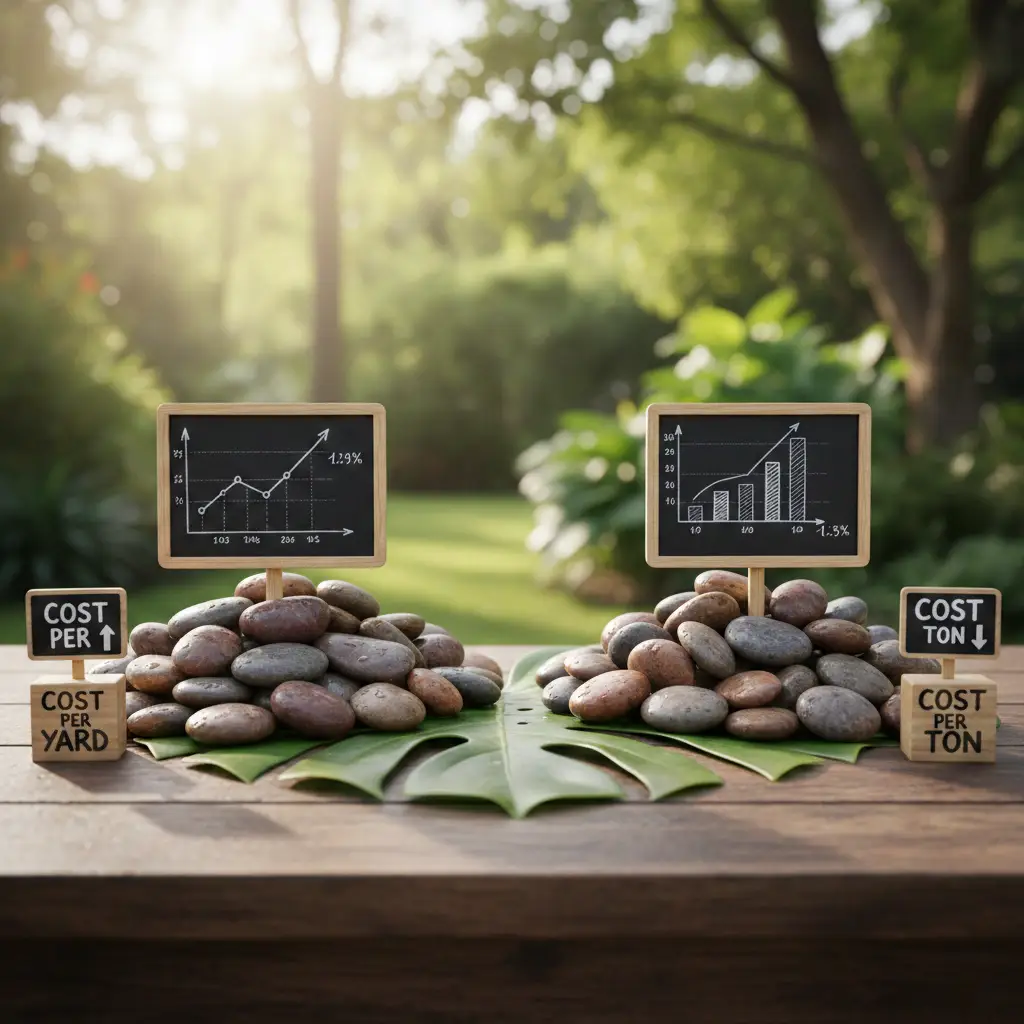
Neither pricing method is inherently cheaper they’re just two ways to measure the same material. One cubic yard of river rock weighs roughly 2,400 to 2,700 lbs (about 1.2 to 1.35 tons). So a $85/yard rock might cost around $65 per ton, and both figures describe the same pile of stone.
Most landscape suppliers in the U.S. sell river rock by either the ton or the cubic yard, and some use both. Here’s how to convert between them:
- 1 cubic yard = approximately 1.3 tons of standard river rock
- 1 ton = approximately 0.75 cubic yards
When comparing quotes from two different suppliers, always convert to the same unit. A supplier quoting $75/ton may sound cheaper than one quoting $85/yard, but once converted, the $75/ton supplier actually costs more ($97.50 per equivalent cubic yard).
For smaller stones like pea gravel, a cubic yard is lighter, so the ton price appears lower. For large decorative rocks or dense basalt, the weight per cubic yard is higher, which makes ton pricing look more expensive. Always check the weight density before comparing quotes.
How Much Area Does One Yard of River Rock Cover?
One cubic yard of river rock covers 75 to 170 square feet, depending on the depth you apply it. At a standard 2-inch depth, expect coverage around 150–170 sq ft. At 3 inches deep, coverage drops to around 100–110 sq ft. At 4 inches deep, a single yard covers roughly 75–85 sq ft.
Here’s a practical reference table:
| Depth | Coverage Per Cubic Yard |
|---|---|
| 1 inch | 300+ sq ft |
| 2 inches | 150 – 170 sq ft |
| 3 inches | 100 – 110 sq ft |
| 4 inches | 75 – 85 sq ft |
For most decorative landscape beds and garden borders, 2–3 inches is the standard. Dry creek beds and drainage areas typically need 4–6 inches, which uses significantly more material.
A few guidelines based on project type:
- Pathways and walkways: 2 inches is fine for light foot traffic
- Decorative garden beds: 3 inches for weed suppression and visual effect
- Drainage and erosion control: 4–6 inches for functional performance
- River rock fireplace surrounds or focal points: 1–2 inches is usually decorative only
One thing to keep in mind: rock compresses and settles over time. Order 10–15% more than your calculation suggests to account for natural settling and edge spillage.
Why Rock Depth (2 inch, 3 inch, 4 inch) Matters
At Robert’s Complete Care, we always recommend a minimum of 3 inches for river rock. Because these stones are rounded, they don’t “lock” together like crushed gravel. A 3-inch layer ensures that when the stones shift, you still have total coverage over your soil or weed barrier.
How to Calculate Landscape Rock Needs
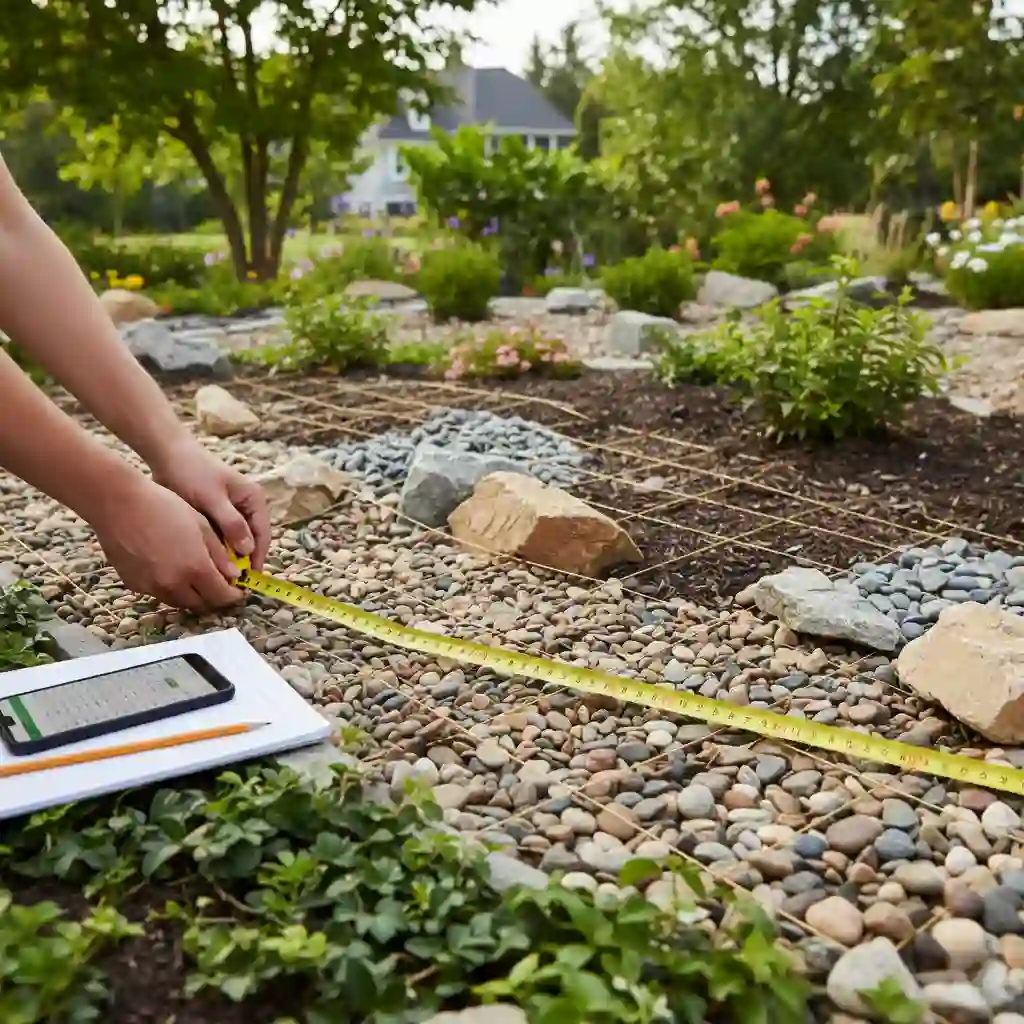
To find your required cubic yards, multiply your total square footage by your target depth in inches, then divide that number by 324. This classic construction formula converts three distinct measurements into one straightforward volume requirement for ordering.
Let’s break the process down into actionable steps:
Step 1: Measure the length and width of your project area in feet.
Step 2: Multiply length by width to find the total square footage.
Step 3: Multiply your square footage by the desired depth in inches.
Step 4: Divide that final number by 324 to get the exact cubic yards needed.
For a practical example, imagine you want to build a long garden border that measures 50 feet long and 4 feet wide. That gives you an area of 200 square feet. If you want a solid 3-inch deep layer of stone to keep weeds away, your calculation looks like this:
We always recommend adding a 10% safety cushion to your final order. Stones settle into the low spots of your soil naturally, and having a small extra pile avoids a second delivery fee.
How Many Bags of River Rock Are in a Cubic Yard?
It takes exactly 54 standard 0.5-cubic-foot retail bags to equal one full cubic yard of bulk river rock. Buying individual bags allows you to transport material in a standard vehicle, but it costs significantly more per pound.
A single retail bag of landscape rocks weighs roughly 50 pounds. While grabbing a few bags from a home improvement store works well for touching up bare spots around a tall rock feature, scaling this up for an entire patio or driveway quickly becomes inefficient.
When you look at the math, 54 individual bags at retail prices usually run between $5 and $17 each, driving your total yard cost up to $270 or even $900. Buying in bulk from a local commercial supplier saves you money on any project requiring more than half a yard.
River Rock Delivery Cost Per Yard
The installed cost of river rock runs $75 to $240 per ton or $100 to $350 per cubic yard when you include labor. Professional installation for a typical 500 sq ft project with material and labor averages around $700. Simple spreading over landscape fabric costs less; complex patterns or borders cost more.
Here’s how installation pricing breaks down:
| Installation Type | Cost Per Sq Ft |
|---|---|
| Basic spreading (flat area) | $2 – $5 |
| With edging and landscape fabric | $4 – $7 |
| Complex patterns or borders | $7 – $12 |
| Large boulder placement | $150 – $600 per boulder |
DIY installation cuts labor out entirely, but factor in equipment rental costs. A wheelbarrow, landscaping rake, and hand tamper will run $50–$150 per day if you don’t already own them. For areas larger than 400 sq ft, renting a small skid-steer loader ($250–$400/day) makes the job go much faster.
Site prep also adds cost. If the area needs grading, weed barrier installation, or edging before rocks go down, add $1 to $3 per square foot to your budget.
Installed Cost of River Rock Per Yard
Want a pro to handle it? Here’s what full installation costs:
| Item | Cost |
| River Rock (material) | $45 – $130/cu yd |
| Weed barrier | $0.20 – $0.50/sq ft |
| Labor to spread | $50 – $100/hr or $1–$3/sq ft |
| Site prep | $50 – $150 |
| Total installed estimate | $150 – $400/cu yd |
If you’re in Southern California and want professional results without the hassle, Robert’s Complete Care offers Expert Hardscaping in Whittier, CA from grading and edging to full river rock installation.
Cost of River Rock by Project Type
Small accent tasks like framing backyard flower beds cost around $300, while extensive structural drainage systems easily run past $2,500. The total price tag depends directly on the depth requirements and the amount of dirt moving needed.
Dry Creek Beds
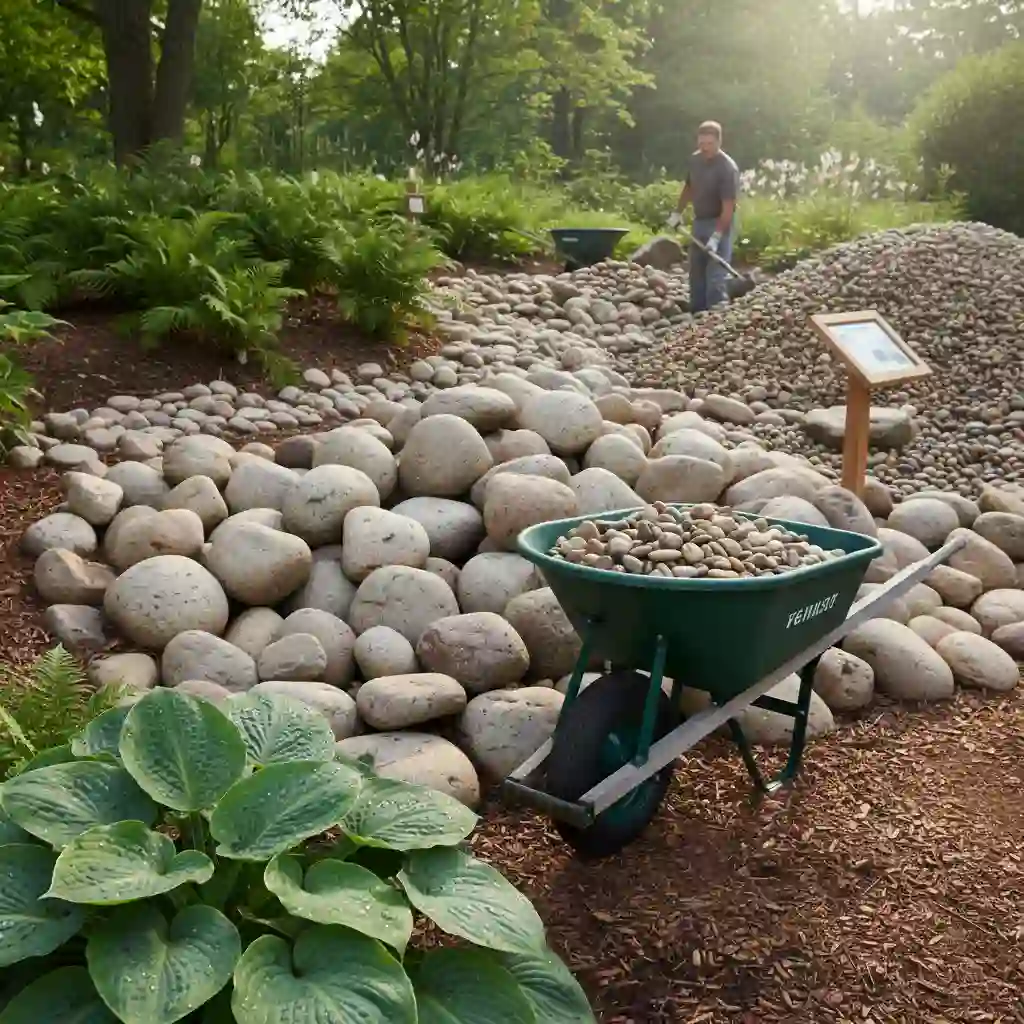
Building a functional dry creek bed requires a mix of medium stones and larger structural rock outlines to channel water safely. Property owners spend roughly $1,200 to $3,500 for a completed installation, which prevents pooling water on turf during heavy storms.
Garden Borders and Flower Beds
Framing your garden beds with smooth stone offers a clean look that outlasts traditional wood mulch. A standard project around front yard trees or fence lines usually takes 2 to 4 yards of stone, keeping your total investment between $600 and $1,800.
Walkways and Paver Patios
Combining landscaping rocks and pavers creates durable, high-traffic paths across your property. Crews excavate the path, lay a compacted base layer, place your walking pavers, and fill the remaining gaps with small river pebbles for a stable surface.
Where to Buy Landscaping River Rocks
River rock is available from big-box home improvement stores, local nurseries, garden centers, stone quarries, and landscape supply yards. Each source has different pricing structures and minimum orders.
Big-box stores (Home Depot, Lowe’s, Menards): These stock a bag of landscape rocks in common sizes. Convenient for small projects, but the bag-per-bag price is 3–6 times more expensive than bulk. A bag of landscape rocks typically costs $5 to $10 for 0.5 cu ft.
Local landscape supply yards: Best pricing on bulk material. Most sell by the cubic yard with delivery included in larger orders. This is where how much are landscaping rocks really becomes a fair price.
Stone quarries and gravel pits: The cheapest source if one is nearby. You can sometimes self-haul with a pickup truck and pay as little as $30–$50 per cubic yard.
Online suppliers and specialty stone dealers: Good for rare colors and specialty varieties like river rock pics you’ve saved from inspiration boards. Expect higher per-unit pricing and significant shipping costs.
Robert’s Complete Care works with trusted regional suppliers to source quality river rock at competitive pricing, handling delivery and installation so you don’t have to coordinate multiple vendors. For landscaping rocks and pavers, or any hardscape material, a single reliable contractor simplifies the whole process.
Conclusion
So, how much is a yard of river rock really? In most cases, homeowners can expect to pay $50 to $160 per cubic yard, with total installed costs reaching up to $240 per yard once delivery and labor are included. By understanding coverage, depth, bulk pricing, and installation factors, you can plan your landscaping project with confidence and avoid costly mistakes.
If you’re unsure how much river rock your yard needs or want a professional opinion before buying, contact us today. The team at Robert’s Complete Care is happy to help you estimate costs, choose the right materials, and design a durable, great-looking landscape solution tailored to your property. Reach out now to get expert guidance and turn your landscaping vision into reality.
FAQs
How much does 1 cubic yard of river rock cost?
$45–$130 depending on type, size, and location.
Is it cheaper to buy river rock by the ton or by the yard?
Usually about the same once you do the math. Always compare total project cost from both quotes.
How many square feet does a yard of river rock cover?
About 160 sq ft at 2″ deep, 108 sq ft at 3″ deep, 81 sq ft at 4″ deep.
How deep should river rock be for landscaping?
2–3 inches for decorative cover, 4–6 inches for drainage, 3 inches for walkways.
How many bags of river rock equal a cubic yard?
54 bags (at 0.5 cu ft each) = 1 cubic yard.
How much does river rock weigh per yard?
Approximately 2,400–2,700 lbs (1.2–1.35 tons) per cubic yard.
How much is a yard of river rock near me?
Search local stone yards and quarries for the most accurate pricing in your area — regional prices vary significantly.