
A plain gray slab gets boring fast. You want a patio that feels finished, not forgotten. The bare concrete look isn’t holding your interest anymore, and that’s exactly why you’re here.
This guide walks through patterns, colors, layouts, and add ons that turn a flat slab into a real living space. You’ll see how stamped textures, fire pits, borders, and plantings work together, and you’ll pick up real direction on how to design outdoor living spaces that fit your home and the Southern California climate. The short answer: the best cement patio ideas pair a durable surface with a clear layout and one focal feature, whether that’s a fire pit, an outdoor kitchen, or a shaded sitting area.
Table of Contents
ToggleWhat Makes a Great Cement Patio?
A perfect cement patio has a slip resistant surface, a pattern that works with how you actually use your yard, and at least one design feature, whether it be color, texture, or a built in element like a fire pit or seating wall. Proper joint spacing and drainage make it last for decades.
Most concrete patio ideas you see online are all about appearances and don’t get into the practical side. Think about how your family spends time outdoors before you choose a pattern. Once you know how to create outdoor living spaces around your routine, all other decisions about cement patio ideas are easier.
Quick note on terms: cement is a constituent of concrete, not the final surface itself, but most homeowners search and talk about both the same way. We will use cement and concrete interchangeably in this piece as that’s how people actually search for it.
Modern Minimalist Cement Patios
Large smooth slabs in a grid layout give a clean look. Pair them with simple furniture and a few potted plants, and the space feels open instead of cluttered. Minimal lines work especially well with newer stucco or modern farmhouse homes.
If you’re after modern concrete patio ideas, grid layouts and a tight two tone palette are the easiest way to get there. A light gray or sand colored slab paired with dark metal furniture reads as modern without trying too hard. This style also keeps maintenance simple, since there’s no stamped texture to clean.
Stamped Cement Patterns That Mimic Natural Materials
Stamped concrete is still one of the most popular concrete patio design ideas out there providing you texture for a fraction of the expense of actual stone. A mold is pushed into wet concrete before it solidifies , and leaves a design behind . The most popular pattern is ashlar slate, which works well with almost any kind of home, and then random flagstone, which creates a more casual, natural edge.
Color is generated with three layers working in concert. An integral color incorporated into the slab, a color hardener spread on the surface and a release agent that falls into the grooves for depth. The primary reason a stamped patio appears painted instead of like actual stone is the lack of releasing agent. A local installer can hold color swatches against your siding and roof before you commit to a job.
Geometric Cement Paver Patio Ideas
Geometric layouts use squares, hexagons, or staggered rectangles instead of one solid pour. Combining a paver pattern with poured concrete borders gives you sharp lines without the full cost of natural stone. This look works well in side yards or narrow spaces where one flat shape would feel plain.
A herringbone or basket weave layout adds movement without looking busy. If your home has brick details, matching the pattern angle to your brick ties the whole yard together. These small details are what separate generic backyard concrete patio ideas from ones that actually look designed.
Cozy Backyard Cement Patio Ideas With Fire Pits
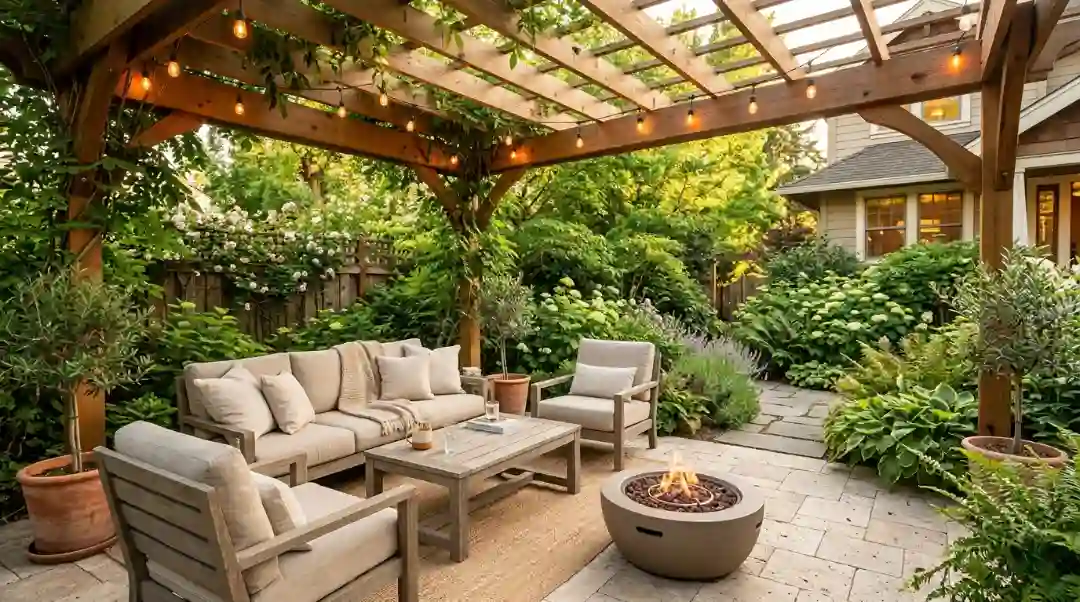
A built in fire pit turns a patio into the spot everyone gathers around after the sun goes down. Surround it with a ring of exposed aggregate or stamped stone for grip and heat resistance. Keep at least three feet of clear space around the pit for seating and safety.
Gas fire pits are cleaner and easier to switch on for a quick evening outside. Wood burning pits feel more old fashioned and work well if you already have stone seating walls planned. Either option needs a non combustible base, which concrete already provides.
Outdoor Kitchen or BBQ Zone on a Cement Patio
Outdoor concrete patio ideas surrounding a kitchen or BBQ zone require a flat, level, completely cured slab before anything else is put down. Concrete will stand up to grease, heat and heavy equipment better than any wood decking ever would. Plan for a modest run-away from the house so water runs off, not pool around appliances.
Even a basic BBQ area looks better with a defined footprint, maybe a border of a different colour or a distinct texture marking out the grilling area. It keeps the foot traffic patterns clear and keeps the remainder of the patio from grease splatter.” There is also a shade structure nearby so you are not in the direct light during the warmest part of the day.
Decorative Borders and Inlays
A contrasting border, even only twelve inches wide, outlines the entire patio and conceals slight edge wear where it’s least visible. “A frame is a soldier course of brick, stained borders or a stamped band. Borders also provide you a tidy line if you’re pairing concrete with pavers or turf down the line.
Inlays like a compass rose, house number or family initials give a unique touch for little added cost. It is best used as a single modest focal point at an entry or dining area and not distributed all over the slab. One well-placed inlay seems planned; five inlays look cluttered.
Multi-Level Cement Patio Design Ideas
Step downs and low retaining walls separate a dining area from a lounge area without adding fences. This layout works especially well on sloped lots where you’d otherwise need heavy grading. Each level can carry its own pattern or color for a layered look.
Multi-level layouts are one of the clearest examples of how to design outdoor living spaces that function like separate rooms outside. A raised dining level near the kitchen door and a lower fire pit level near the back fence keep noise and activity naturally apart. Lighting along the steps also keeps the transition safe after dark.
Rustic Backyard Cement Patio Ideas
Rustic styles rely on warm, earthy colors like buff, tan or worn brown instead of chilly grays. Wood plank stamped concrete is a great match for this style, providing the grain of wood without the splinters and decay. Add a stone coated fire pit and simple wood furniture for that cabin atmosphere.
It covers minor surface defects better than a modern smooth slab. It’s a practical, lesser cost option for older homes with a farmhouse or ranch type exterior.
Creative Cement Patio Landscaping Ideas
Planting beds cut into the edge of a patio soften the hard lines of concrete. Low growing groundcover between paver joints adds texture without adding much upkeep. Raised planters built from matching concrete block also tie the hardscape and landscape together visually.
Lighting tucked into planting beds or along step edges extends how long you actually use the space after sunset. This is really just another piece of how to design outdoor living spaces, since lighting and planting choices matter as much as the slab itself. A patio that looks great at noon but disappears at night isn’t finished yet.
Painted or Stained Cement Patio Surfaces
Acid stain reacts with the surface to produce mottled, variegated color that never looks flat or painted on. Water based stains give more uniform, predictable color if you want a specific shade to match trim or furniture. Either option needs a sealer afterward to protect the color from fading.
Light colored finishes reflect heat instead of holding it, which matters on a patio that sits in direct sun most of the day. Dark stains look sharp in photos but can get hot enough to bother bare feet by mid afternoon. If your patio doubles as a pool deck, lighter tones are almost always the better call.
How Much Does a Cement Patio Cost to Install or Upgrade?
A plain poured cement patio typically costs less per square foot than pavers or natural stone, while stamped or stained finishes add to that price based on pattern complexity and color layers. Most homeowners spend more on labor and site prep than on the concrete itself.
Site prep, base material, and proper drainage planning usually account for a large share of the total bill. Adding a fire pit, lighting, or a seating wall raises the cost but also raises how much you actually use the space. Getting a written estimate that breaks out labor, materials, and add ons separately makes it far easier to compare bids.
Conclusion
Cement patios offer endless versatility, but pairing them with our Landscape Design Whittier CA Service truly transforms your outdoor space into something exceptional. From custom layouts to seamless patio integration, we design areas that match your lifestyle and elevate your home’s appeal. Our team ensures every detail from fire pits to multi-level patios blends perfectly with your landscape. Ready to upgrade your backyard into a stunning outdoor destination? Contact Robert Complete Care today and let us design a space you’ll love for years to come.
Frequently Asked Questions
What’s the Difference Between a Cement Patio and a Concrete Patio?
Cement is one ingredient mixed with water, sand, and gravel to make concrete, so a cement patio and a concrete patio describe the same finished surface. Most homeowners and even some contractors use the two terms the same way in everyday conversation.
How Long Does a Cement Patio Last?
A properly installed cement patio with good base prep and drainage typically lasts thirty years or more before it needs major repair or replacement. Climate, soil movement, and how well the surface was sealed all affect how soon it shows wear.
Is Stamped Concrete Worth the Extra Cost?
Stamped concrete costs more upfront than plain poured concrete, but it usually adds more curb appeal and resale value per dollar than switching to pavers or natural stone. For most backyard projects, the extra cost is worth it if you plan to stay in the home for several more years.
Can You Add a Fire Pit to an Existing Cement Patio?
Yes, a fire pit can be added to an existing patio if the surrounding slab is in good shape, though it usually means cutting into the concrete for a gas line or building a raised pit on top instead. A contractor can confirm whether your current slab can support the extra weight safely.
Does a Cement Patio Increase Home Value?
A well designed cement patio does increase home value, since buyers consistently rate outdoor living space as a top priority during a sale. Stamped or stained finishes that match the home’s exterior tend to add more perceived value than a plain gray slab.
What’s the Cheapest Way to Upgrade a Plain Cement Patio?
Staining or painting an existing slab is the cheapest way to upgrade a plain cement patio, since it skips the cost of removing and repouring concrete entirely. Adding a stamped or stained border around the edges also refreshes the look without resurfacing the whole patio.