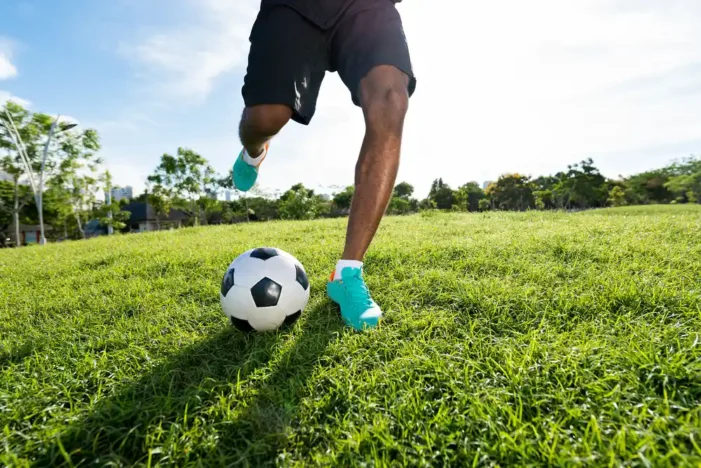
Soccer, football, baseball and lacrosse players are among those who have asked themselves can you wear cleats on turf? As more and more fields are converted from natural grass to artificial surfaces, selecting the right footwear is also increasingly critical. You won’t be able to give your best performance, nor will you feel as comfortable and you might even risk an injury.
This guide explains everything there is to know about Can You Wear Cleats on Turf, the difference between molded cleats on turf or dedicated turf shoes and how to weigh them up when deciding what’s best for your sport.
Table of Contents
ToggleUnderstanding the Field: Artificial Grass vs. Carpet Turf
The term turf is confusing because people use it to describe two completely different playing surfaces. To make the right footwear choice, you must look closely at what lies beneath your feet.
The Evolution of Synthetic Fields
Old-school artificial turf looks like a thin green carpet rolled out over a solid block of concrete. You still find this abrasive, hard surface in older indoor soccer facilities, field houses, and baseball batting cages.
Modern synthetic fields, known as 3G or 4G surfaces, mimic natural grass using long, individual polyethylene plastic blades. These fields use a thick, deep infill layer made of black rubber granules and silica sand to absorb impact.
Why Surface Depth Changes Everything
The depth of the field dictates how your shoes behave when you plant your foot to change direction. Natural grass yields under pressure, allowing long plastic or metal studs to cut through the sod and slide out sideways if your body rotates too far.
Synthetic carpet turf has zero depth, meaning long studs cannot penetrate the surface at all, leaving you balancing on hard plastic stilts. On 3G and 4G fields, standard outdoor studs penetrate the rubber infill, but they grab the underlying mesh backing with an aggressive, vice-like grip that does not let go when you twist.
Types of Cleats and How They Perform on Turf
Using the correct soleplate option ensures your feet interact safely with the synthetic ground. Manufacturers stamp specific abbreviations on shoe boxes to indicate the surface the shoe was engineered to handle.
Molded Cleats on Turf
Molded firm ground cleats, labeled as FG, are the most common outdoor shoes on the market. They feature a dozen long plastic or TPU studs designed to pierce natural dirt and grass.
When you use these outdoor cleats on artificial turf, performance drops significantly. The long studs sit on top of thin carpet surfaces, reducing your surface area contact to a fraction of an inch, which causes frequent slipping. On deep infill fields, the long, bladed profiles dig deep and create excessive rotational resistance, acting like a brake pad when you try to pivot.
Artificial Grass (AG) Cleats
Artificial grass cleats are specifically engineered for modern 3G and 4G synthetic fields with rubber infill. They feature an entirely different soleplate design than standard outdoor models, utilizing a higher volume of shorter, completely round studs.
Most AG studs are completely hollow in the center to shed heat and reduce weight while maximizing the surface area contact with the synthetic turf. The rounded shape allows the shoe to rotate smoothly in the rubber infill, giving you excellent linear traction without locking your foot into the ground during quick lateral cuts.
Artificial Grass vs Turf Cleats: What’s the Difference?
Choosing between an AG cleat and a TF turf shoe comes down to the depth of the synthetic grass and the environment where you play.
| Feature | Artificial Grass (AG) Cleats | Turf Shoes (TF) |
| Outsole Material | Hard TPU / Nylon Plate | Soft, Flexible Carbon Rubber |
| Stud Profile | 20–25 Short, Hollow Round Studs | 50+ Tiny Rubber Dimples / Nubs |
| Best Surface | Deep 3G/4G Turf with Rubber Infill | Thin Indoor Carpet over Concrete |
| Cushioning | Minimal Midsole Foam | Thick EVA Foam Layer |
AG models look like traditional outdoor cleats but use shorter, rounder studs to prevent turf bite. TF models look more like heavy-duty running shoes with a flat rubber bottom covered in dozens of miniature rubber nubs.
If you play on deep, premium outdoor synthetic fields, choose AG cleats for maximum competitive bite. If your league takes place inside an older indoor arena on thin green carpet, choose TF shoes to protect your feet from hard impacts.
How Turf Affects Cleat Performance and Safety
The synthetic construction of artificial grass changes the physics of how an athlete moves, cuts, and accelerates compared to natural soil.
The Problem with Friction and Heat
Artificial fields absorb sunlight and hold ambient temperature far more aggressively than living grass. On a warm afternoon, the synthetic blades and black rubber granules can reach temperatures exceeding 120°F.
Standard outdoor cleats feature thin soleplates that transfer this ambient heat directly into the bottom of your feet, causing painful blisters and hot spots. Specialized turf footwear utilizes thicker outsoles and heat-resistant compound materials to insulate your feet from the searing ground temperature.
Altered Ball Control and Bounce
Synthetic blades do not absorb water or compress the way natural turf does, which changes the speed of the game. The ball rolls significantly faster on artificial grass, and it bounces higher and truer because there are no natural divots.
Wearing bulky, aggressive outdoor cleats on a fast turf field limits your agility and dampens your touch on the ball. Shorter turf-specific profiles drop your center of gravity closer to the ground, allowing you to match the high-speed tempo of synthetic play.
Safety Risks of Wearing the Wrong Cleats on Turf
Stepping onto an artificial field with improper footwear is a primary driver of non-contact lower-limb injuries in amateur sports.
The Threat of Foot Lock and Joint Failures
When a long bladed outside stud makes contact with a 3G or 4G turf field it will touch the plastic mesh backing layer below. Imagine you’re running forward and you want to make a rapid, sharp lateral cut to shake a defender, but your knee turns and your foot is totally pinned to the turf.
This is a mismatch of mechanics, and causes a strong twisting force that shoots straight up your leg. There is no natural sod to give way or break up . Your ACL or ankle syndesmosis takes the whole rotational stress . This typically causes a catastrophic structural tear .
Thin carpet turf has little stress absorption since it is installed directly over asphalt or concrete bases. The hard plastic outdoor cleats you wear on this unforgiving terrain deliver a severe shock wave up your skeletal system with every single stride.
This repeated pounding over a lengthy season can lead to chronic ailments such as shin splints, plantar fasciitis, and severe lower back discomfort. Turf shoes address this by putting a large layer of compressed EVA foam in the midsole to cushion the impact on your joints from harder landings.
So, What Cleats Should You Wear on Turf?
The ideal footwear choice depends entirely on the sport you play and the specific rules of the local athletic complex hosting your games.
Are Cleats Good for Turf?
No, traditional long outdoor cleats are not good for turf because they compromise your safety and accelerate field degradation. While they offer great traction on wet, slippery natural grass, they provide erratic, unsafe grip on synthetic alternatives.
If you want the best experience on artificial grass, skip the standard outdoor models and invest in dedicated turf shoes or short-studded AG cleats.
Can You Wear Soccer Cleats on Turf?
Yes, you can wear soccer cleats on turf, provided they feature short, molded round plastic studs rather than long plastic blades. Avoid any soccer models designed for soft ground (SG) that feature metal-tipped studs or sharp aluminum edges.
The best soccer options for modern artificial grass are dedicated AG variants of popular models, which feature numerous hollow, circular plastic nubs that distribute your body weight evenly across the synthetic field.
Can You Wear Football Cleats on Turf?
Yes, you can wear football cleats on turf, but you must avoid aggressive skill-position cleats that feature long, pointed speed studs. Football involves immense lateral force during blocking and cutting, which amplifies the risk of dangerous foot lock on synthetic blades.
Look for football models designed specifically for artificial grass, or switch to a high-top turf shoe that offers thick ankle support paired with a multi-studded rubber outsole.
Tips for Choosing the Right Cleats for Turf
Selecting the perfect pair of shoes requires evaluating the stud layout, materials, and overall fit to match your specific playing conditions.
Check the Outsole Stud Layout
Flip the shoe over and examine the configuration of the soleplate before making a purchase. You want to see a high volume of small, circular studs distributed evenly across the entire bottom of the shoe.
Avoid any shoe that features triangular, bladed, or chevron-shaped studs on the perimeter of the soleplate. These geometric shapes act like hooks in artificial grass, preventing the clean rotational release your joints need to stay healthy.
Focus on Midsole Material and Comfort
If you regularly play on hard, compacted turf surfaces, prioritize shoes that feature visible foam cushioning through the heel and arch. Premium turf shoes utilize performance midsole foams that absorb vertical impact forces without sacrificing your responsiveness or field feel.
The upper material should feature a reinforced toe box, as abrasive synthetic turf wears down leather and thin knits much faster than natural grass fields.
Maximizing Field Quality and Performance
Maintaining excellent playing conditions requires a smart combination of regular field care and professional preservation services.
Footwear Maintenance and Field Integrity
To protect your synthetic fields from premature wear, always clean your shoe outsoles before stepping onto the turf. Mud, rocks, and natural dirt trapped in your studs grind down the synthetic plastic blades and contaminate the clean rubber infill layer.
Regularly check your studs for sharp edges or cracked plastic, as damaged footwear can sliced through the turf backing and cause expensive tears.
Conclusion
Yes, you can wear cleats on turf, but turf-specific cleats are the safest and most effective choice to protect both your traction and the field. Always consider the type of surface before choosing footwear to avoid injury and maintain performance. If you’re looking to upgrade your outdoor spaces with expert care, Robert’s Complete Care is here to help with top-quality Whittier landscape services designed to enhance your property’s beauty and value. Contact us today to transform your yard with professional precision!
FAQs
What type of cleats are best for turf?
Turf cleats or AG (Artificial Ground) cleats are the best choice because they provide safer grip and even pressure on synthetic surfaces.
Can wearing the wrong cleats damage turf?
Yes. Long studs from traditional cleats can dig into turf, damaging the surface and reducing its lifespan.
Are turf cleats safer than regular cleats on artificial grass?
Absolutely. Turf cleats are designed specifically for artificial surfaces, offering better stability and lower injury risk.
Can I use turf shoes on natural grass?
You can, but they won’t provide the same traction as regular cleats on real grass fields.
Do turf cleats last longer than regular cleats?
Generally, yes. Since they’re made for turf’s abrasive texture, they usually hold up better on synthetic fields.