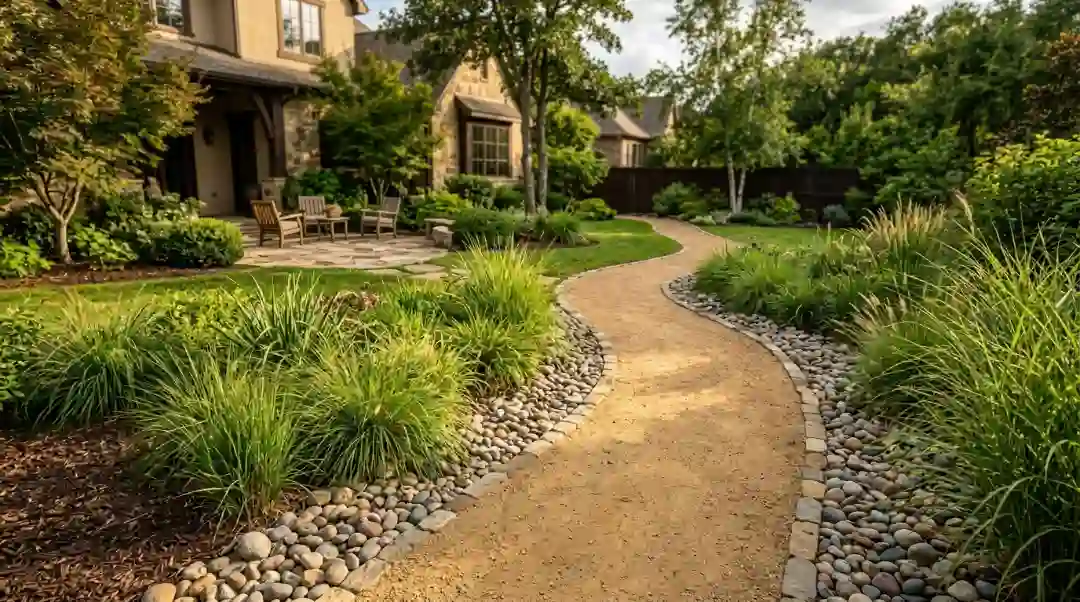
If you’ve been searching for a ground cover that looks natural, holds up under foot traffic, and won’t drain your wallet you’ve probably stumbled across decomposed granite. Most people haven’t heard of it until they’re knee-deep in a landscaping project, and then suddenly it’s everywhere.
Here’s the quick answer: What is decomposed granite? It’s a naturally occurring material formed when solid granite rock slowly breaks down over thousands of years into fine particles, grit, and small rock fragments. It’s used in pathways, patios, driveways, and garden beds as a low-cost, permeable, and attractive ground cover. This guide covers everything types, costs, installation, pros, cons, and how it stacks up against other materials.
A Guide to Decomposed Granite Pathway Materials
Granite is one of the hardest rocks on Earth. But given enough time, even the toughest rock breaks down.
What is decomposed granite at its core? It’s the end result of granite eroding naturally through weathering, pressure, and time. The finished material looks like coarse, gritty sand mixed with small rock flakes somewhere between gravel and dirt in texture.
It’s often referred to simply as “DG” in the landscaping world. The color ranges from golden yellow and tan to gray, reddish-brown, and even almost white, depending on the source rock.
It sits at an interesting middle ground it’s not as hard as concrete or pavers, but it’s far more durable than plain dirt or mulch. Think of it as hardscape with a soft, natural soul.
Types of Decomposed Granite
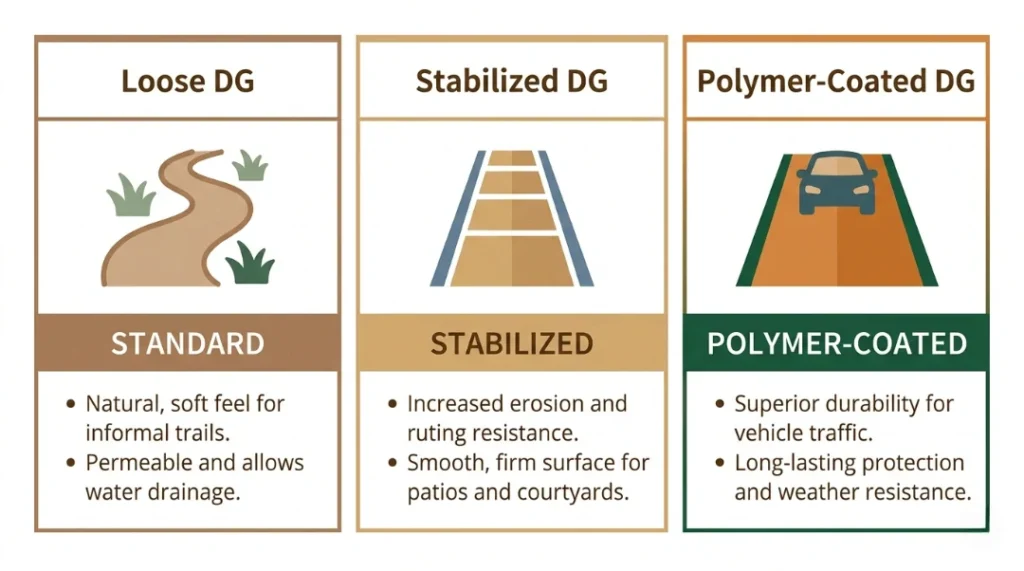
Not all DG is the same. There are three main forms, and picking the right one for your project makes a real difference.
1. Standard (Loose) Decomposed Granite
This is the most basic form DG in its natural, unaltered state. It’s loose, easy to spread, and the most affordable option.
It works well for low-traffic garden paths, tree rings, and decorative ground cover. The downside is that it can scatter with foot traffic and wash away in heavy rain without edging in place.
Best for: Garden borders, plant beds, decorative accents, low-traffic paths.
2. Stabilized Decomposed Granite
This version is pre-mixed with a natural binding agent, either organic-based or polymer-based, before it’s laid down. The binder locks the particles together once compacted and slightly moistened.
The result is a firmer, more cohesive surface that resists erosion and holds its shape much better than loose DG. It’s the most popular choice for residential and commercial pathways.
Best for: Walkways, high-traffic paths, bike trails, public gardens, golf cart paths.
3. Polymer-Coated (Wax Polymer) Decomposed Granite
This is the heavy-duty version. DG is coated with an engineered wax polymer that creates a sealed, non-permeable surface. It won’t get muddy, won’t produce dust, and handles steep slopes and extreme traffic well.
It’s the most expensive of the three types but requires the least maintenance long-term.
Best for: Steep driveways, high-traffic commercial areas, golf courses, steep slope paths.
What Does Decomposed Granite Look Like?
Decomposed granite texture is gritty, fine, and earthy. It looks like coarse sand mixed with small rock chips, typically in warm tones of tan, gold, gray, or reddish-brown. The exact appearance depends on the source rock, but it always has that natural, raw, outdoor feel.
In a finished landscape, it reads as clean and tidy especially when bordered by edging. It doesn’t scream “artificial.” It blends with plants, stone walls, and wooden structures naturally.
The color also stays relatively consistent over time, though it may lighten slightly in direct sun.
Using Decomposed Granite in Landscaping
DG is one of the most flexible landscaping materials available. Here’s where it genuinely works well:
Pathways and Walkways
Stabilized DG makes a firm, smooth walking surface. It compacts tightly and gives a clean, finished look without the cost of pavers or concrete.
It’s especially popular for garden paths, nature trails, and winding backyard walkways where a natural aesthetic matters.
Driveways
Loose DG alone isn’t ideal for driveways, but polymer-coated or well-stabilized DG can handle the weight of vehicles. It’s a much cheaper alternative to asphalt or concrete for residential driveways.
Patios and Seating Areas
Flat, compacted DG makes a surprisingly comfortable patio surface. It stays cooler than concrete in summer heat, which matters a lot in warm climates.
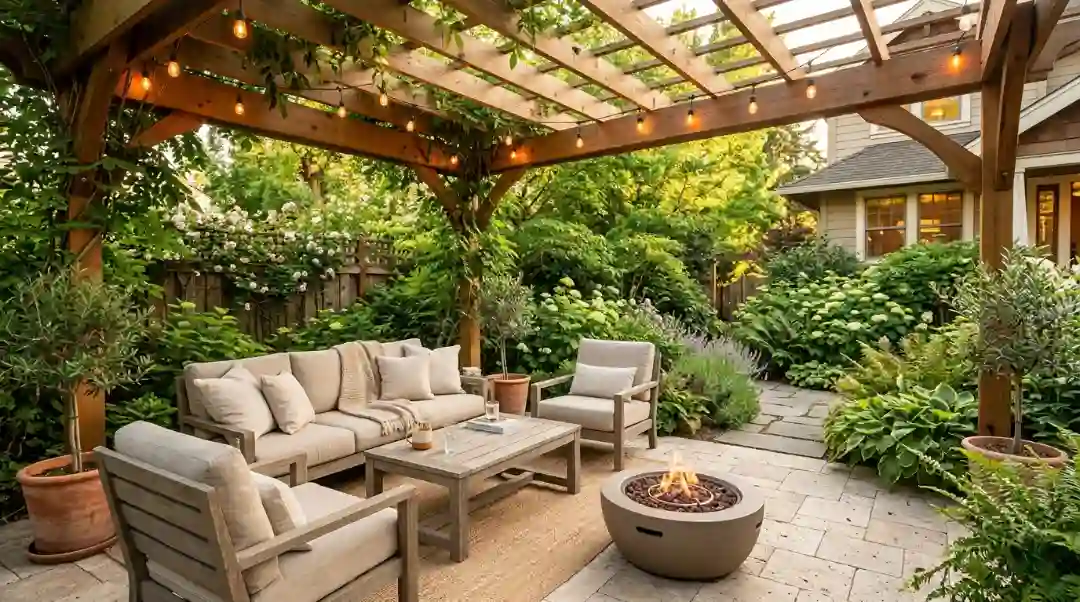
Pair it with a fire pit, outdoor furniture, or raised planters, and it looks intentional and polished.
Xeriscape and Desert Gardens
DG is a natural fit for xeriscape design — water-wise landscaping that uses drought-tolerant plants and minimal irrigation. Its permeability keeps water in the ground instead of running off, which supports plant health.
This is one reason it’s extremely popular in Southern California landscaping, where water conservation is a real priority.
Around Trees and Plants
DG works as a natural mulch alternative around trees and garden beds. It suppresses weeds, retains moisture, and looks cleaner than bare dirt.
Just keep it a few inches away from the base of plants direct contact can retain too much moisture against stems and roots.
How Much Does Decomposed Granite Cost?
Here’s a realistic breakdown:
| Material Type | Cost Per Ton | Cost Per Cubic Yard |
| Loose DG | $25 – $50 | $30 – $60 |
| Stabilized DG | $50 – $100 | $60 – $110 |
| Polymer-Coated DG | $100 – $150+ | $115 – $170+ |
Installation labor typically adds $1–$3 per square foot depending on your location and project complexity.
For a standard 200 sq ft garden path at 3 inches deep, you’d need roughly 1.5–2 tons of DG. That puts your material cost anywhere from $50 to $200+ depending on the type you choose.
Buying from a local supplier or landscape yard is almost always cheaper than purchasing bagged DG from a home improvement store.
How to Install Decomposed Granite (Step-by-Step)
Installing DG is a manageable DIY project if you plan it properly. Here’s how it works:
Step 1 Mark and edge the area. Define the space with steel edging or bender board. This keeps DG contained and gives the finished project a clean edge.
Step 2 Excavate. Dig down about 3–4 inches. This gives room for the DG layer while keeping the finished surface flush with surrounding areas.
Step 3 Compact the base soil. Use a hand tamper or rented vibratory plate compactor to firm up the base. An uneven base will give you an uneven surface.
Step 4 Lay weed fabric. Spread landscape fabric over the compacted soil. This blocks weeds from pushing up through the DG without blocking water drainage.
Step 5 Add and spread DG. Pour in DG and rake it level. Aim for about 2.5–3 inches of depth.
Step 6 Compact and finish. Use the plate compactor again to pack the DG tight. For stabilized DG, lightly mist with water as you compact to activate the binder.
Benefits of Decomposed Granite
Here’s why so many homeowners and landscapers keep coming back to DG:
Permeable surface. Water drains straight through loose and stabilized DG, reducing runoff and keeping groundwater levels healthy. This matters for both plant health and environmental responsibility.
Affordable. It costs a fraction of concrete, pavers, or asphalt. For large projects, the savings add up fast.
Natural appearance. DG landscape material blends seamlessly with plants, stone, and wood. It doesn’t look out of place the way concrete or asphalt can.
Low maintenance. Once installed properly, it mostly takes care of itself. Occasional raking and light re-compacting is usually all it needs.
Versatile. Paths, patios, driveways, plant beds, xeriscape gardens DG fits into nearly any outdoor project.
Eco-friendly. It’s a natural material with no synthetic chemicals. It supports healthy drainage and works well in sustainable landscape design.
Disadvantages of Decomposed Granite
DG isn’t perfect. Here’s what to know before committing:
It can shift and scatter. Loose DG moves around under foot traffic, especially without edging. Stabilized versions handle this better, but it’s still not as locked-in as concrete.
Weeds can push through. Without weed fabric underneath, you’ll get weeds coming up through the surface over time. Proper installation solves this, but skipping that step causes problems later.
It tracks indoors. Small particles stick to shoes and get carried inside. It’s a minor issue, but worth knowing if you’re installing it right outside a door.
Needs occasional replenishment. Over a few years, DG can compact down or wash away in heavy rain. Topping up the layer every few years is normal.
Not ideal for steep slopes (loose type). Loose DG will wash downhill in rain. Stabilized or polymer-coated DG is a much better choice for any slope over 5%.
Decomposed Granite vs Other Materials
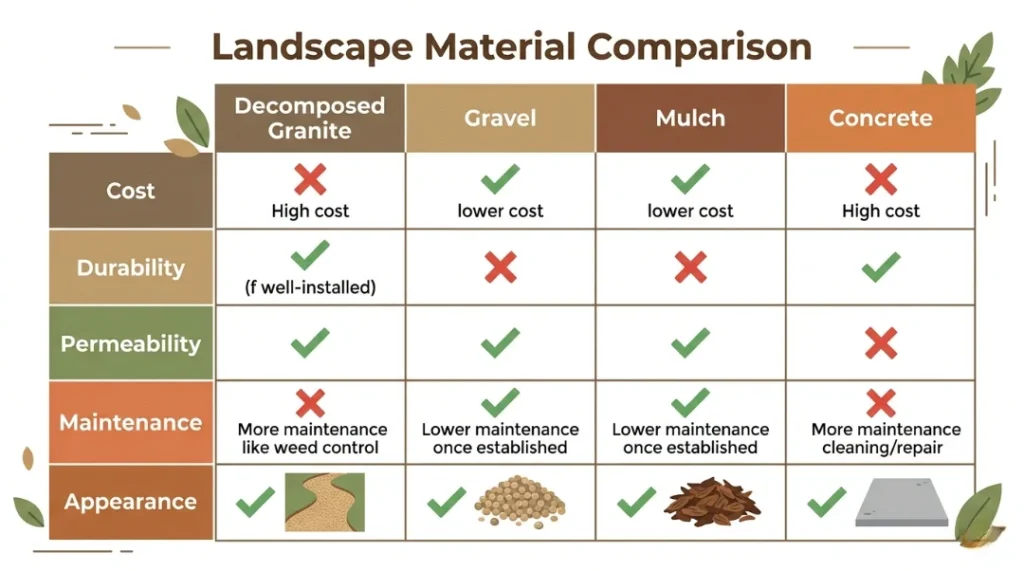
Decomposed Granite vs Gravel
Both are loose materials, but they behave differently underfoot. Gravel has larger, rounder particles that shift and crunch when walked on. DG compacts into a firmer surface and has a more refined, natural appearance.
DG wins for pathways and patios. Gravel is better for drainage layers and around utility areas.
Decomposed Granite vs Mulch
Mulch breaks down over time and needs replacing every 1–2 years. DG lasts much longer and doesn’t attract insects the way organic mulch can.
Mulch is better directly around plant roots for moisture retention. DG is better for open areas, paths, and decorative coverage.
Decomposed Granite vs Concrete
Concrete is harder, permanent, and more expensive. DG is softer, semi-permanent, permeable, and costs a fraction of the price.
If you want a long-term, zero-maintenance surface, concrete wins. If you want something natural-looking, budget-friendly, and water-permeable, DG is the better choice.
Landscape Design in Whittier, CA
If you’re based in Southern California and considering DG for your outdoor space, the climate here is genuinely ideal for it. The dry summers, mild winters, and water conservation requirements in the region make DG one of the most practical ground cover choices available.
At Robert’s Complete Care, we help homeowners in Whittier and surrounding areas plan and install decomposed granite for pathways, driveways, patios, and full landscape design projects. Our team understands local soil conditions, drainage needs, and how to choose the right DG type for each specific project.
If you want a finished outdoor space that looks clean, holds up to daily use, and fits within a real budget, professional landscape design in Whittier CA through Robert’s Complete Care is worth a conversation.
Frequently Asked Questions
Does decomposed granite get muddy?
Loose and stabilized DG don’t typically get muddy because water drains through the material rather than pooling on top. Polymer-coated DG is fully sealed and completely mud-free. The key is proper installation on a compacted, well-draining base.
Poor base preparation is the main reason DG turns muddy water can’t drain if the soil underneath is compacted clay.
How long does decomposed granite last?
Properly installed stabilized DG can last 7–10 years before needing significant replenishment. Polymer-coated DG lasts even longer. Loose DG may need topping up every 2–3 years depending on traffic and weather.
Regular light maintenance raking, occasional compacting, and adding a thin fresh layer extends the life considerably.
Is decomposed granite good for dogs?
Yes, DG is generally safe for dogs. It doesn’t splinter like wood chips, doesn’t get as hot as concrete in summer, and compacts well enough that dogs won’t kick it everywhere. Loose DG may scatter with heavy digging, so stabilized DG is the better choice for dog runs.
Avoid using DG in areas where dogs dig aggressively; the loose type won’t hold up.
Does decomposed granite attract bugs?
Unlike organic mulch, DG doesn’t decompose and doesn’t provide food or habitat for insects. It’s not a natural attractant for bugs. It won’t harbor termites, ants, or other pests the way wood-based materials can.
This makes it a strong choice for areas close to the home’s foundation where pest prevention matters.
Can you use decomposed granite around plants?
Yes. DG works well as a ground cover around trees, shrubs, and drought-tolerant plants. It suppresses weeds and allows water to reach roots. Keep it a few inches away from plant stems to avoid moisture buildup that could cause root rot.
It’s particularly effective in xeriscape garden designs where water conservation and low maintenance are both priorities.
What is the difference between decomposed granite and gravel?
Decomposed granite is finer, compacts into a firm surface, and looks more natural. Gravel consists of larger, rounder particles that stay loose and don’t compact. DG is better for walkable surfaces; gravel is better for drainage applications.
The two are sometimes confused, but they serve different purposes in landscaping.