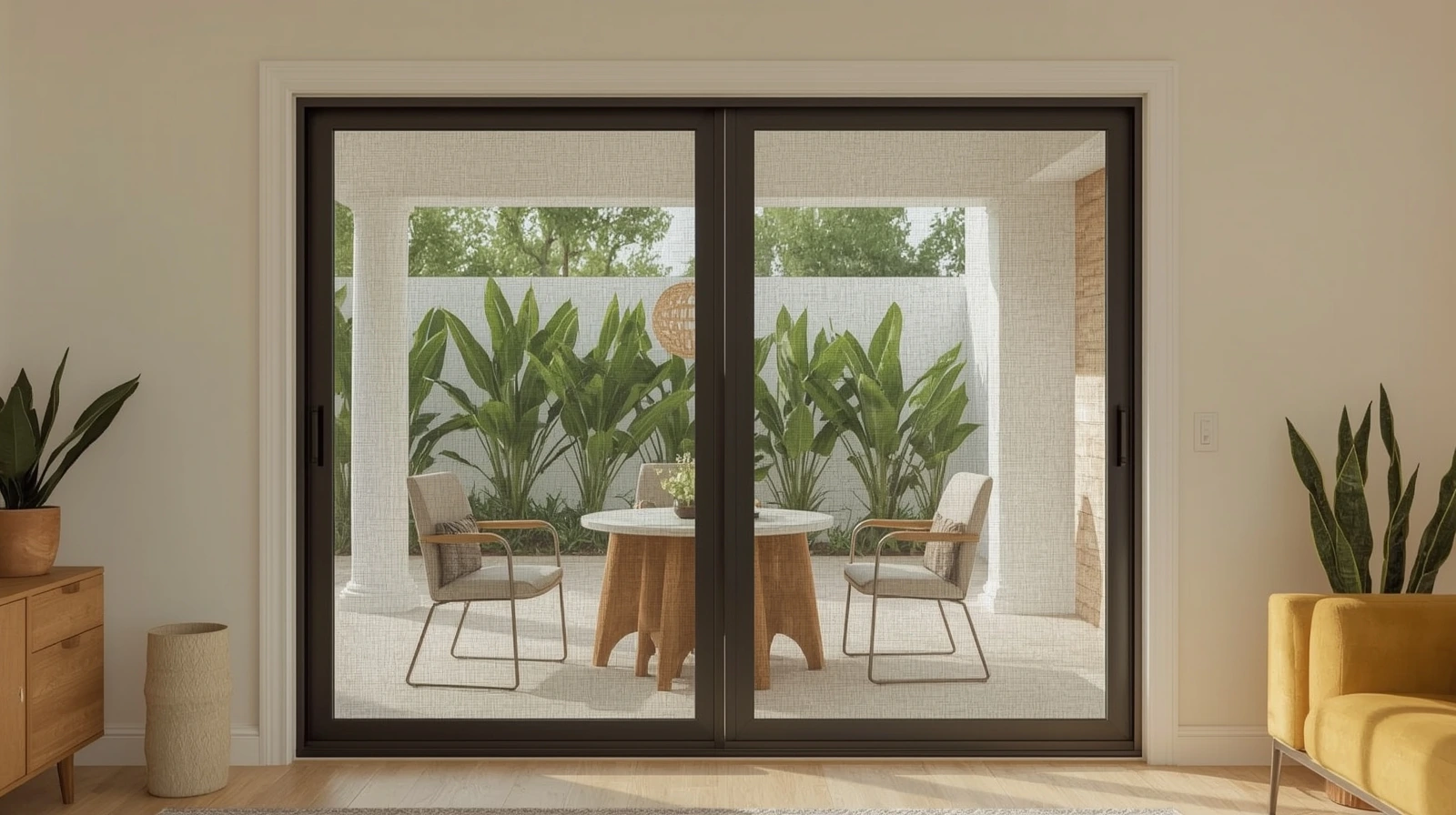
If you’ve been battling a missing, broken, or sagging screen door all summer, you already know the frustration. Bugs get in, fresh air stays out, and every trip to the patio feels like an obstacle course. The good news? Learning how to install a sliding patio screen door is a manageable DIY project that most homeowners can finish in a couple of hours with basic tools.
This guide walks you through everything, from measuring the opening correctly to adjusting the rollers for a perfect glide. We’ll also cover when to repair instead of replace, what tools you actually need, and the most common mistakes that cause new screen doors to stick, sag, or fall off track.
What Is a Sliding Patio Screen Door and Why It Matters
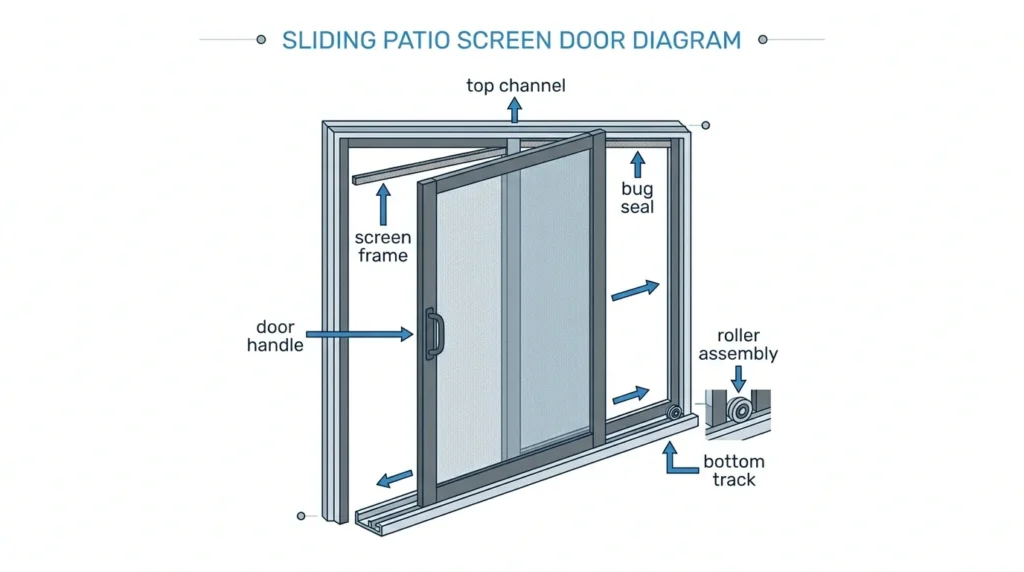
A sliding patio screen door is a lightweight framed screen that runs along a top and bottom track, parallel to your sliding glass door. It lets in fresh air while keeping out insects, debris, and dust. Most frames are made from aluminum or vinyl, and the mesh is typically fiberglass or aluminum screen material.
Beyond comfort, a working screen door actually reduces how often you run the AC. The U.S. Department of Energy notes that natural ventilation through open windows and doors can significantly reduce cooling costs in mild climates. For Whittier homeowners dealing with warm Southern California summers, that’s a real benefit worth protecting.
When to Replace vs. Repair Your Sliding Screen Door
If your screen door is sagging, sticking, or off track, you don’t always need a new one. Roller adjustment fixes most sliding and alignment problems in under 20 minutes. But if the frame is bent, the mesh has large tears, or the track is cracked, replacement makes more sense than patching.
Here’s a quick way to decide:
- Repair if: rollers are intact but dirty, the door slides rough, the screen has a small hole, or it’s just off the track.
- Replace if: the frame is warped or cracked, the mesh is badly deteriorated, rollers are broken beyond adjustment, or there’s a large gap between the screen and the door frame that can’t be fixed by tensioning.
A brand-new adjustable-fit sliding screen door typically costs $40 to $120 at a home improvement store. Professional installation adds $75 to $200 depending on door size and condition of the existing track.
Tools and Materials You’ll Need Before You Start
Getting the right tools together before you start saves a lot of back-and-forth. Here’s what you’ll need for a standard sliding patio screen door installation:
Tools:
- Phillips head screwdriver
- Flathead screwdriver
- Pry bar or putty knife
- Measuring tape
- Level
- Robertson screwdriver (for some brands)
Materials:
- Replacement sliding screen door (sized to your opening)
- Dry spray lubricant (silicone-based only, never oil-based)
- Replacement rollers (if existing ones are worn)
- Bug seal or weatherstrip (if not included with the door)
One important note on lubricant: oil-based sprays attract dirt and debris over time, which makes the door stick worse. Always use a dry silicone spray on screen door tracks.
How to Measure for the Right Sliding Patio Screen Door Size
To measure for a sliding patio screen door, measure the width of the screen track opening from inside edge to inside edge, and the height from the top channel to the bottom track. Use the smallest measurement if you get slightly different readings at different points.
Most standard sliding patio doors use screen doors between 60 and 72 inches wide and 80 inches tall, but openings vary. Here’s the process:
- Measure the width of the track opening at the top, middle, and bottom. Note the smallest number.
- Measure the height on both the left and right sides. Note the smallest number.
- Check if your opening uses a fixed fin track (screen door slides into a groove) or a surface-mounted track (rollers ride on a raised rail). This affects which door style you buy.
- If you’re buying an adjustable-fit door, choose a size slightly larger than your opening since adjustable models expand to fit.
Buying a door that’s even half an inch too small means it won’t sit properly in the track. Getting the measurement right the first time saves a return trip.
Step-by-Step: How to Install a Sliding Patio Screen Door
This is the core of the project. Follow these steps and you’ll have your screen door running smoothly in about an hour.
Step 1: Prepare the Track
Start by cleaning both the top channel and the patio screen door bottom track. Dirt, old debris, and dried lubricant cause more installation problems than anything else. Use a stiff brush or old rag to clear both tracks completely.
Check the tracks for dents or bends. A bent track won’t let the door slide freely. Minor dents can sometimes be gently pressed back with pliers, but if the track is seriously damaged, replacing it is the cleaner fix.
Step 2: Attach the Rollers to the Door
If your screen door is new and unassembled, attach the rollers to the bottom of the door frame first. Most rollers click or screw into a pocket at each end of the bottom rail. Make sure they spin freely before you move on.
Set the roller adjustment screws to the middle position so you have room to raise or lower them after installation.
Step 3: Insert the Door into the Top Channel
Tilt the top of the screen door frame into the upper track at an angle. Slide it all the way into the top channel until it seats firmly. The door should have enough vertical slack in the top channel to allow the bottom to swing inward.
Step 4: Set the Bottom Rollers onto the Lower Track
With the top of the door seated in the upper channel, use a pry bar or putty knife at the bottom corner of the door to gently depress the rollers. Lower the bottom of the door onto the patio screen door bottom track one side at a time. The rollers should click or drop onto the track.
Don’t force it. If the door won’t drop into the lower track, the top channel may not be seated deep enough, or the roller adjustment screws may be set too low.
Step 5: Adjust the Door Handle Placement
Place the door handle on the same side as the sliding glass door handle. The operating handle should face the interior. Most handles snap or screw into a pre-drilled slot on the door frame.
Step 6: Test the Door Slide
Slide the door back and forth several times. It should move smoothly with light effort. If it drags, binds, or wobbles, move to the roller adjustment step below before going further.
How to Adjust Screen Door Rollers for a Smooth Slide
Sliding screen door roller adjustment is the most important finishing step. Poor roller alignment causes the door to drag, bind, or come off the track entirely. Most issues fix with a simple screwdriver adjustment.
Here’s how to do it:
- Locate the two adjustment screws at the bottom of the door, one at each end.
- Turning the screw clockwise raises the door (wheels lower, door lifts).
- Turning the screw counterclockwise lowers the door (wheels raise, door drops).
- Aim for about 1/4 inch of clearance between the door bottom and the track when rollers are set correctly.
- Check the “reveal,” which is the gap between the screen frame and the patio door frame. This gap should be even, parallel, and consistent from top to bottom. If it’s uneven, adjust one roller up or down until both sides match.
If the door still won’t slide straight after adjustment, check the track for debris or bends. A door that leans or tilts usually points to uneven roller heights on each side.
How to Lubricate and Maintain Your Screen Door Track
Once the door is installed and adjusted, spray a thin coat of dry silicone lubricant along both the top channel and the bottom track. Slide the door back and forth a few times to spread it evenly.
Repeat this every 3 to 6 months, or whenever the door starts to feel sticky. This one simple habit prevents most of the dragging and sticking problems that lead people to think their screen door is broken when it just needs a cleaning and a quick spray.
For deeper maintenance, clean the tracks with a stiff brush and mild soap once a season. Inspect rollers annually for wear. Rollers that are cracked, flat-spotted, or wobbling should be replaced, as worn rollers are the top cause of doors that repeatedly fall off track.
Common Installation Mistakes and How to Avoid Them
Even a straightforward job like screen door track installation can go sideways fast if you skip a step. Here are the mistakes that come up most often:
- Not cleaning the track first. Old grease, dirt, and debris in the track make it almost impossible to get the door seated right. Clean before you start, not after.
- Skipping the reveal check. If the gap between your screen and the door frame is uneven, the door will bind and wear unevenly. Always check for a parallel reveal before calling the job done.
- Using oil-based lubricant. It feels smooth at first, but it gathers dust and makes things worse within weeks. Silicone-only.
- Setting rollers too low. If rollers are wound all the way down, the door sits too low and drags on the threshold. Start with rollers at a mid-height setting.
- Buying the wrong size door. Many homeowners guess instead of measuring. A door that’s too small won’t track properly, and one that’s too big won’t fit in the opening at all.
- Ignoring a bent track. Installing a new door on a damaged track is a short-term fix. The door will come off track again within weeks. Fix or replace damaged track sections first.
Troubleshooting: Screen Door Won’t Stay On Track or Keeps Sticking
If your door keeps jumping off the lower track, the rollers are likely set too high or the bottom track has a gap or dip. Lower the rollers slightly and check that the track is level and fully secured to the threshold.
If the door sticks or binds in one spot, run your finger along the track in that area and check for a raised edge, debris, or a small dent. Even a grain of sand jammed under a roller can stop a door cold.
For a door that was working fine but suddenly got difficult, check whether the door frame itself has shifted. Temperature changes and house settling can cause the frame opening to shift slightly over time. Re-adjusting the rollers usually corrects this without any other work.
Final Thoughts
Knowing how to install a sliding patio screen door is one of those DIY skills that pays off every single summer. A properly installed, well-adjusted screen door keeps your home comfortable without letting in bugs or dust, and it costs very little to do it right.
If you’re in the Whittier area and your patio setup needs more than a screen door swap, Robert’s Complete Care handles full outdoor living improvements, including Landscape Design Whittier CA services that transform patios, yards, and outdoor spaces into places you actually want to use. A great screen door is the first step; a well-designed outdoor space is the complete picture.
Have questions about your specific screen door or outdoor project? Contact Robert’s Complete Care today and get answers from a local team that knows Whittier homes inside and out.
People Also Ask
Can I install a sliding patio screen door by myself?
Yes. Most sliding patio screen door installations are one-person jobs. The door is lightweight, and no special skills are required beyond basic tool use. The whole process takes 30 minutes to 2 hours depending on whether you need to prep the track or adjust rollers.
How do I put a screen door back on track?
To put a screen door back on track, loosen the roller adjustment screws slightly to create slack, tilt the top of the door into the upper channel first, then use a putty knife to depress the bottom rollers onto the lower track. Retighten the roller screws once seated.
What type of screen mesh is best for a patio door?
Fiberglass screen mesh is the most common choice. It doesn’t crease, it’s easy to cut, and it handles outdoor exposure well. Aluminum mesh is more durable but shows dents more easily. For pest-heavy areas, look for no-see-um mesh with a tighter weave.
How do I stop my sliding patio screen door from sticking?
Clean the top and bottom tracks, then spray them with dry silicone lubricant. If the door still sticks, check the roller adjustment and the reveal for uneven gaps. Most sticking problems come from dirty tracks or mis-adjusted rollers, not the door itself.
How long does a sliding screen door last?
With regular cleaning and maintenance, a quality aluminum-framed sliding screen door can last 15 to 20 years. Fiberglass mesh typically needs replacement every 5 to 10 years depending on sun exposure and wear.
Do I need to remove the patio door to install the screen door?
No. The sliding glass door stays in place. The screen door installs in its own separate track that runs parallel to the glass door track.