Most people mow the lawn, park the mower, and never think twice about it. But grass clippings, dirt, and dried debris build up fast underneath that deck, and they quietly rob your mower of cutting power with every pass. If your lawn has been looking ragged lately despite regular mowing, a dirty mower is often the real culprit.
This guide covers exactly how to clean lawn mower parts the right way, whether you own a gas push mower, a riding mower, or a battery-powered electric model. By the end, you’ll know the safest approach, the right tools, how often to do it, and a few pro tricks that make the job easier each time. Let’s get into it.
Why Cleaning Your Lawn Mower Deck Matters

Skipping deck cleaning is one of the most common reasons mowers underperform or break down early. Dried grass traps moisture against the metal, leading to rust, and compacted debris blocks airflow, causing the engine to work harder and cut unevenly.
Think of the mower deck like a carburetor. When it’s clean, airflow moves freely, the blade spins efficiently, and grass discharges cleanly. When it’s caked in old clippings, the whole system labors. Over time, that extra strain shortens blade life, strains the belt (on riding mowers), and can even warp the deck housing.
There’s also a practical safety angle. Thick, dried clippings can clog the discharge chute and cause dangerous blowback. Regular cleaning keeps that risk minimal.
What You’ll Need to Clean Your Mower Deck
You don’t need fancy equipment for this job. Here’s what actually works:
- Putty knife or plastic deck scraper (for dried clippings)
- Stiff-bristle brush (for loosening compacted debris)
- Garden hose with spray nozzle (standard pressure is enough for most jobs)
- Dry rag or old towel (for drying the deck)
- Silicone spray or WD-40 (prevents future clipping buildup)
- Rubber gloves (protect your hands near blades)
- Safety glasses (debris can fly when scraping)
- Wooden block or deck lift (for safe deck access)
On riding mowers, a hydraulic deck lift or aftermarket mower lift stand makes access significantly easier and safer. For walk-behind models, a simple wooden block under the mower frame works fine.
Prepare Your Mower: Safety First
This step is non-negotiable. Before touching the underside of any mower, you must disable the ignition system.
On gas mowers: Disconnect the spark plug wire by pulling the rubber boot away from the plug. This prevents any accidental engine start while your hands are near the blade.
On electric or battery-powered mowers: Remove the battery pack entirely. Don’t just turn it off. The motor can still receive a signal on some models if the pack remains connected.
Also, let the engine cool down completely if you’ve been mowing. Hot engine components and fuel vapors are a genuine fire risk when you start spraying water or applying sprays near the engine bay.
Tilt the mower with the air filter and carburetor side facing up. This prevents oil from flooding into the cylinder and causing a hard-start or smoke issue the next time you fire it up.
Tools & Safety Checklist (Quick Review)
Before starting, run through this list mentally:
- Spark plug wire disconnected (or battery removed)
- Mower is cool to the touch
- Tilted with the carburetor side up (gas models)
- Rubber gloves and safety glasses on
- Working on a flat, stable surface
- Garden hose accessible nearby
Once those boxes are checked, you’re ready for the actual cleaning.
Step-by-Step Cleaning Methods
Step 1: Scrape Off the Bulk of the Buildup
Use your putty knife or plastic scraper to remove thick layers of compacted grass clippings and dirt from the deck’s underside. Work in the direction of the discharge chute to push debris out rather than deeper in.
Don’t use a metal scraper on plastic decks. It’ll gouge the surface and create rough spots where clippings grip even harder next time.
Step 2: Brush Away Loose Debris
After scraping, switch to the stiff-bristle brush to clear out residual material from corners, around the blade bolt, and along the deck walls. Pay attention to the discharge chute opening. It clogs easily and is often the source of uneven cutting.
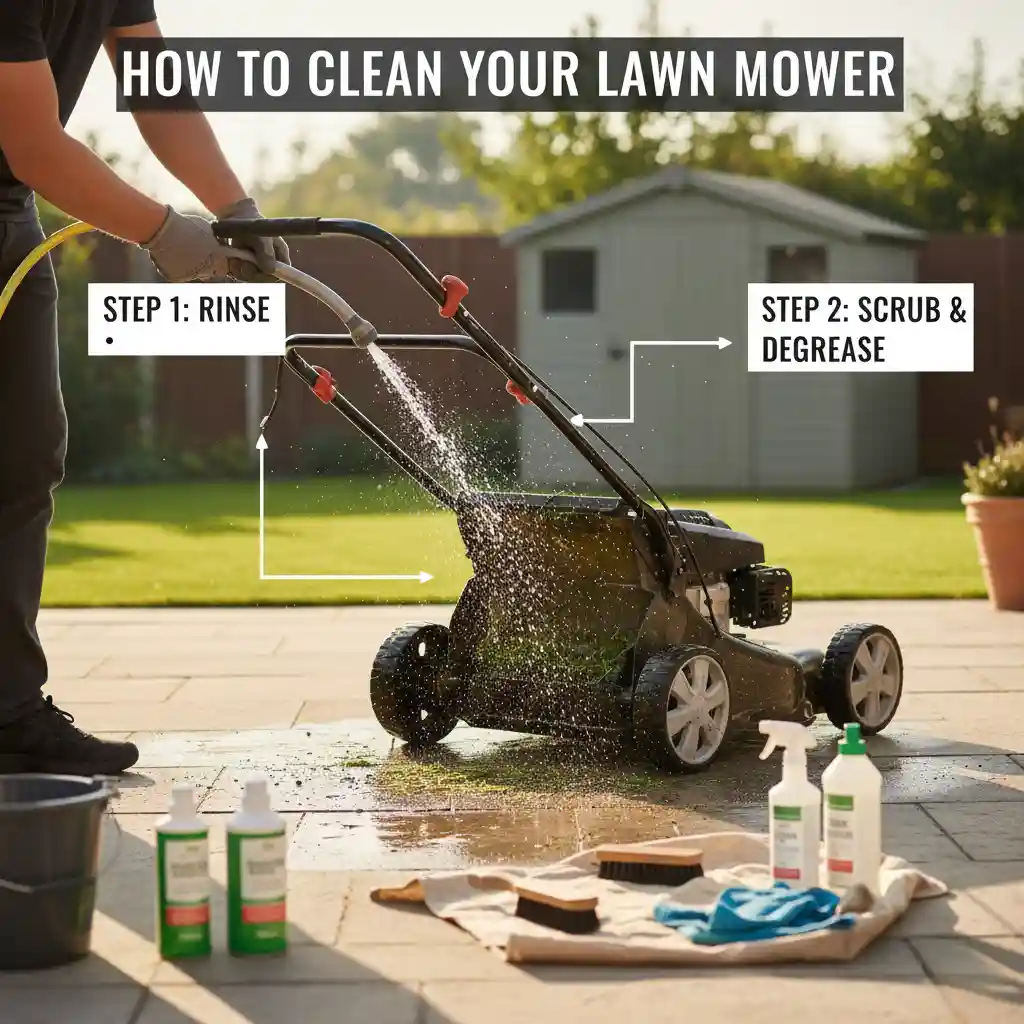
Step 3: Rinse With a Garden Hose
Use a strong spray to rinse off remaining particles. Aim along the inner deck curves to flush debris out through the discharge opening. Don’t use an unrestricted flow directly at the spindle or blade bearing. Excess water in those areas can wash out grease and shorten bearing life.
Step 4: Dry Thoroughly
This step is where most people cut corners. A wet deck leads to rust, especially in the corners where water pools. Use a dry rag to wipe down as much of the surface as you can reach. Then let it sit in open air for 15 to 20 minutes before the next step.
If you’re in a humid climate, a quick pass with a leaf blower speeds up drying significantly.
Step 5: Apply Silicone Spray
Once the deck is fully dry, apply a light, even coat of silicone spray or a dedicated mower deck spray to the underside. This creates a non-stick surface that makes grass much less likely to stick during future mowing sessions. Reapply after every 3 to 4 cleanings.
Some homeowners use cooking spray (PAM) as a budget alternative. It works short-term but breaks down faster and can smell unpleasant when the mower heats up.
Step 6: Reconnect and Test
Reconnect the spark plug wire or reinsert the battery. Start the mower and let it run for 30 seconds. Listen for any unusual sounds, particularly around the blade. If everything sounds smooth, you’re done.
Best Way to Clean Mower Deck: Gas vs Electric
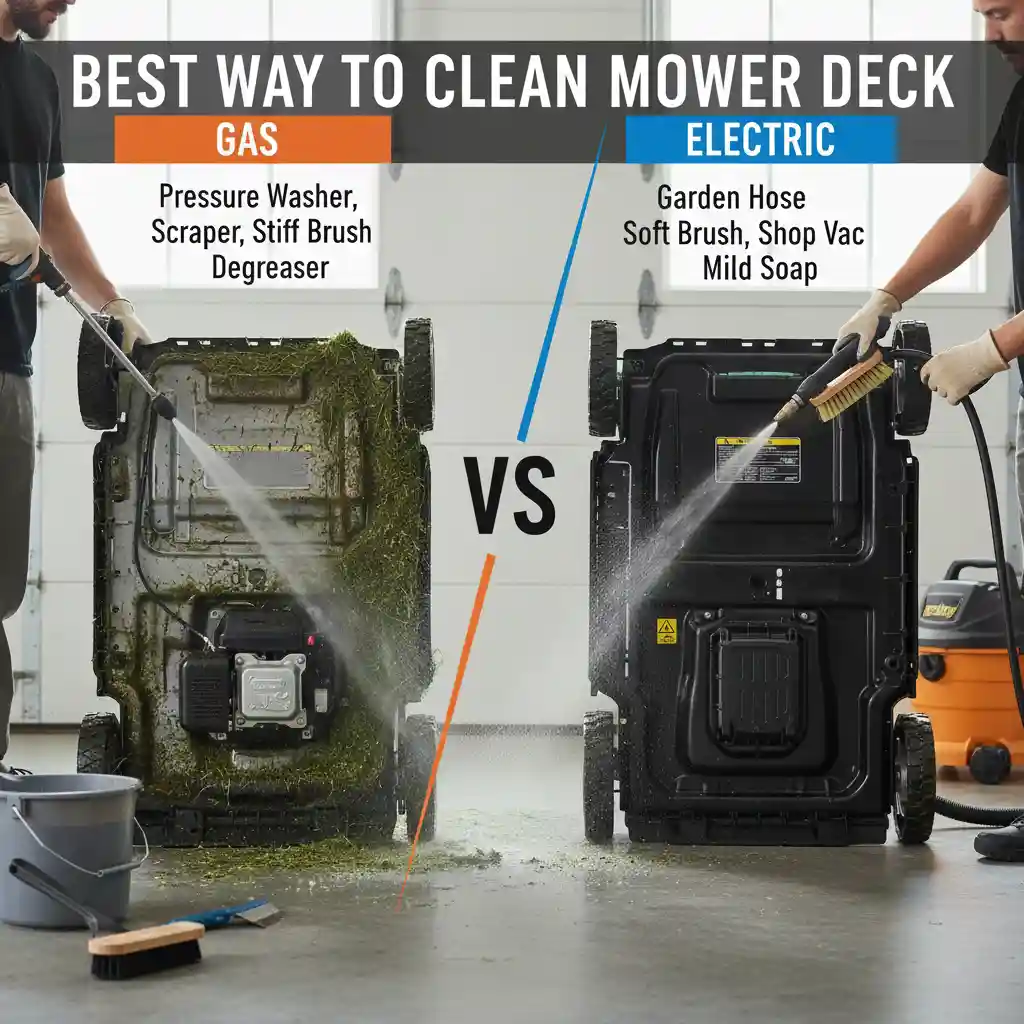
These two mower types share most of the same cleaning steps, but a few key differences are worth knowing.
Gas Mowers
The main concern with gas mowers is oil seepage during tilting. Always tilt toward the air filter side (not the carburetor side) to avoid oil draining into the filter or flooding the cylinder. After cleaning, check the oil level. Some oil may shift during tilting.
Gas mower decks are typically steel, so rust prevention with silicone spray is especially important. A small amount of surface rust is normal and manageable. Widespread flaking or pitting means you may need to sand and apply a rust-resistant deck paint before it gets worse.
Electric and Battery-Powered Mowers
Electric models are generally safer to clean since there’s no fuel system to worry about. However, keep water away from the motor housing and any electrical connectors. These components are usually rated for splash resistance, not direct spray.
The decks on many electric mowers are molded plastic, which doesn’t rust but can crack over time if struck repeatedly by hidden debris. Inspect the deck housing for cracks each time you clean, as cracks can let debris escape at high speed during mowing.
How Often Should You Clean Your Lawn Mower Deck?
The general rule is to clean the mower deck after every 25 hours of use, or at minimum at the start and end of each mowing season. If you’re mowing in wet conditions or cutting thick, overgrown grass, a quick clean after every session prevents major buildup.
A good visual cue: if you can see a layer of packed clippings more than a quarter-inch thick on the deck, it’s already overdue for cleaning.
Here’s a simple maintenance frequency guide:
- After every mow (optional but ideal): Quick rinse or brush if you mow wet grass
- Every 2 to 3 weeks during mowing season: Full scrape, rinse, and dry
- Start of season: Deep clean plus blade inspection
- End of season: Full clean, dry thoroughly, apply silicone spray before storage
Mowing dry grass extends the time between thorough cleanings. Wet clippings stick much more aggressively and accelerate buildup.
Can You Use a Pressure Washer to Clean a Mower Deck?
You can use a pressure washer on a steel mower deck, but it requires care. Keep the pressure below 1,200 PSI and avoid directing the nozzle at the spindle, bearings, blade bolt, or any part of the engine. High-pressure water strips grease from bearings fast, leading to premature spindle failure.
On plastic decks, high pressure can chip or crack the housing, especially on older models where the plastic has become brittle. A standard garden hose with a good spray nozzle is almost always sufficient and carries less risk.
If you do use a pressure washer, follow up immediately with thorough drying and a fresh coat of silicone spray on any metal surfaces. And after pressure washing, re-grease all spindle fittings that have grease zerks (if your mower has them).
Pro Tips for Longer Deck Life
These are the habits that separate people who replace mower decks every few years from those who run the same machine for a decade.
Mow dry when possible. Wet clippings stick to the deck like glue. If you must mow after rain, clean the deck the same day.
Raise your cutting height slightly. A deck set just a touch higher generates less suction against the grass, meaning less debris gets packed against the deck walls.
Keep your blade sharp. A sharp blade creates cleaner cut pieces that discharge freely. Dull blades create mushy, packed clippings that cling.
Store the mower on a flat surface. Storing on uneven ground can stress the deck housing over time.
Inspect the discharge chute monthly. This is the most overlooked part of the mower. A partially clogged chute backs up debris into the deck faster than anything else.
Why Professional Care Still Matters
Even with good DIY habits, professional service can catch issues early. At Robert’s Complete Care, we often see mowers fail simply due to neglected cleaning and maintenance.
If lawn care feels overwhelming or time-consuming, professional Lawn Care and Maintenance Services in Whittier can help protect both your lawn and equipment while saving you time.
You can also better plan your budget by reviewing our related guide: How Much Does Lawn Mowing Cost.
Conclusion
Learning how to clean lawn mower properly is one of the simplest ways to improve lawn health and extend equipment life. With the right tools, safe preparation, and regular care, you can prevent grass buildup, reduce rust, and keep your mower running smoothly season after season.
If you’d rather leave lawn mower care and ongoing yard maintenance to professionals, contact us Robert’s Complete Care today. Our experienced team is ready to help keep your lawn healthy, your equipment protected, and your outdoor space looking its best. Reach out now to schedule service or get expert advice tailored to your lawn’s needs.
FAQs
How often should I clean the deck of my lawn mower?
You should try to clear out big clumps after every mow. At least twice a season, once in the midst of summer and once before putting things away for the winter, you should clean them thoroughly with water and a scraper.
Can you clean a mower deck without taking off the blade?
Yes, it’s safe as long as you unplug the spark plug. It’s easy to scrape around the blade. But taking the blade off once a year makes it far easier to keep the mower deck from rusting.
What is the best way to clean the buildup on a lawn mower deck?
A citrus-based degreaser like Simple Green works great. They break down the “glue” in the grass without hurting the paint of the mower.
Can I use a power washer?
Yes, however the nozzle should be at least 12 inches away from the surface. Do not spray the top of the engine, where the air filter and carburetor are.
How can I clean a mower deck without hurting the paint?
Instead of a metal scraper, use a plastic one. This stops scratches that can cause rust.