Most people mow their lawn on a schedule. Almost nobody sharpens their mower blade on one. That’s exactly where the problem starts. A dull blade doesn’t cut grass; it tears it. And torn grass turns brown, invites disease, and makes your lawn look worse after mowing than it did before. So before you fire up the mower again, it’s worth asking: when did you last sharpen that blade?
So, how often should you sharpen lawn mower blades? The general rule is to sharpen after every 20 to 25 hours of mowing time. For most homeowners mowing a standard-sized lawn weekly, that works out to once or twice per mowing season. If your lawn is large, rocky, or full of roots and debris, you’ll need to sharpen more often.
When to Sharpen Mower Blades
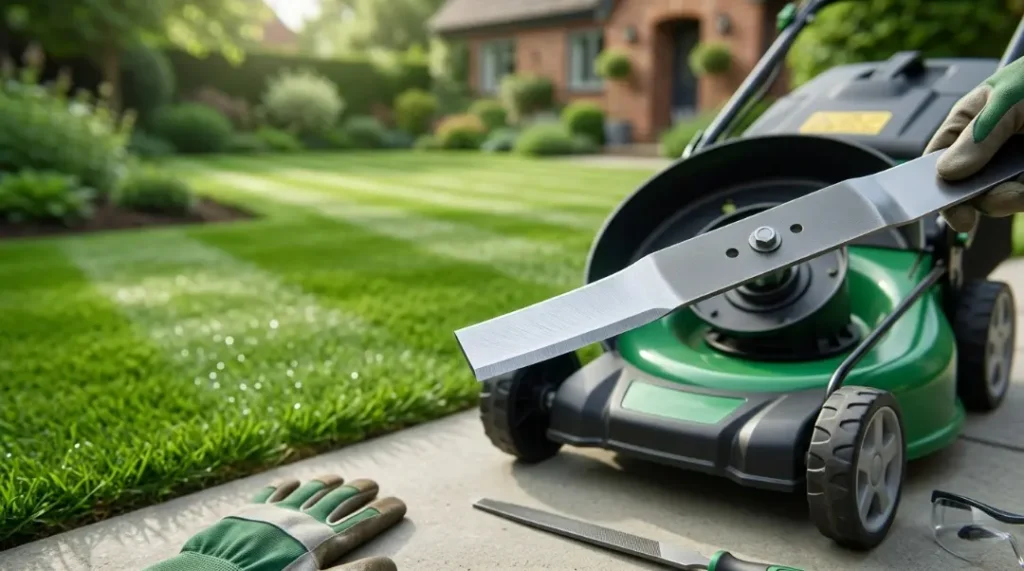
Mowing frequency and yard conditions dictate your maintenance schedule more than calendar dates. If you spend 45 minutes cutting the grass each weekend, you hit the 20-hour mark after roughly 27 cuts. For a standard home in a temperate region, this means a baseline routine of sharpening once in early spring before the first cut and once again in mid-summer around July.
Southern lawns features tough, dense warm-season turf varieties like Bermuda, St. Augustine, or Zoysia. These grasses possess high silica content, acting like fine sandpaper against cutting edges. Properties with loose, sandy topsoil throw up abrasive grit into the cutting deck during operation, dulling the metal much faster than clay or loam soils. Under these conditions, drop your maintenance interval to every 15 hours to maintain a pristine aesthetic.
5 Signs Your Mower Blades Need Sharpening
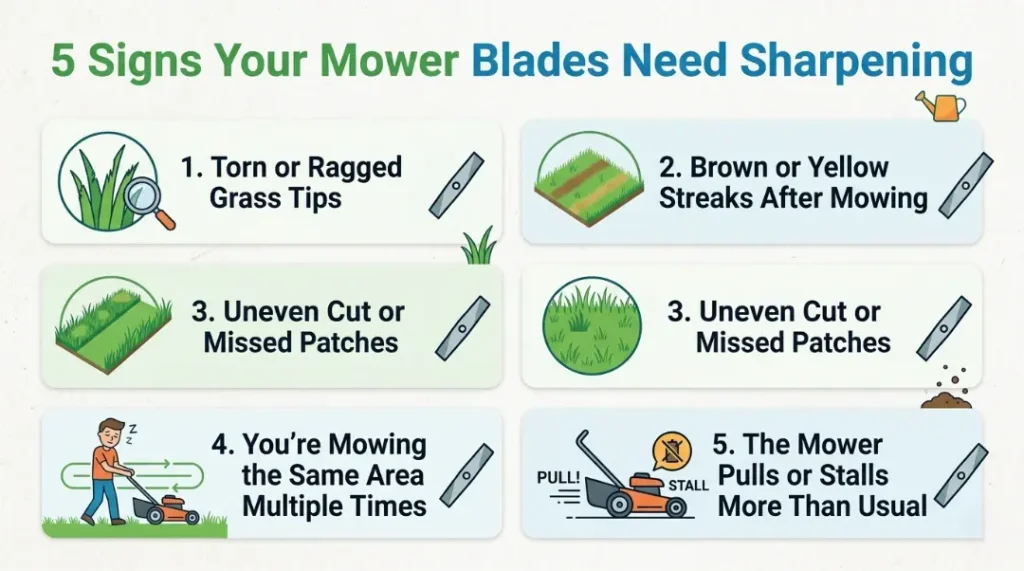
Not everyone tracks mowing hours. That’s fine. The lawn itself will tell you when the blade is dull if you know what to look for.
1. Torn or Ragged Grass Tips
When a blade is sharp, it slices through grass cleanly. When it’s dull, it tears. After mowing, crouch down and look at the tops of the grass blades. If the tips look frayed or brown after a day or two, that’s tearing, not cutting. Clean cuts heal faster and stay green longer.
2. Uneven Cutting Height
A dull blade doesn’t just cut poorly. It can cause uneven cutting across the deck. Some sections look shorter than others despite no change in deck height. If you’re seeing stripes of taller grass that the mower should have caught, inspect the blade before assuming it’s a deck issue.
3. Grass Being Pulled, Not Cut
You may feel or hear the mower working harder than normal. A dull blade creates more friction, which strains the engine and actually pulls at grass roots rather than slicing the stem. Over time, this stresses the grass and can thin out your lawn.
4. Dents, Chips, or Visible Nicks on the Blade
Take the blade off and look at the cutting edge under natural light. Even small nicks or flat spots affect performance. A blade with visible dents along the cutting edge is past the “just sharpen it” stage.
5. Increased Mowing Time
If it’s taking more passes to get the same result, or the lawn still looks rough after a fresh cut, that’s a performance signal. A sharp blade does more work per pass. A dull one makes you do the work twice.
When to Replace Mower Blades Instead of Sharpening
Sharpening has limits. There are cases where a replacement is the right move, not a sharper edge on a compromised blade.
Replace a mower blade when it’s cracked, bent, heavily chipped, or worn past its minimum thickness. A blade that’s too thin is structurally unsafe. Sharpening a damaged blade just creates a sharp, dangerous one.
Here’s when to skip sharpening and go straight to replacement:
- The blade has a visible crack or fracture, even a small one
- The blade is noticeably bent (place it on a flat surface to check)
- The sail height (the angled part that creates lift) is worn down significantly
- The blade has been sharpened so many times it’s now noticeably thinner than a new blade
- You hit a large rock or hard object at full speed and heard a sharp metallic impact
Most blades last 1 to 2 seasons of regular use before they need replacement. Higher-quality blades (think hardened steel vs. standard steel) can go longer but still have limits.
Why Sharp Lawn Mower Blades Matter
A sharp blade isn’t just about aesthetics. It directly affects the health of your lawn in ways most people don’t consider.
Sharp blades make clean cuts that allow grass to heal quickly. Dull blades tear grass, which creates jagged wounds that brown at the tips, become entry points for fungal infections, and weaken the plant over time. Grass cut cleanly by a sharp blade recovers faster, stays greener, and resists drought stress better.
Think of it like this: if you need stitches and the doctor uses a dull scalpel, the wound takes longer to close and has a higher risk of infection. Grass works the same way. A clean cut is a fast-healing cut.
There’s also an efficiency argument. A dull blade makes the engine work harder, which burns more fuel in a gas mower and drains batteries faster in a battery-powered one. Over a season, that adds up in both cost and wear on the motor.
Do New Lawn Mower Blades Need to Be Sharpened?
Do brand new lawn mower blades need to be sharpened before their first use? No, new lawn mower blades do not require sharpening because manufacturers ship them with a milled edge coated in a thick layer of paint or powder coating designed to prevent rust during shipping and storage.
Many homeowners mistake this protective finish for dullness. The factory edge is intentionally left slightly blunt—roughly the thickness of a butter knife—because a razor-sharp edge would chip, roll, or dull within the first ten minutes of hitting thick grass and soil. Install them straight out of the box without grinding.
Safety Precautions for Blade Sharpening
Working with heavy cutting machinery demands strict adherence to safety protocols to prevent accidental start-ups or severe lacerations. Treat the underside of the deck with the same respect you would show any active workshop power tool.
Disconnect the Spark Plug: Pull the rubber wire completely off the spark plug and tuck it away from the metal terminal to prevent the engine from firing up if you turn the cutting part by hand.
Drain the Fuel Tank: Empty the gas tank or place a sheet of plastic wrap under the fuel cap to prevent raw gasoline from leaking onto your garage floor when tipping the machine.
Tip the Mower Correctly: Always tip a walk-behind mower with the air filter and carburetor facing straight up toward the sky to prevent motor oil from draining into the combustion chamber.
Wear Heavy Utility Gloves: Thick leather work gloves shield your fingers from rough edges, metal burrs, and accidental slips while handling the steel.
Tools You’ll Need
Sharpening a blade at home is straightforward with the right tools.
Basic setup:
- A blade balancer (critical, often skipped)
- A flat metal file or angle grinder with a sharpening disc
- Work gloves
- A wrench or socket set that fits your blade bolt
- A piece of wood to block the blade while loosening the bolt
Optional but useful:
- A bench vise to hold the blade steady while filing
- Penetrating oil if bolts are seized
- A torque wrench for reinstalling to spec
The blade balancer is the tool most DIYers skip, and it’s the one that matters most. A blade that’s been sharpened unevenly will be heavier on one side. An unbalanced blade creates vibration that damages the mower’s crankshaft over time. Blade balancers cost less than $10. There’s no good reason to skip one.
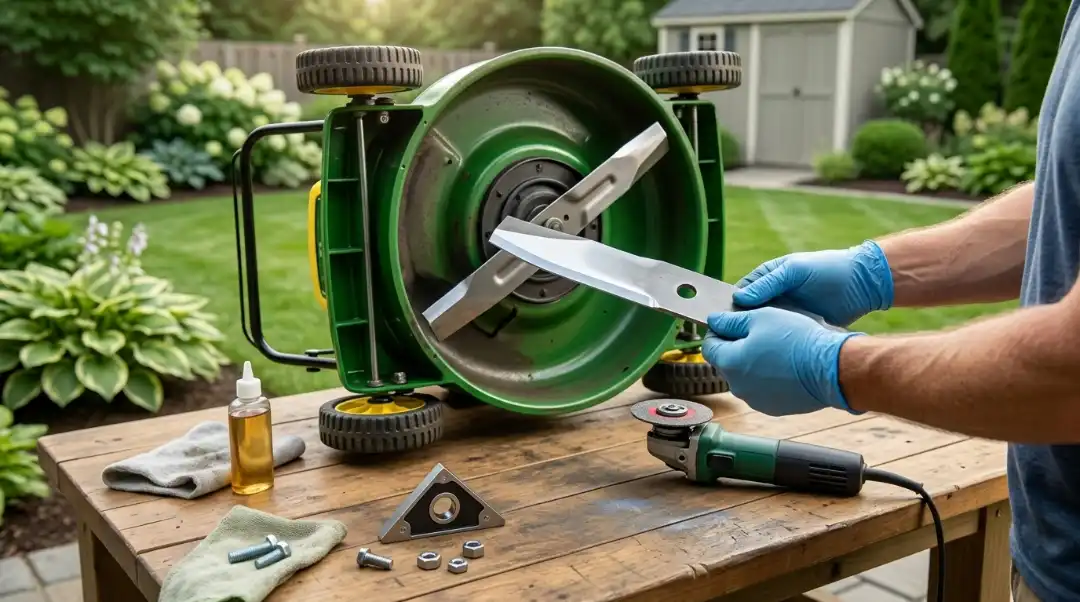
Steps to Sharpen Your Mower Blades
- Disconnect the spark plug wire.
- Tilt the mower and remove the blade using a wrench. Block the blade with a piece of wood so it doesn’t spin.
- Clamp the blade in a vise or hold it steady on a flat surface.
- Use a metal file or angle grinder to sharpen the cutting edge at the same angle as the factory bevel (usually 30 to 45 degrees).
- Maintain consistent strokes in one direction along the cutting edge.
- Check balance on a blade balancer. Remove material from the heavier side until it sits level.
- Reinstall the blade and torque the bolt to manufacturer specifications.
- Reconnect the spark plug wire.
The whole process takes about 20 to 30 minutes once you’ve done it a couple of times. The first time might take 45 minutes. Either way, it’s faster and cheaper than a shop visit.
When to Call a Professional
There are times when you really need an expert. A shop can use a special blade grinder to get the factory angle back to where it should be if the blade is significantly chipped from hitting rocky terrain. This is better than most DIY approaches.
It usually costs between $5 and $15 to have a professional sharpen your blades. Some Ace Hardware stores, as well as most small engine repair shops and lawn equipment stores, offer this service. Most of the time, turnaround is quick, often the same day. If you don’t feel safe using power tools or if the blade is badly damaged and you’re not sure what to do, you should definitely consult a professional.
For complete lawn care including mowing, trimming, and year-round turf health maintenance Robert’s Complete Care offers professional Lawn Care and Maintenance Services in Whittier for homeowners who want a consistently well-maintained yard without the hassle. From blade health to full seasonal service, it’s one less thing to manage yourself.
One Final Thought
Sharp blades are the most overlooked part of lawn care. Most people invest in a decent mower, spend time mowing every week, and then wonder why the lawn never looks quite right. Nine times out of ten, the blade is the answer.
The rule is straightforward: check your blades at the start of the season, sharpen at the 20 to 25 hour mark, and watch your grass after every mow. Brown tips and uneven cuts are your cues. Catch them early and you’ll spend less time fixing problems and more time actually enjoying your yard.
FAQ About Lawn Mower Blades
How many times can you sharpen mower blades before replacing them?
There’s no fixed number of sharpenings before replacement is needed. The real indicator is blade condition: if the blade is thinner than 1/2 inch, has visible cracks or bends, or can no longer be balanced, it’s time to replace it regardless of how many times it’s been sharpened.
Most homeowners find blades last one to three seasons before replacement is necessary. The key variable is how much material gets removed during each sharpening and what conditions the blade works in.
Is sharpening lawn mower blades worth it?
Yes, sharpening is worth it in almost every case. A sharp blade produces a cleaner cut, reduces stress on your grass, lowers fuel consumption, and extends the life of your mower. The cost of sharpening ($5 to $15 at a shop, or a few minutes of your time DIY) is minimal compared to the cost of lawn repairs or mower issues caused by running dull blades.
What is the average cost to sharpen lawn mower blades?
Professional sharpening runs between $5 and $15 per blade at most small engine shops, hardware stores, and mower dealerships. Some places charge up to $30 for two blades, which is still reasonable considering the time and skill involved. If you DIY with an angle grinder and flap disc, the per-sharpening cost drops to almost nothing after the initial tool purchase.
Can you over-sharpen a mower blade?
Yes. Sharpening too often removes more metal than necessary and thins the blade faster than normal use would. It also increases the risk of creating an edge that’s too thin which dulls almost immediately in cutting conditions. Stick to the 20 to 25 hour schedule rather than sharpening out of habit every few weeks.
The goal is a clean, beveled edge not a razor. A blade sharpened to the factory angle (30 to 45 degrees) holds its edge far better than one ground too aggressively.
How much does Ace charge to sharpen mower blades?
Ace Hardware pricing varies by location, but most stores that offer the service charge between $5 and $15 per blade. Call your local store before bringing it in; not all locations offer sharpening, and some send blades to a third-party service, which affects turnaround time.