Spurge weed comes without warning. It spreads swiftly and fights back aggressively. One week you have a tidy lawn, the next you are staring at a thick, flat mat of reddish-stemmed weeds crawling across your grass, driveway cracks and flower beds. If that sounds similar, you’re not alone and the good news is you don’t have to put up with it. The difference between a one-time remedy and a yearlong battle is knowing how to get rid of spurge weed, before it seeds out.
In this article, we’ll look closely at what spurge weed is, how to recognize it, where it lurks, and the best ways to destroy it whether you want to pluck it by hand, use a targeted herbicide, or follow the natural path. By the time you’re done, you’ll have a clear action plan to get your lawn back.
What Is Spurge Weed?
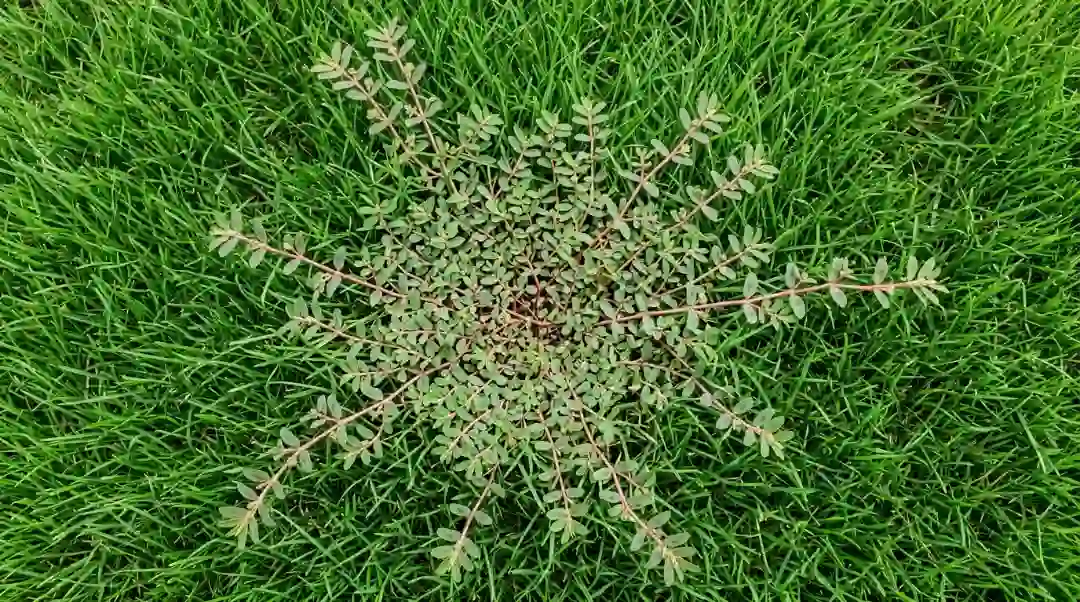
Spurge weed is a low-growing summer annual that spreads outward from a single central taproot, forming flat, dense mats up to 3 feet wide. It thrives in heat, germinates when soil temperatures hit around 60°F, and produces flowers as early as five weeks after sprouting.
The three most common types found in lawns are:
- Spotted spurge dark green oval leaves with a distinctive red or purple spot in the center
- Prostrate spurge similar to spotted, but forms roots at the leaf nodes
- Creeping spurge smaller leaves, tends to spread more aggressively in moist areas
All three share one key identifying trait: when you snap a stem, a thick, milky white sap oozes out. That’s your clearest sign you’re dealing with spurge.
Is Spurge Sap Dangerous?
Yes, spurge sap is a skin irritant and can be toxic if ingested. The milky white sap can cause redness, itching, or a burning sensation on contact with skin. If it gets into the mouth, it may cause irritation in the throat. Keep children and pets away from areas being treated, and always wear gloves and long sleeves when handling spurge whether you’re pulling it or spraying it.
If a child or pet ingests spurge sap, contact a doctor or veterinarian immediately.
How Invasive Is Spurge Weed?
Spurge weed is highly invasive for a simple reason: it’s a seed-producing machine. A single plant can produce thousands of seeds, and it starts producing them only five weeks after germination. Those seeds stick to shoes, mower wheels, and animal fur, spreading across your lawn before you even realize what’s happening.
Even after cold weather kills the plant, dormant seeds survive in the soil and sprout the following spring. This is why lawns that had spurge one year tend to see it return the next and the year after that. The seed bank in your soil can stay active for several years.
Where Does Spurge Weed Grow?
Spurge weed doesn’t need much to get started. It targets the weak spots in your lawn and landscape, including:
- thin or bare turf spurge moves into any area where grass coverage is poor
- Compacted or sandy soil well-drained, low-fertility soil is its ideal growing condition
- Driveway and sidewalk cracks spurge in driveway cracks is extremely common because roots anchor easily in tight spaces
- Garden and flower beds especially where soil has been recently turned or disturbed
- Shady spots under trees low-light areas with sparse grass coverage are prime territory
- Areas after aeration or const disturbed soil creates the perfect seedbed
If spurge weed in your lawn keeps appearing in the same spots every year, look at what those areas have in common. Thin turf, poor drainage, or compaction are usually the cause
How to Get Rid of Spurge Weed: Step-by-Step
Step 1 Identify and Assess Your Infestation Level
Before doing anything, figure out how bad it is. This determines your strategy.
- Spotty infestation (a few plants scattered around): hand-pull or spot-treat
- Moderate infestation (patches forming across the lawn): combine hand-pulling with a post-emergent herbicide
- Severe infestation (large areas covered): broadcast herbicide treatment is your best option
Act early. Spurge caught before it seeds is far easier to control than spurge that’s been seeding for weeks.
Step 2 Manual Hand Pulling
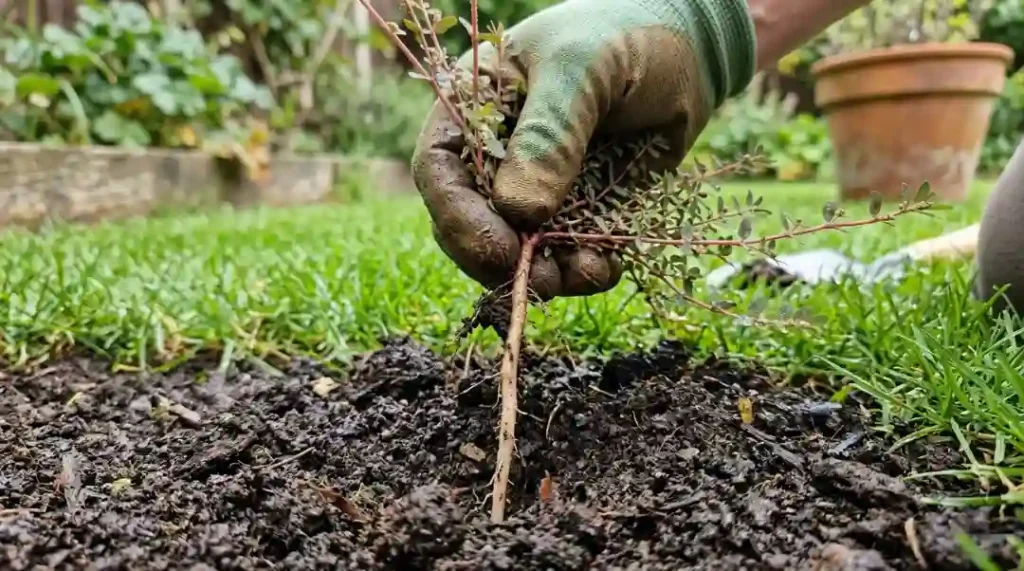
The best time to hand-pull spurge is right after rainfall or irrigation, when the soil is moist and the taproot releases more easily. In dry soil, the root breaks off underground and the plant regrows. Pull from the base, as close to the ground as possible, and remove the entire taproot.
Here’s how to do it properly:
- Wear gloves and long sleeves the sap is a skin irritant
- Grab the main stem at the base, as close to the soil surface as possible
- Pull don’t yank, or the taproot will snap
- If the root breaks, dig down and remove the remaining piece
- Bag the plant and dispose of it in the trash don’t add it to compost, as seeds can survive and spread
Hand-pulling works well for spotty infestations or catching new plants early. It’s not efficient for large infestations because of the taproot depth and sheer volume of plants.
Step 3 Post-Emergent Herbicide (For Established Spurge)
If the spurge is already established, a post-emergent herbicide is your most reliable option. These products kill the plant after it’s actively growing.
The most effective post-emergent herbicides for spurge weed control include:
- Trimec broadleaf herbicide, works on most lawn types
- Surge selective, safe for most cool and warm-season grasses
- Celsius WG especially effective in warm-season grasses like Bermudagrass and St. Augustinegrass
- Speedzone fast-acting, good for moderate infestations
- Turflon effective for cool-season lawns (not recommended for warm-season grass)
- Lesco Three-Way broad-spectrum broadleaf control
How to spot-treat spurge weed:
- Mix the herbicide according to label directions
- Spray directly onto the spurge leaves full, even coverage
- Avoid spraying on windy days to prevent drift onto nearby plants
- For non-selective herbicides (like those used in driveway cracks), only apply to hardscapes
- Rinse your sprayer thoroughly after use
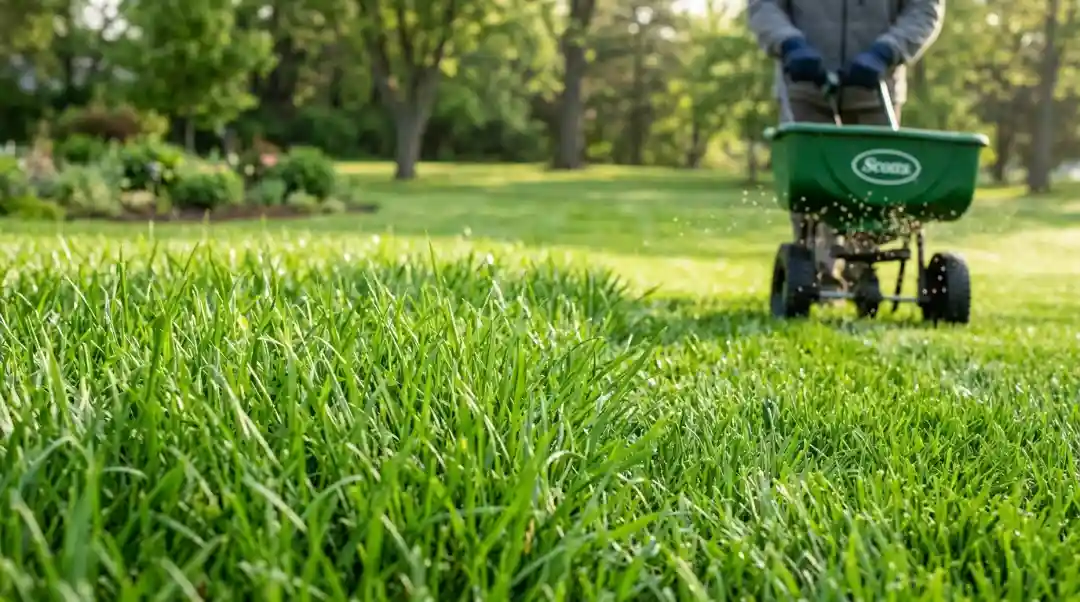
For severe infestations, use a broadcast spreader with a granular post-emergent like Preen Lawn Weed Control. Walk in parallel rows to ensure even coverage, and water lightly afterward if the label recommends it.
Most post-emergent herbicides show results within one to two weeks. For established spurge, more than one application is usually needed rotate products with different active ingredients for best results, and reapply every two to four weeks as directed.
Step 4 Natural and Organic Methods
For those who prefer to avoid synthetic chemicals, there are natural options for killing spurge weed. They take more effort and multiple applications, but they work for small infestations.
Horticultural vinegar (20% acetic acid): This is far more effective than kitchen vinegar, which only contains 5% acetic acid. Spray it directly onto the spurge leaves. It works by burning the plant tissue. Be warned horticultural vinegar can also burn nearby grass and requires protective eyewear and gloves, as it’s strong enough to cause skin and eye injury.
Boiling water: Pour it directly onto the plant. It kills on contact by destroying plant tissue almost immediately. The downside is it won’t always reach the taproot, so regrowth is common. It can also damage surrounding grass.
These organic methods work best on young, small plants. For mature spurge with deep taproots, a post-emergent herbicide is more reliable.
Step 5 Treat Spurge in Driveway Cracks and Hardscapes
Spurge weed in driveway cracks and pavers is a separate challenge because pulling it out completely is nearly impossible. The roots grip tight into narrow gaps.
For hardscape areas, use a non-selective herbicide like Ortho GroundClear or a vinegar-based spray. These kill any plant they contact, so keep them off your lawn. Spray directly into the cracks, targeting the base of the plant. You may need to repeat the treatment two to three times over a couple of weeks.
For long-term control in hardscapes, consider applying a crack sealant after the spurge dies to prevent future germination.
Best Herbicides for Spurge Weed (By Grass Type)
Choosing the wrong herbicide can damage your lawn. Here’s a quick breakdown:
| Grass Type | Recommended Herbicide |
| Bermudagrass | Celsius WG, Trimec |
| St. Augustinegrass | Celsius WG, Surge |
| Zoysiagrass | Trimec, Surge |
| Kentucky Bluegrass | Trimec, Speedzone, Turflon |
| Tall Fescue | Trimec, Speedzone, Turflon |
| Ryegrass | Speedzone, Lesco Three-Way |
Always double-check the product label before applying to confirm your specific grass type is listed as safe.
How to Prevent Spurge Weed From Coming Back
Getting rid of spurge is one thing. Keeping it gone is another. Here’s how to stop it from returning.
Apply a Pre-Emergent Herbicide in Late Winter
A pre-emergent herbicide stops spurge seeds from germinating before they sprout. Apply it in late winter to early spring, before soil temperatures reach 60°F. This is the single most effective preventive step you can take.
Maintain a Thick, Dense Lawn
Spurge thrives where grass is thin and weak. A thick, healthy lawn leaves no room for it to establish. Mow at the right height for your grass type, fertilize on schedule, and water consistently. Dense turf is your best long-term defense.
Mulch Garden and Flower Beds
Apply at least 3 inches of mulch in landscaping beds. This blocks light from reaching the soil surface, preventing seed germination. Organic mulches like wood chips or bark work well and break down to improve soil health over time.
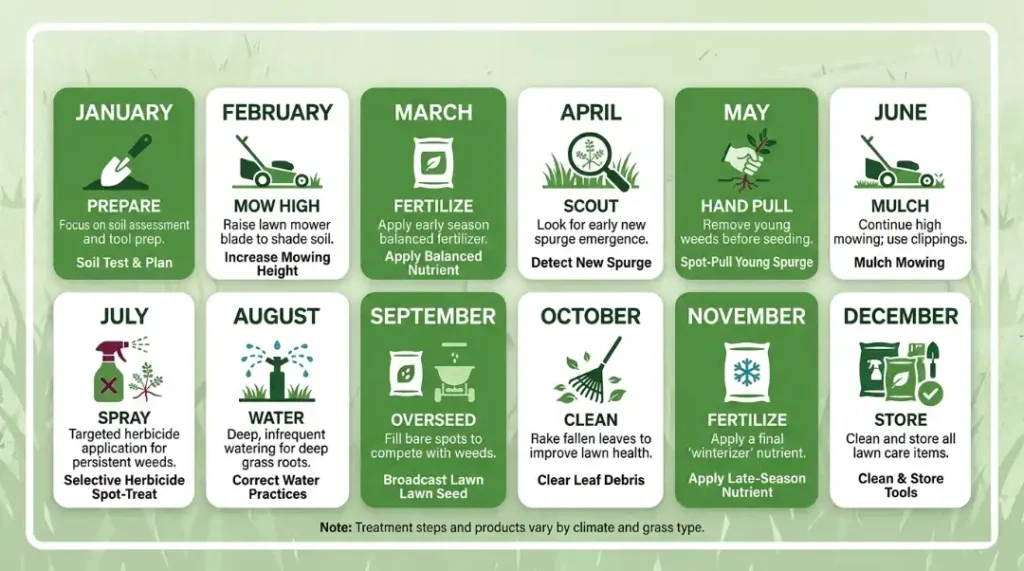
Spurge Weed Treatment Calendar
| Month | Action |
| January–February | Apply pre-emergent herbicide before soil warms |
| March–April | Monitor for early germination, hand-pull immediately |
| May–June | Spot-treat with post-emergent at first signs |
| July–August | Broadcast treat if infestation is severe |
| September–October | Mow, fertilize, overseed bare patches |
| November–December | Assess lawn health, plan next year’s prevention |
Landscaping Maintenance in Whittier
If spurge weed keeps coming back no matter what you try, it’s often a sign of a deeper lawn health issue compacted soil, poor turf density, or inconsistent maintenance. That’s where professional help makes a real difference.
At Robert’s Complete Care, we provide full-service landscaping maintenance in Whittier, including weed control, pre-emergent treatments, fertilization, and lawn health programs designed to keep weeds like spurge from taking over. Rather than chasing weeds season after season, we help you build a lawn that’s too healthy for them to move into.
Contact us today to schedule a lawn assessment and get a plan that actually works long-term.
Safety Precautions When Handling Spurge Weed
- Always wear gloves and long sleeves the milky sap causes skin irritation
- Use safety goggles when working with horticultural vinegar or chemical herbicides
- Keep children and pets off treated areas until the product has fully dried (check label for specific re-entry times)
- Bag pulled plants and dispose of them in regular trash don’t compost
- Wash hands and exposed skin thoroughly after handling spurge or herbicide.
Final Thoughts
Spurge weed is persistent, but it’s not unbeatable. The key to knowing how to get rid of spurge weed for good is acting early, using the right method for your situation, and following through with prevention. Pull it before it seeds, treat established plants with the right herbicide for your grass type, and close the door on regrowth with pre-emergent applications each late winter.
If the problem feels bigger than a DIY fix, don’t wait until it takes over your entire lawn. Reach out to Robert’s Complete Care contact us here and let us handle the hard part so your lawn can thrive.
Frequently Asked Questions
How long does it take for a post-emergent herbicide to kill spurge weed?
Most post-emergent herbicides show visible results within one to two weeks. For established spurge with deep taproots, multiple applications spaced two to four weeks apart may be needed. Rotating products with different active ingredients improves results over time.
Can spurge weed grow back after pulling?
Yes, if any part of the taproot remains in the ground, the plant will regrow. This is why moist soil conditions and proper technique are so important when hand-pulling. Pull slowly from the base to remove the complete root.
What kills spurge weed naturally?
Horticultural vinegar with at least 20% acetic acid and boiling water are the most effective natural options. Kitchen vinegar (5% acetic acid) is generally too weak to kill established plants reliably. Natural methods work best on young, small spurge plants.
When should I apply pre-emergent herbicide for spurge?
Apply pre-emergent in late winter to early spring, before soil temperatures reach 60°F. In most regions, this means late January through early March. Applying too late, after seeds have already germinated, renders the pre-emergent ineffective.
Is spurge weed toxic to dogs and cats?
Yes, the milky sap of spurge weed can cause skin irritation and digestive upset in pets if ingested. If you suspect your pet has eaten spurge or come into contact with the sap, contact your veterinarian right away.
Why does spurge keep coming back every year?
Spurge seeds can lie dormant in soil for several years before germinating. Even after you eliminate all visible plants, the seed bank in the soil remains active. Consistent pre-emergent treatments and maintaining a dense, healthy lawn are the only long-term solutions.