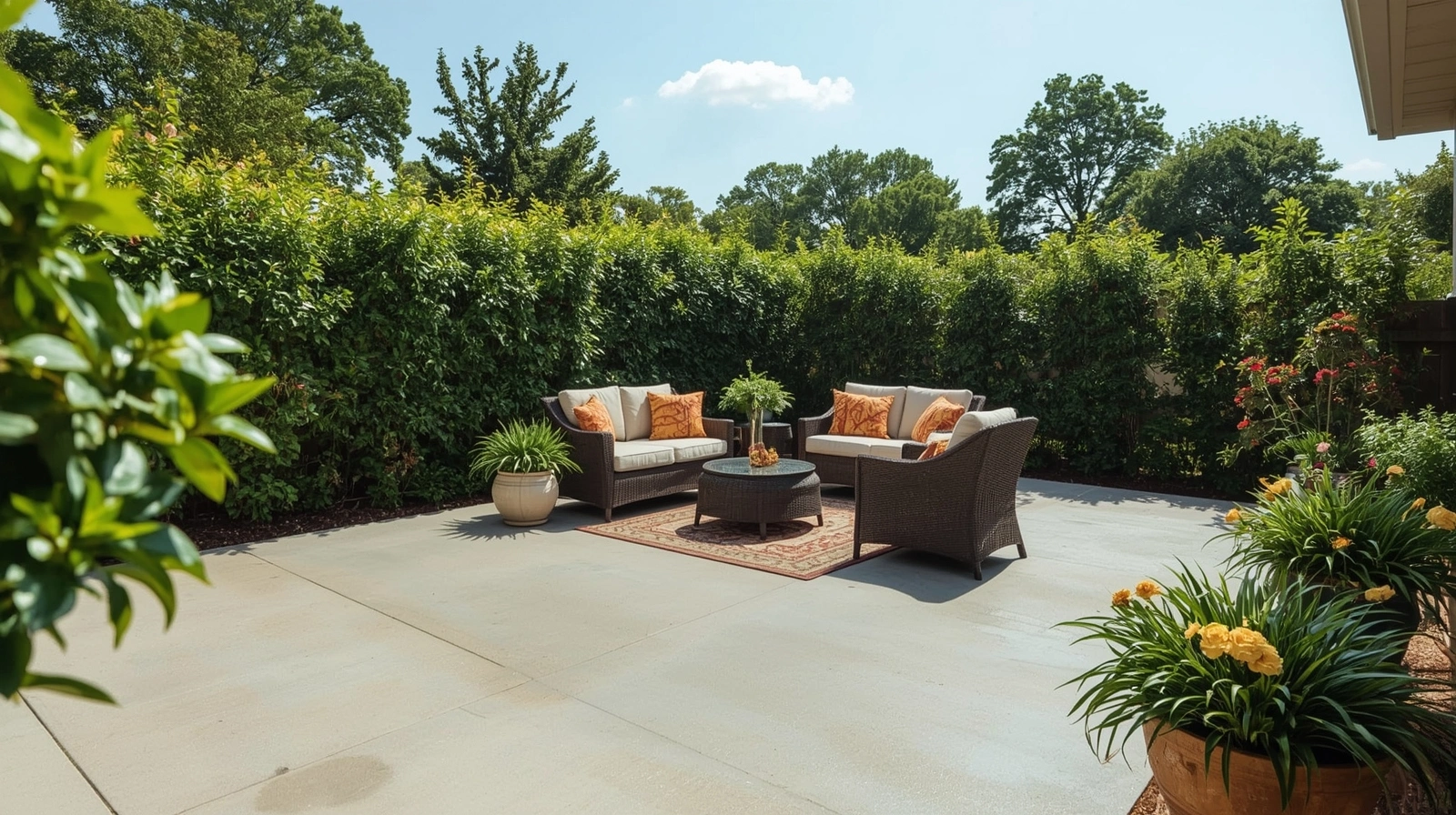
Your concrete patio looks rough stained, grimy, maybe spotted with rust or black mildew patches. You’ve tried hosing it down and the stains barely budged. That’s a frustrating place to be. Learning how to clean a concrete patio properly means knowing which cleaner works on which stain, which tools to use, and what to avoid so you don’t end up making things worse. This guide covers all of it, from a basic wash to the toughest stains on the slab.
Sweep the patio, pre-wet the surface, apply a cleaner suited to your stain type (vinegar for general grime, bleach for mildew, oxalic acid for rust), scrub with a nylon-bristle brush, and rinse thoroughly with a garden hose or pressure washer. For a standard cleaning, the whole job takes under an hour.
Why Concrete Patios Get Dirty (and Why Plain Water Won’t Fix It)
Concrete looks solid, but it’s porous. Think of it like a sponge with a hard shell. When liquids hit the surface, they don’t just sit on top. They sink in. That’s why a quick rinse rarely does the job on stains.
The texture of a concrete slab also works against you. Every small groove and crevice is a pocket where dirt, algae, moss, and organic debris can settle in and build up over time. Rain pushes them deeper. Sun bakes them in.
Common causes of concrete patio staining include:
- Mildew and algae growth from moisture and shade
- Rust from metal furniture legs, grills, or planters
- Grease and oil drips from BBQ grills
- Red mud and iron-rich soil tracked in from the yard
- Efflorescence (a white, chalky powder formed when water draws calcium salts to the surface)
- General dirt and debris from leaves and outdoor use
What You’ll Need Before You Start
Getting the right tools upfront saves time. Here’s what a standard concrete patio cleaning job requires.
Tools:
- Push broom or leaf blower
- Garden hose with spray nozzle (or pressure washer)
- Nylon-bristle scrub brush (long-handled to save your back)
- Plastic bucket
- Sponge mop (for manual application)
- Protective eyewear and waterproof gloves
Cleaning materials (varies by stain type):
- Distilled white vinegar
- Baking soda
- Chlorine bleach
- Oxalic acid-based cleaner (for rust)
- Cat litter or cornstarch (for grease absorption)
- Commercial concrete degreaser
- Concrete sealer (for after cleaning)
Avoid wire brushes entirely. Metal particles break off, sink into the pores of the concrete, and form rust stains later. A nylon-bristle brush does the job without that risk.
How to Clean a Concrete Patio: Step-by-Step
This is the standard process for an outdoor concrete slab that’s due for a general cleaning. For specific stains, follow the targeted sections below after completing steps 1 through 3.
Step 1: Clear the Patio
Remove all furniture, planters, grills, and anything else sitting on the surface. Use a push broom or leaf blower to clear leaves, dirt, and loose debris. Don’t skip this. Scrubbing over loose grit just scratches the surface.
Step 2: Pre-Wet the Concrete
Rinse the slab with a garden hose. Wetting the surface first stops your cleaning solution from absorbing too fast. It also loosens surface dirt before you apply any product.
Step 3: Apply Your Cleaner
For general cleaning on unsealed concrete, mix one cup of baking soda with two cups of distilled white vinegar in a bucket. The mixture foams up. Mix it slowly to keep the consistency thick. Spread it over the concrete with a sponge mop.
For heavier buildup, a commercial concrete cleaner applied through a pressure washer detergent tank works faster. Use a biodegradable, non-corrosive formula to protect your lawn and nearby soil.
Step 4: Let It Sit, Then Scrub
Allow the cleaner to sit on the surface for at least 10 to 30 minutes. Don’t let it dry. Scrub with a nylon-bristle brush, paying extra attention to stained areas. Work in sections so the cleaner stays wet throughout.
Step 5: Rinse Thoroughly
Rinse with clean water at the highest pressure your hose allows. If you’re using a pressure washer, keep the nozzle at least two feet from the surface and hold it perpendicular to the slab. Getting too close can damage the surface.
Work in small sections and repeat the apply, scrub, rinse sequence until the whole patio is done.
Cleaning Methods Compared
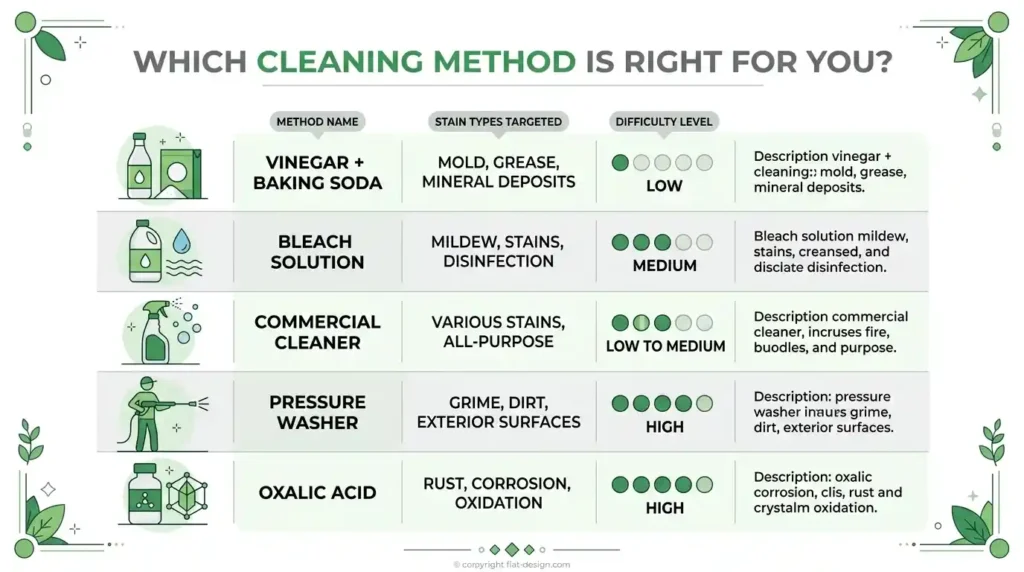
Not everyone has a pressure washer. Not every stain needs one. Here’s how the main methods stack up:
| Method | Best For | Cost | Difficulty | Notes |
| Vinegar + Baking Soda (manual) | General grime, unsealed concrete | Under $5 | Easy | Mix fresh each use; won’t kill mildew spores |
| Bleach solution (manual) | Mildew and black stains | $5 to $10 | Easy | Use 1 part bleach to 2 parts water; protect lawn |
| Commercial cleaner (manual) | Grease, oil, multi-stain | $10 to $30 | Easy-Medium | Check label for surface compatibility |
| Pressure washer (no detergent) | Surface dirt, general refresh | Equipment cost | Medium | 1,500 to 3,000 PSI is the safe range for concrete |
| Pressure washer + detergent | Heavy buildup, large areas | Equipment + cleaner | Medium | Most effective method for full patio cleaning |
| Oxalic acid cleaner | Rust and red mud stains | $10 to $25 | Medium | Never use bleach on rust; it intensifies the stain |
PSI guidance for pressure washing concrete: Stay between 1,500 and 3,000 PSI. Below 1,500 PSI won’t remove stubborn buildup. Above 3,000 PSI risks etching or pitting the surface, especially on older concrete.
How to Remove Specific Stains from Your Concrete Patio
How Do You Remove Rust Stains from Concrete?
An oxalic acid-based cleanser is the best way to get rust stains from concrete. Place it on the stain, work it in with a nylon bristle brush, and rinse. Never use bleach on rust stains chlorine reacts with the iron compounds and makes the discoloration deeper and more difficult to remove.
In areas with iron-rich soil, red mud tracks might look a lot like rust. Treat those the same. Lemon juice can be a modest substitute for oxalic acid for light discoloration.
How Do You Remove Mildew from Concrete?
To remove mildew from a concrete patio, mix one part chlorine bleach with two parts water. Apply it to the affected area, wait 5 to 30 minutes depending on severity, scrub, and rinse. Chlorine bleach is the only option that kills mildew spores oxygen bleach removes the stain but leaves the spores alive to return.
Protect nearby grass and shrubbery with old towels or plastic sheeting before applying bleach. Wear protective eyewear and waterproof gloves. Heavy mildew stains may need two rounds of treatment.
How Do You Remove Grease Stains from Concrete?
Grease and oil stains need to be treated as soon as possible. The longer grease sits on a porous concrete surface, the deeper it penetrates. Start by covering the stain with a one-inch layer of cat litter or cornstarch to absorb the oil, leave it 24 to 72 hours, then sweep and treat with a commercial degreaser.
After removing the absorbent, spray a commercial degreaser on the remaining stain, scrub with a nylon-bristle brush, and rinse with a garden hose. Repeat if needed.
How Do You Remove Moss and Algae from Concrete?
Moss and algae thrive on damp, shaded concrete. A bleach solution (one part bleach, two parts water) kills the growth and removes the stain. For persistent moss, a pressure washer after the bleach treatment pulls the dead growth off cleanly.
Trim back nearby plants and trees to reduce shade on the patio. Less moisture and more sunlight are the two best long-term defenses against moss regrowth.
Best Cleaners for Concrete Patios
DIY/Natural Options
Baking soda and vinegar work well for light to moderate grime on unsealed concrete. They’re safe for lawns and pets, low cost, and easy to mix at home. The limitation is that they won’t kill mildew spores and don’t penetrate deep oil stains.
Commercial Concrete Cleaners
Look for biodegradable, non-corrosive formulas that are labeled safe for lawns and pets. Products with peroxide-based active ingredients clean effectively without toxic residue. Check whether the formula is EPA Safer Choice certified for peace of mind around soil and water runoff.
What to Avoid
Muriatic acid is sometimes recommended online, but it’s a bad idea for regular use. It dissolves Portland cement (the binder in concrete), causes efflorescence, and is very difficult to control safely. The white chalky residue it leaves behind can build up thick enough that you’ll need to sweep it away.
Trisodium phosphate (TSP) is alkaline and won’t corrode concrete, but it causes skin burns and is harmful to aquatic life. When it reaches waterways, phosphates trigger algae overgrowth that depletes oxygen and harms fish. Skip it.
How to Seal Your Concrete Patio After Cleaning
This is the step both top-ranking articles barely mention, and it matters a lot. Sealing a cleaned patio protects it from future staining by filling the pores in the surface.
Apply a concrete sealer every two to three years. There are three main types:
- Penetrating sealers soak into the concrete and protect from within. They don’t change the appearance and last the longest.
- Acrylic sealers coat the surface, add a slight sheen, and are easy to apply with a roller.
- Epoxy and polyurethane sealers are the most durable and best suited for high-traffic areas.
Wait at least 24 hours after cleaning and rinsing before applying sealer. The concrete needs to be fully dry. Follow the manufacturer’s instructions on the sealer label for application and dry time.
How to Prevent Concrete Patio Stains
Prevention takes far less effort than removal. Here are the most effective habits:
- Seal the slab every two to three years. Sealed concrete absorbs less, which means stains stay on the surface and are easier to clean.
- Clean annually as a baseline, more often if there’s heavy use or frequent cooking.
- Clear debris regularly by sweeping and blowing off leaves. Wet organic material is a major source of staining and moss growth.
- Use an indoor-outdoor carpet under grilling areas and outdoor dining spaces to catch food and grease drips.
- Treat spills immediately. The longer a liquid sits on a porous slab, the deeper it goes.
- Move furniture occasionally to prevent rust marks from leg contact points.
When to Clean a Concrete Patio
Most patios need a thorough cleaning once per year. Spring is the best time for a full annual clean because winter leaves behind accumulated grime, organic matter, and moisture damage.
If you use the patio for grilling and entertaining regularly, a fall cleaning before the cold season is a smart habit. It removes food stains and grease before they set over winter.
Common Mistakes to Avoid When Cleaning Your Concrete Patio
These are the errors that either damage the surface or waste your time:
Using a wire brush. Metal bristles break off and lodge in the concrete’s pores. Over time, those metal fragments rust and create new stains.
Using muriatic acid casually. It damages the Portland cement in concrete, triggers efflorescence, and is dangerous to handle without proper protective equipment.
Using bleach on rust stains. This makes rust stains darker. Use oxalic acid instead.
Letting the cleaner dry on the surface. Once it dries, it’s much harder to rinse off and can leave residue. Always rinse before the cleaner evaporates.
Pressure washing too close. Holding the nozzle closer than two feet, or using PSI above 3,000, risks pitting and etching the surface. Old or already-damaged concrete is especially vulnerable.
Skipping the sealer. Cleaning without sealing means the concrete is immediately vulnerable again. Sealing after each deep clean extends the time between required cleanings significantly.
Expert Hardscaping in Whittier
If your concrete patio has cracking, deep staining, or structural damage that goes beyond what cleaning can fix, it may be time to call in a professional. At Robert’s Complete Care, we specialize in expert hardscaping in Whittier and the surrounding area. Whether it’s a patio restoration, a full concrete installation, or routine maintenance guidance, our team has the experience to do it right the first time.
Cleaning can take a rough-looking patio a long way. But some jobs need hands-on expertise and professional-grade equipment that goes beyond what a hose and brush can handle.
Contact us today to get a free assessment of your outdoor space. We’ll tell you exactly what your patio needs and what it doesn’t.
Final Thoughts
A clean concrete patio makes a real difference in how your outdoor space looks and feels. The process isn’t complicated, but using the right cleaner for the right stain type is everything. Vinegar and baking soda for general grime, bleach for mildew, oxalic acid for rust, and a degreaser for oil. Follow up with a sealer and your patio stays cleaner for longer.
This concrete patio cleaning guide covers every common stain you’re likely to face. Bookmark it, work through it section by section, and your slab will look noticeably better by the end of the weekend.
Frequently Asked Questions
What is the best cleaner for a concrete patio?
There’s no single best cleaner because the right choice depends on the stain. Baking soda and vinegar work for general grime. Bleach is best for mildew. Oxalic acid removes rust. For overall convenience, a biodegradable commercial concrete cleaner covers most situations without harming lawn and soil.
Can you clean a concrete patio without a pressure washer?
Yes. A garden hose, a nylon-bristle scrub brush, and the right cleaning solution remove most stains effectively. A pressure washer speeds up the job and helps with large areas or very heavy buildup, but it’s not required.
Is vinegar safe to use on concrete?
Distilled white vinegar is safe for occasional use on concrete. It’s mildly acidic but dilute enough that it won’t cause the damage muriatic acid does. Don’t use it every week, and rinse thoroughly after each application.
How often should you clean a concrete patio?
Once a year is enough for most patios. Add an extra clean in fall if you grill frequently. After any major spill or storm, spot-clean before stains set.
Does bleach damage concrete?
Diluted bleach (one part bleach to two parts water) used correctly does not damage concrete. Using undiluted bleach repeatedly over time can degrade the surface. Always rinse thoroughly after any bleach application.
What causes white powder on a concrete patio?
That’s efflorescence. It happens when water moves through the concrete and draws calcium salts to the surface, which then dry into a white, chalky deposit. A stiff nylon brush and warm water removes light efflorescence. A commercial efflorescence remover handles heavier buildup.