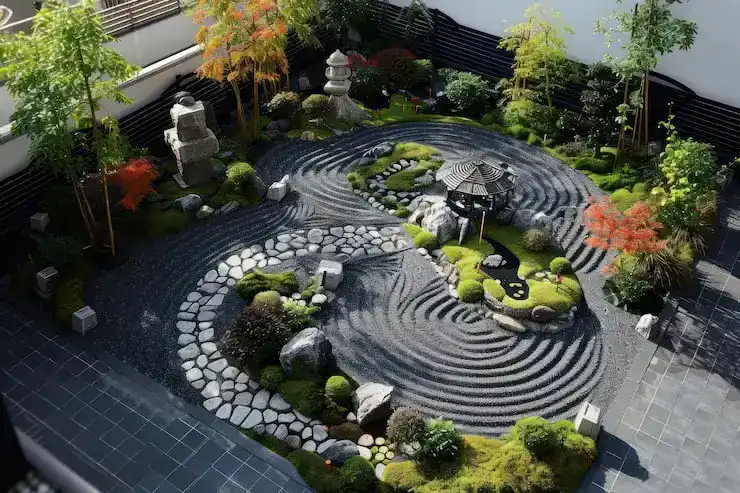
A great landscape is rarely the result of chance. Most appealing outdoor spaces are based on the same essential design principles, whether it’s a modest front yard, a rear retreat or a sprawling estate garden. That’s why many homeowners look into What Are the Basic Elements of Landscape Design when they are preparing to embark on a landscaping job.
The simple answer is: the essential aspects of landscaping are line, form, color, texture, scale, balance, focal points, and unity. The result of these components is outdoor areas that are coherent, practical and attractive. Understanding them may transform random plantings and hardscape pieces into a purposeful landscape.
8 Elements & Principles of Landscape Design
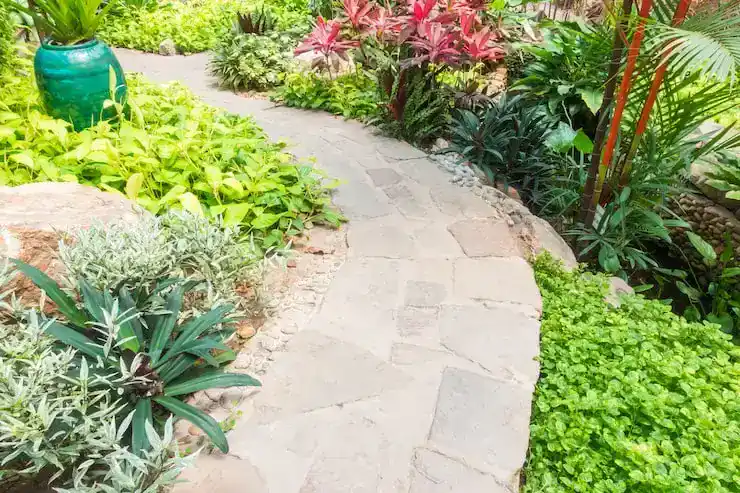
Experienced property planners rely on eight physical building blocks to organize outdoor environments. We must analyze each component to understand its practical role in your yard.
1. Line
Lines establish the physical boundaries and pathways across your entire property layout. They control how the human eye moves through the space and direct physical foot traffic. We create lines whenever two different textures or materials meet on the ground.
Vertical lines draw the eye upward toward the sky, making compact backyards feel much larger. You can build vertical structure by installing upright arborvitae trees or tall wooden trellises. Horizontal lines rest flat along the ground, which naturally widens your field of vision. Patios, low retaining walls, and wide walkways are excellent tools for creating strong horizontal baselines.
2. Form
Form refers to the three-dimensional shape of your plants and hardscape features. It defines the central theme and style of your outdoor property layout.
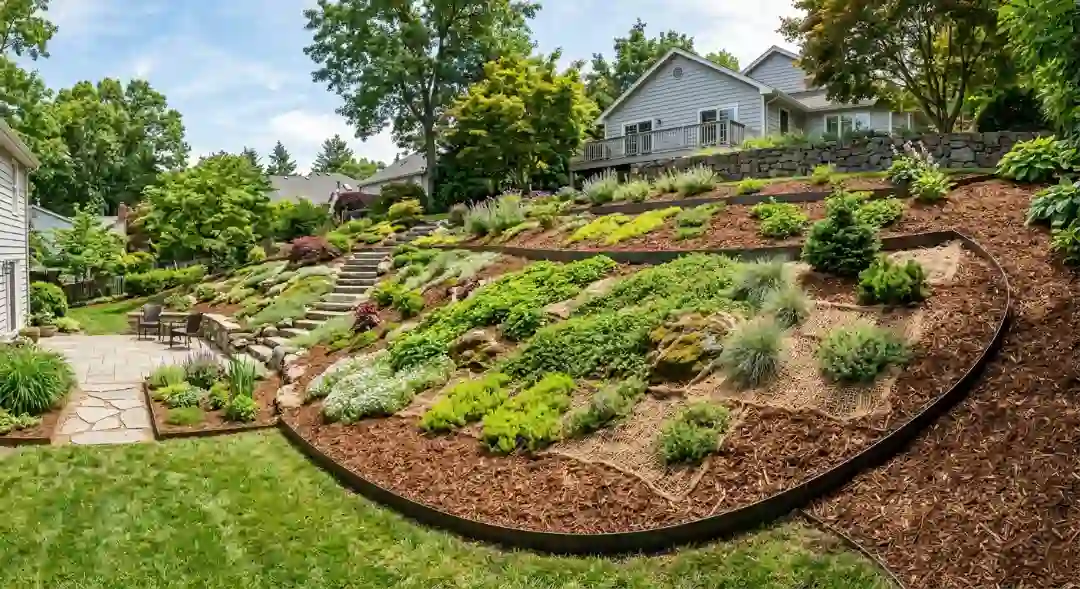
Plants grow in several distinct structural shapes, including upright, weeping, rounded, mounding, and prostrate. A tall, conical conifer provides a sharp structural contrast when placed next to a low, spreading groundcover. If you mix these shapes carelessly, the garden bed will look messy and unorganized.
Hardscape forms include geometric features like square concrete patios, rectangular pergolas, and circular fire pits. Formal designs rely on manicured, symmetrical shapes like perfectly clipped boxwood spheres. Informal properties use loose, freeform plant silhouettes that blend into the surrounding environment naturally.
3. Mass and Weight
Mass is the perceived visual weight of any object or group of features in your yard. Every tree, stone wall, deck, and open lawn space contributes to this balance.
Your layout must balance filled spaces with open areas, which designers call negative space. A massive stone outdoor kitchen requires a wide lawn or a spacious brick patio nearby to offset its structural footprint. If you group too many heavy structures into one tight corner, the space will feel claustrophobic.
We must also consider the mature size of living plants when calculating visual mass. A young tree might look small today, but it will eventually dominate the entire sky. Matching the mass of your plants to the size of your home preserves proper spatial harmony.
4. Color
Color captures human attention faster than any other component in an outdoor environment. It sets the immediate emotional mood of your patio or garden entrance. Color exists in blooming flowers, softscape foliage, stained wood, and hardscape pavers.
Warm colors like bright reds, deep oranges, and golden yellows create high-energy environments. These hues catch the eye instantly and make distant boundaries appear much closer than they actually are. They work beautifully around active entertaining zones like outdoor bars or barbecue pits.
Cool colors like soft blues, light purples, and deep greens promote a tranquil, relaxing atmosphere. They tend to fade into the background, which helps a small urban courtyard feel open and breezy. To maximize year-round appeal, select evergreens and colored twigs that provide deep shades during cold winter months.
5. Texture
Texture describes the surface quality of your softscape and hardscape materials. Combining diverse textures adds physical depth and prevents your property layers from looking flat.
Hardscape materials carry specific texturing that influences the overall design theme. Rough, irregular flagstones project a rustic, naturalistic style. Smooth, cut slate or polished concrete pavers deliver a crisp, modern aesthetic that feels clean underfoot.
6. Light and Shadow
Light is a shifting component that alters how we perceive your yard throughout the day. It changes how colors look and how shadows modify your spatial boundaries.
Bright afternoon sunlight intensifies warm colors but can completely wash out soft pastel flowers. Morning light creates long, elegant shadows that highlight the unique shapes of your trees and shrubs. We must track how sunlight moves across the property before installing expensive features.
A patio built for evening relaxation needs shaded protection from the hot western afternoon sun. Dark, damp corners that receive constant shadow require light-colored gravel and bright foliage to lift the mood. Strategic outdoor lighting extension extends the usability of your space long after the sun goes down.
7. Sound
Sound modifies how you experience an outdoor living space by engaging your ears. It can mask distracting street noises and reinforce a peaceful backyard environment.
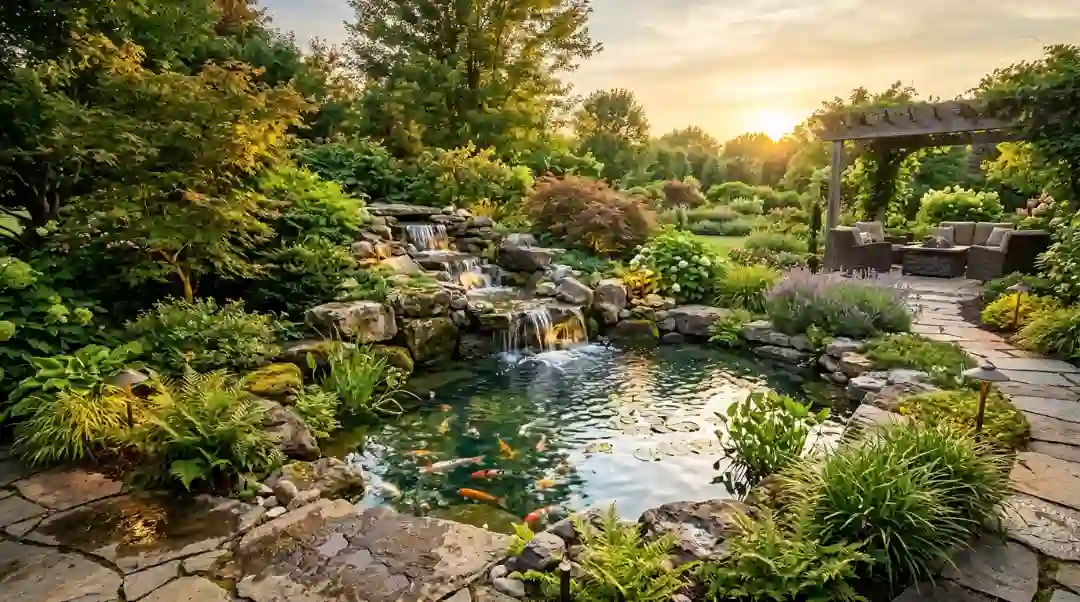
We can introduce natural sounds by planting ornamental grasses that rustle softly in a light breeze. Installing a bubbling stone fountain or a small tumbling waterfall creates a consistent background splash. This water sound blocks out traffic noise and creates a private sanctuary.
You can also use sound to bring wildlife into your garden spaces. Placing wooden bird feeders and stone birdbaths encourages local songbirds to visit. Their natural music adds a pleasant, dynamic layer to your daily outdoor experience.
8. Scent
Scent provides an invisible layer of interest that photos cannot capture. It triggers deep memories and makes your outdoor space feel personal and welcoming.
We should position aromatic plants near seating areas, patio edges, and main walkways. Walking past these zones releases the fragrance into the air automatically. Lavender, rosemary, confederate jasmine, and creeping thyme release pleasant aromas when brushed against or stepped on.
Avoid mixing too many competing fragrances in one small area because the scents will clash. Space out your aromatic plants so visitors enjoy one distinct scent at a time as they move through your yard.
Types of Landscapes Why Location Shapes Design
The same eight elements are everywhere, but the climate determines their utilization. A Pacific Northwest garden can be luxuriant with water-hungry plantings. A yard in the Whittier and broader Los Angeles County area can’t count on that same plant palette without a large water bill to go with it.
In Southern California landscape design, drought-tolerant, native plants do much of the hard work. Line and texture are handled with materials such as decomposed granite, gravel and permeable pavers that have no water need of a standard lawn edge. “Don’t just copy a design from a wetter region. Pick plants for your specific microclimate and USDA hardiness zone,” says University of California Cooperative Extension.
Coastal yards, inland valley yards and yards in the foothills in our service area each have slightly variable sun exposure and wind patterns. A planting bed that flourishes in a shaded Norwalk home would not do so well in full sun a few miles away in Santa Fe Springs, even if both are in the same general climate zone.
This is the point where softscape vs hardscape decisions are most important. Your living plants and lawn, or softscape, need more water and more seasonal upkeep than hardscape elements like patios, walls and pathways. A design that leans more toward hardscape and drought-tolerant softscape tends to fare better through a dry Southern California summer.Elements vs.
Elements vs. Principles of Landscape Design: What’s the Difference?
Elements are the raw building blocks of a yard, including line, color, form, and texture. Principles are the rules that tell you how to arrange those building blocks, covering ideas like balance, scale, unity, and rhythm, so the final result looks planned rather than random.
Think of elements as ingredients and principles as the recipe. You can own every ingredient in the kitchen, but without a recipe to combine them in the right order and the right amount, dinner doesn’t come together. The same logic applies to landscape design principles guiding how your line, color, and texture choices interact.
How These Elements Work Together in a Real Landscape
Picture a typical front yard redo. The walkway sets the line, curving gently from the driveway to the front door instead of cutting a hard diagonal across the lawn. A single Japanese maple near the entry becomes the focal point, drawing the eye before anything else competes for attention.
Low, repeating boxwood shapes along the walkway create unity in landscape design without needing a single matching plant on both sides. Add a warm-toned paver path and a few drought-tolerant grasses for texture, and the scale stays in proportion with a single-story home instead of overwhelming it.
None of these choices work in isolation. The line decides where the eye travels, the focal point decides where it lands, and the repetition ties the whole path together into one connected picture instead of a string of separate decisions.
How to Design a Landscape A Practical Starting Point
You don’t need design software to start. A piece of graph paper, a measuring tape, and a clear head will get you further than most people think.
Step 1 Measure your space accurately. Sketch your property to scale. Include the house, existing trees, fences, and utility lines.
Step 2 Identify your zones. Where do you want seating? Play areas? Planting beds? Privacy screening? Map it out before choosing a single plant.
Step 3 Apply your elements. Decide on your dominant lines (curved or straight), your color palette, and your primary texture contrasts.
Step 4 Choose a focal point. Pick one strong visual anchor per zone. Don’t put five competing features in the same area.
Step 5 Plan for transition. Make sure each zone connects to the next through a logical change in height, material, or planting density
Common Landscape Design Mistakes Beginners Make
Most of the questions we get about what are the basic elements of landscape design actually start with a homeowner trying to fix a mistake rather than build from scratch. These five issues show up the most often in yards we’ve walked across Whittier and the surrounding area.
Too many focal points. A yard with a fountain, a statue, and three different specimen trees competing for attention ends up with no clear focal point at all. Pick one main feature and let everything else support it.
Ignoring scale. Tiny plants against a two-story house, or oversized boulders in a small front bed, both throw off the proportion of the whole yard. Measure against your house and your existing hardscape before buying anything.
Skipping texture variety. An entire bed planted with the same leaf type and size looks flat once the flowers fade. Mix coarse and fine textures so the bed still holds interest in every season.
Fighting the climate. Choosing a lush, water-hungry plant palette in a dry Southern California yard creates ongoing maintenance and water costs that a native or drought-tolerant plan would avoid from day one.
No transition between zones. A patio that ends abruptly at a lawn edge with nothing connecting the two feels disjointed. A short run of stepping stones or a planting bed between zones makes the change feel natural.
Conclusion
Mastering what are the basic elements of landscape design isn’t about memorizing rules it’s about understanding how each element contributes to beauty, balance, and purpose. When these principles work together, they transform even the simplest yard into a peaceful retreat.
At Robert Complete Care, we believe that every outdoor space has the potential to become a living masterpiece. Whether you’re planning a backyard makeover or designing a new garden from scratch, our expert team offers professional Landscape Design Services in Whittier to bring your vision to life. From the first sketch to the final bloom, we combine creativity, craftsmanship, and sustainability to deliver landscapes that truly inspire.
Remember, a well-designed landscape is more than decoration it’s an experience. Take time to experiment, trust your instincts, and let nature be your guide.
FAQs
What is the most important element of landscape design?
No single element outranks the others, but balance and scale cause the most visible problems when they’re ignored. A yard with strong color and texture but poor scale will still look off, while a well-scaled yard with simple color and texture often looks calm and put together.
How many elements of landscape design are there?
Most professional sources point to eight core elements: line, form, color, texture, scale, balance, focal point, and unity. Some guides split these into more categories or fold a few together, but the underlying ideas stay consistent across nearly every source.
What’s the difference between landscape design elements and principles?
Elements are the building blocks, like color and texture. Principles are the rules for combining them, like balance and proportion. You need both to move from a yard full of nice individual features to a yard that reads as one finished design.
Can I apply these elements to a small yard?
Yes, and scale matters even more in a small space. A single well-placed focal point and a simple, repeating plant palette will read as intentional in a small yard, while too many competing features will make the space feel cluttered fast.
How much does professional landscape design cost?
Cost varies widely based on yard size, material choices, and whether the project includes irrigation or lighting. A consultation with a local landscape contractor is the most reliable way to get pricing specific to your yard and your goals.