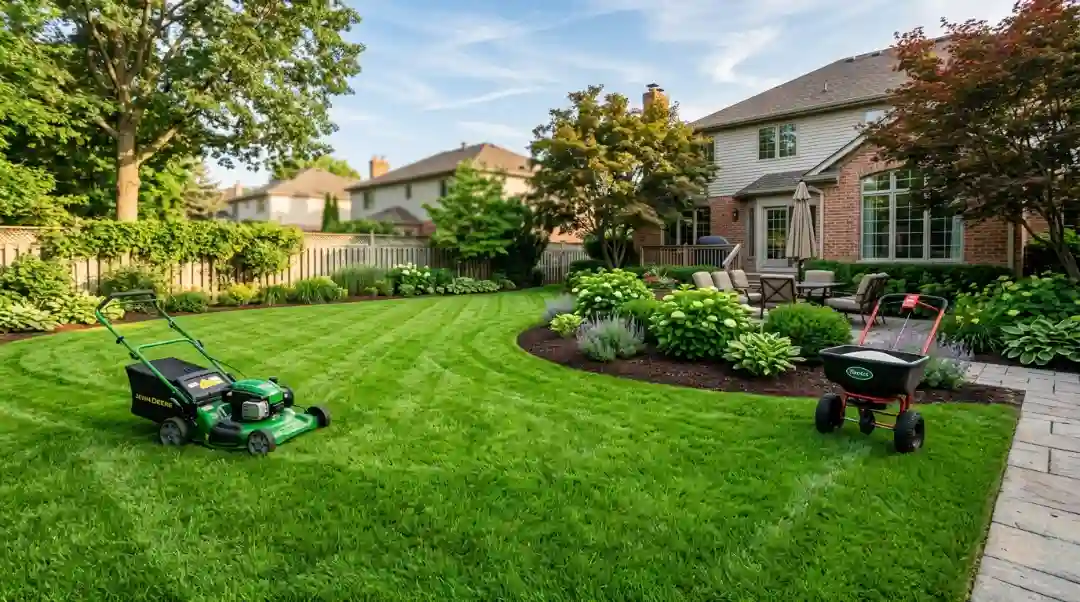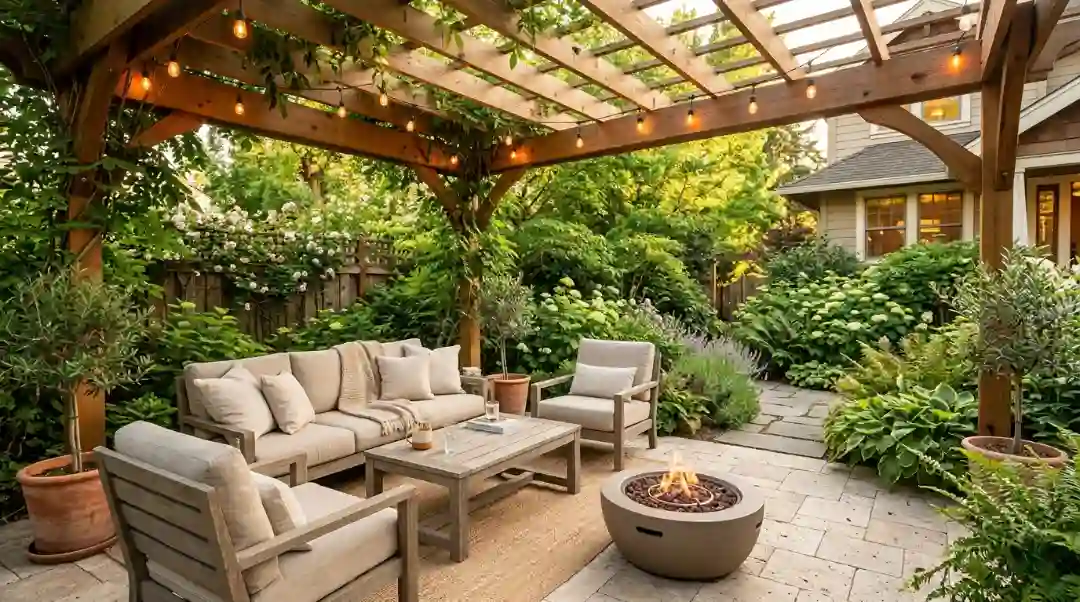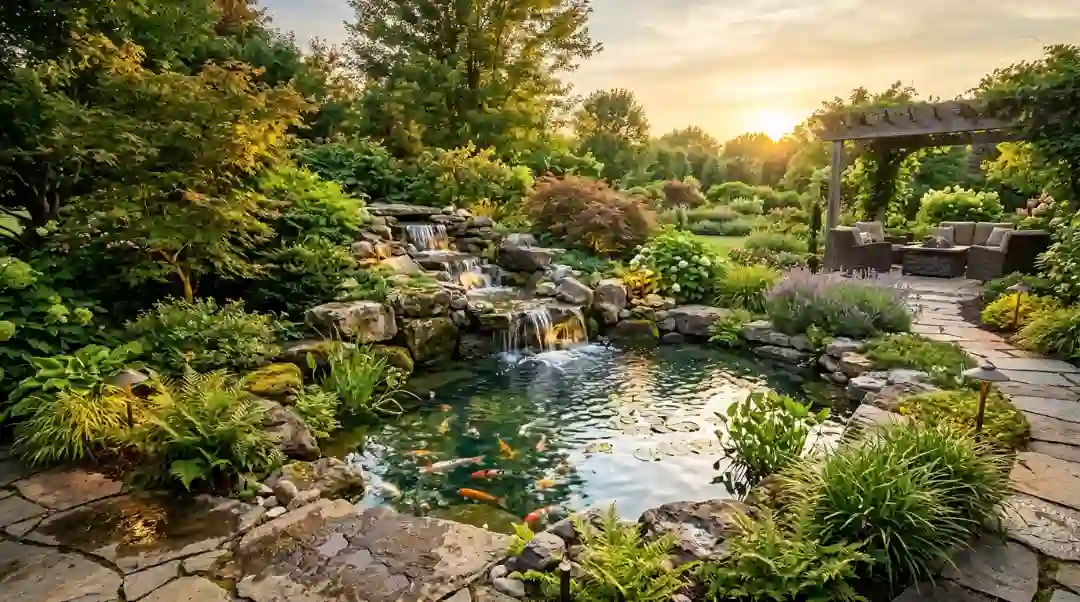
Most yards that look “off” aren’t missing expensive plants or tall rock features. They’re missing a simple design principle. The rule of 3 in landscaping is the idea that plants, rocks, and design elements look most natural and visually balanced when grouped in odd numbers, especially threes. It works because the human eye finds odd-numbered groupings more interesting and easier to process than even ones.
Here’s the quick answer: The rule of 3 in landscaping means grouping plants, stones, or features in sets of three (or other odd numbers) to create a more natural, balanced, and visually pleasing landscape. It applies to flower beds, hardscaping, containers, focal points, and seasonal plantings alike.
Understanding the Rule of 3 in Landscaping
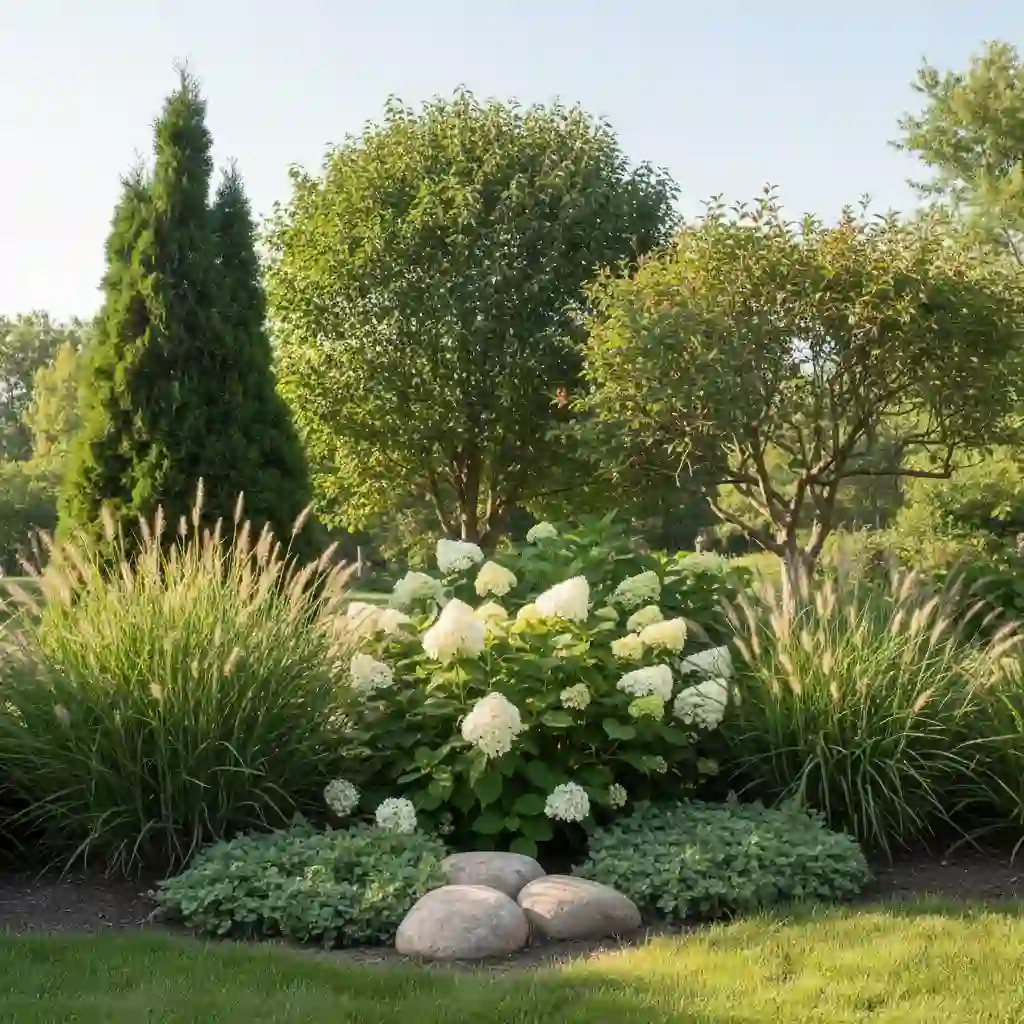
The core of this rule relies on human psychology and how we perceive data from our surroundings. Our brains naturally look for pairs and try to categorize objects into symmetrical matches. When you place two identical shrubs next to each other, your eye locks onto them as a pair, creating a static focal point that stops visual movement.
Threes break this patterns. An odd number prevents the brain from easily pairing things up, forcing your eyes to travel across the composition in a triangular path. This movement creates a sense of rhythm and flow that mimics natural environments. In nature, plants rarely grow in perfect pairs or clean, even rows; they cluster organically.
| Design Element | Even Groupings (Pairs) | Odd Groupings (Threes) |
| Visual Effect | Static, rigid, artificial symmetry | Dynamic, fluid, organic movement |
| Brain Perception | Catches patterns instantly and stops | Scans the layout continuously |
| Best Used For | Formal entryways, structured gates | Garden beds, rock clusters, general borders |
Applying the Rule of 3 in Your Garden
Start by looking at what you already have. If you’ve planted two of something side by side, add a third. If you have a row of four identical shrubs, pull one and rearrange into a triangle-shaped cluster of three.
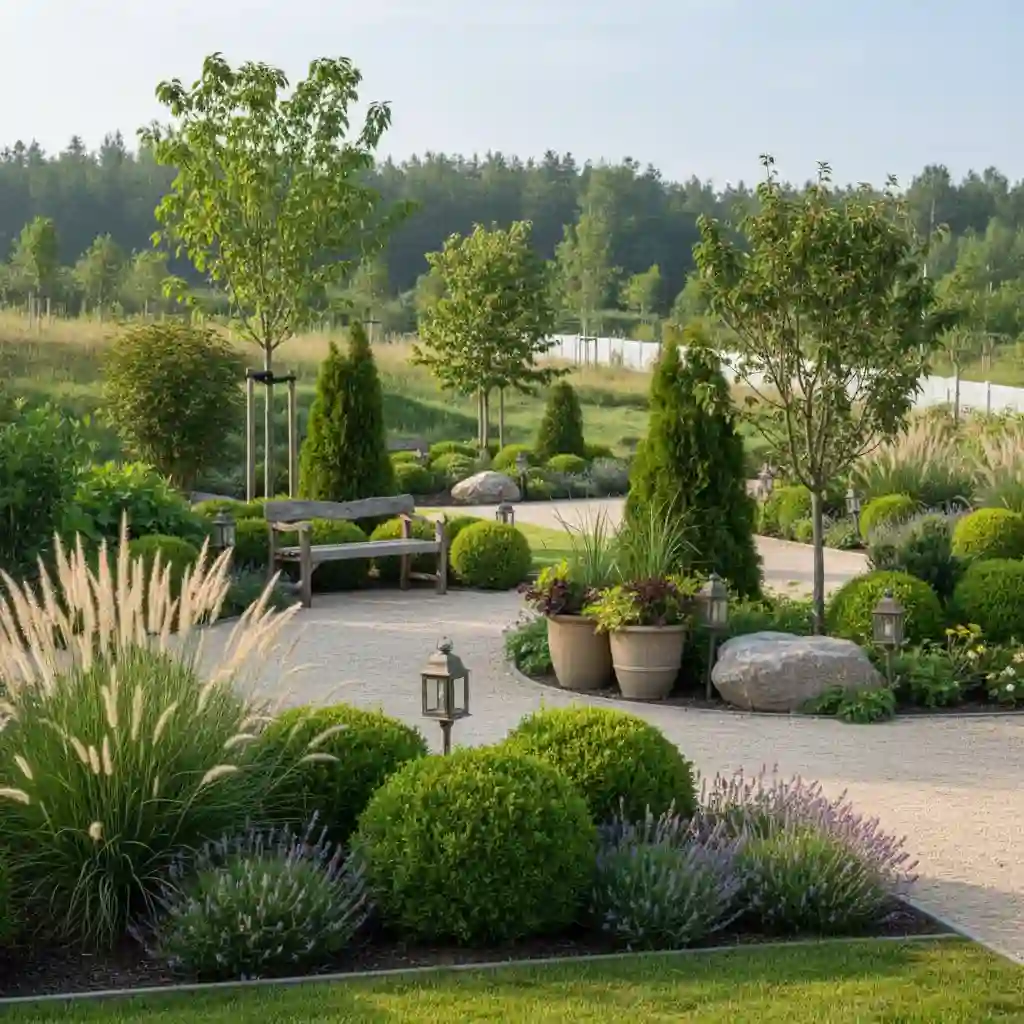
The triangle formation is the most powerful application of this rule. Place three plants at the three points of an imaginary triangle, slightly staggered in depth. This creates layering and shadow, which makes the group look full even with just three plants.
You can also mix species within the group of three. Try one tall statement plant in the back, one mid-height bloomer in the middle, and one low ground-cover plant at the front. That single trio does the work of a much larger planting scheme.
Tips for Implementing the Rule of 3 in Your Landscape Design
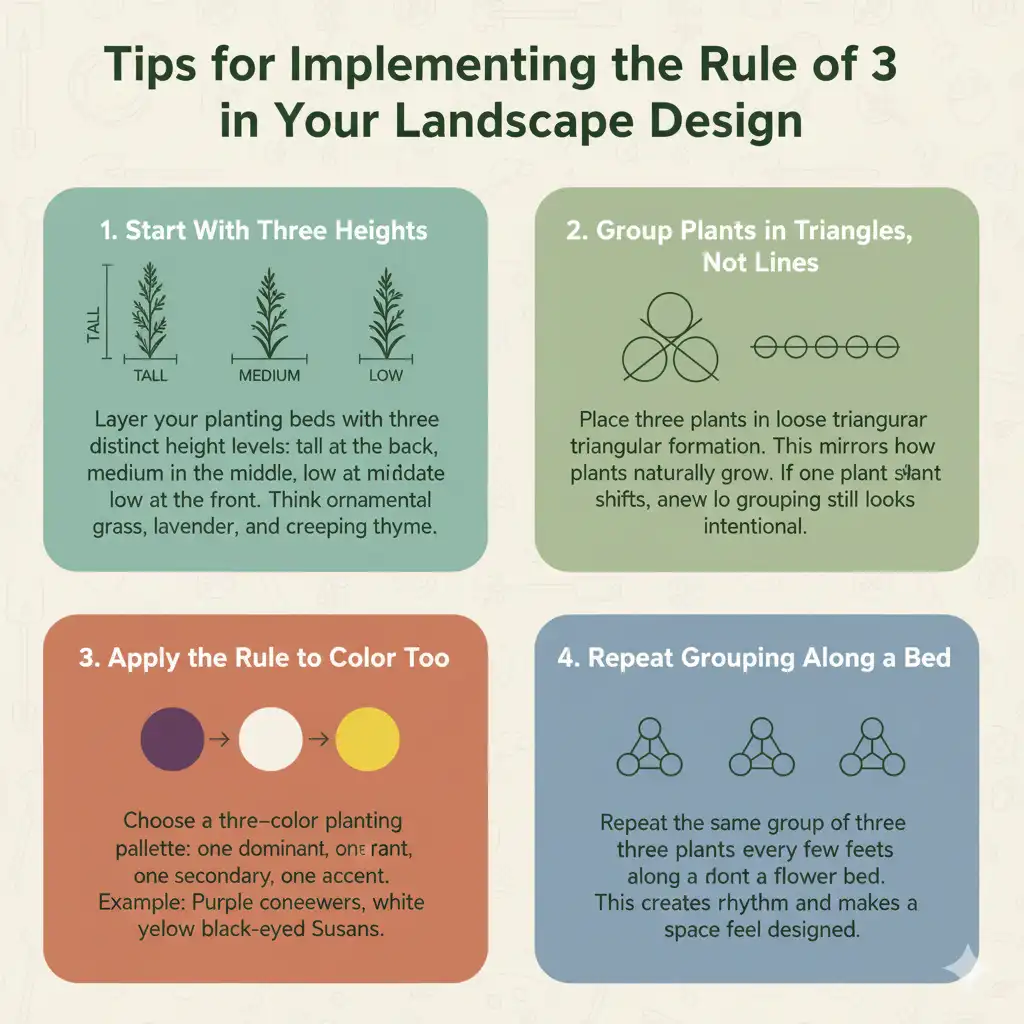
Here are practical ways to put this rule to work immediately:
Use varying heights. A group of three identical plants at the same height looks flat. Vary by 12 to 18 inches between each plant for a natural layered look.
Repeat groups across the yard. Three groups of three plants across a long bed creates rhythm. Your eye moves from one trio to the next, which makes the whole space feel considered and cohesive.
Mix textures, not just colors. Pair fine-textured ornamental grass with a broad-leaf hosta and a spiky agave. The contrast between textures makes each plant pop.
Apply the rule to rocks, too. A single large landscaping rock looks placed. Two rocks look like an accident. Three rocks, staggered in size, look like they were always there. This works especially well with river stone fireplace surrounds and garden borders.
Creating Focal Points with the Rule of 3
A focal point is the first thing someone’s eye lands on when they look at your yard. Without one, the eye wanders and the space feels unresolved.
The rule of 3 helps create strong focal points by giving the eye a clear “anchor and surround” structure. Place your boldest element at the center, then flank it with two supporting elements, like two ornamental grasses on either side of a tall rock or river stone feature.
This three-point structure works for front entries, garden corners, and around mailboxes or garden gates. It’s the same reason most well-designed storefronts use three display items in a window.
Why the Rule of 3 Matters in Landscape Design
Symmetry is satisfying in architecture, but in gardens it can feel stiff and formal. Nature doesn’t plant things in pairs. Go to any forest or meadow and you’ll see clusters of plants in varying sizes and numbers, rarely even, rarely perfectly spaced.
The rule of 3 mimics that natural randomness while still giving you control. It’s a framework that produces organic-looking results even when you’re making every single decision yourself.
For anyone wondering what is the rule of 3 in landscaping in a practical sense, think of it this way: it’s a shortcut that makes your design decisions easier and your results more consistent.
Rule of 3 vs. Rule of Thirds What’s the Difference?
These two rules are related but not the same, and they get confused often.
The rule of 3 refers to grouping elements (plants, stones, features) in sets of three or other odd numbers. It’s about quantity and composition of individual elements within a space.
The rule of thirds is a photography and design principle where you divide a space into a 3×3 grid and place key elements along the grid lines or at intersection points. It’s about where in the overall frame or yard you place things.
Both rules work together. Apply the rule of thirds to position your planting beds or focal points within the yard’s overall layout, then use the rule of 3 to arrange the plants within each bed.
Rule of 3 in Flower Beds
Flower beds are the most common places to use odd-numbered groupings. To make a lasting impression, mass your perennials in trios along the length of your border.
Instead of scattering individual flowers randomly, plant three echinacea together, followed by three blocks of lavender, and three clumps of coreopsis. This clustering technique creates bold blocks of color that can be appreciated from a distance, rather than a muddy blend of textures.
For long foundation beds, repeat your chosen three-plant combinations in a rhythmic sequence along the front of your home. This repetition draws the eye smoothly down the architectural line, making your home feel firmly anchored to its surrounding land.
Rule of 3 in Hardscape Design
Hardscaping, meaning patios, paths, walls, and rock features, benefits from this rule just as much as planting.
When placing landscaping rocks and pavers, odd-number groupings feel more natural than even ones. Three stepping stones placed at a slight angle look like a natural path. Four stones placed evenly look like a math problem.
For a river stone fireplace surround or a stone garden border, group stones in three size categories: small, medium, and large. Alternate them irregularly, keeping the grouping odd. This is the most natural-looking approach and requires no special design training to pull off.
For those asking how much do large landscaping rocks cost, or how much are landscaping rocks in general, grouping them in threes means you can use fewer stones and still achieve a full, layered look. That’s a real budget advantage.
Applying this to hardscape is where a lot of DIY landscapers miss the opportunity. They nail the planting, then line up furniture symmetrically and wonder why the space still feels flat. Three zones, three lighting types, three pots, it all works the same way.
Rule of 3 for Small Gardens and Containers
Small gardens are where most homeowners break this rule without realizing it. A small patio with four potted plants looks crowded. The same space with three plants, chosen for height variation, looks intentional.
For container groupings, use this formula: one tall plant (like a dwarf conifer or tall grass), one mid-height trailing plant, and one low, spreading plant. A single bag of landscape rocks used as top-dressing across all three containers ties the trio together visually.
For raised beds or courtyard gardens, divide the bed into three visual “zones” and plant each zone with its own trio. Even small beds with three distinct groupings look more designed than large beds planted randomly.
Seasonal Planting with the Rule of 3
One underused application of this rule is planning for all three seasons of visual interest: spring, summer, and fall.
Within each planting trio, include at least one plant that peaks in spring, one that peaks in summer, and one with fall color or structure. This keeps the group interesting across the full growing season rather than having everything bloom at once and then go flat.
Example trio for a temperate climate:
- Spring: Bleeding heart (Dicentra)
- Summer: Black-eyed Susan (Rudbeckia)
- Fall: Ornamental grass for structure and movement
Common Mistakes When Using the Rule of 3
Even a simple principle gets misapplied. Here’s what to watch for:
Mistake 1: Using Even Numbers Anyway
It sounds obvious, but planting four of something because you bought a flat of four is extremely common. Split the flat. Give one to a neighbor. Three is better than four in a garden bed every time.
Mistake 2: Grouping by Species Only, Not Height or Color
Planting three hostas together without varying their size or spacing makes the group look like a blob. Use variety even within the same species. Choose three different hosta cultivars with varying leaf size or color tone.
Mistake 3: Applying the Rule Once and Stopping
One grouping of three isn’t the rule of 3, it’s just three plants. The power comes from repetition. Use the same grouping three times across a bed to create rhythm and flow.
Mistake 4: Forgetting Scale
A trio of six-foot ornamental grasses in a three-foot border overwhelms the space. Always match plant scale to the space you’re working with. The rule of 3 works across all sizes from window boxes to large estates.
Mistake 5: Ignoring Bloom Time
Three plants that bloom at the same time provide a wonderful spring spectacle, and then nothing. Stagger the bloom times of your three plants so that the group is interesting in more than one season. This is how the rule of three flowers works in professional landscaping.
When to Break the Rule of 3
Every good design rule has exceptions.
Formal gardens deliberately use even numbers and symmetry. A boxwood-lined formal driveway with matched pairs of topiary looks exactly right. Breaking it up with odd numbers would undermine the style.
Long linear borders sometimes benefit from repetition in even numbers. Four evenly spaced standard roses along a fence creates a formal rhythm that’s intentional and attractive.
Single specimen plants don’t need a trio. A large Japanese maple, a dramatic sculptural agave, or a statement boulder stands better alone.
The rule of 3 is a starting point, not a law. When you understand why it works (visual interest, movement, naturalism), you can make informed choices about when to use it and when to set it aside.
Enhancing Outdoor Spaces with the Rule of 3
What is the rule of 3 in landscaping when you step back and look at your whole yard? It’s a framework for every decision planting, lighting, seating, pathways, color. Apply it consistently and your outdoor space starts to feel like it was designed by someone who knows what they’re doing.
Start with one area. Pick your front entry, your main garden bed, or your patio. Apply the rule of 3 to that one space and see how different it looks in 30 days once plants settle in.
Then move to the next zone. The consistency of the principle across your entire yard is what creates the feeling of a cohesive, designed landscape, not just a collection of things you bought at the garden center.
Get Expert Help Applying the Rule of 3 in Your Yard
Understanding the rules is one aspect. Effectively implementing it in your particular environment utilizing appropriate flora for your temperature, soil composition, and sunlight exposure is another consideration. Professional assistance significantly impacts outcomes.
Robert’s Complete Care specializes in Landscape Design Whittier CA Service and brings this kind of thoughtful, principle-driven design to every project. Whether you’re starting from scratch or refreshing an existing yard, our team applies the rule of 3 and other proven design principles to create outdoor spaces that genuinely look and feel great.
If you’re ready to stop guessing and start designing, check out our Landscape Installation Services in Whittier. We’d love to show you what the rule of 3 looks like in practice in your yard, with your plants.
Conclusion
Good landscape design often relies on simple ideas used thoughtfully. What is the rule of 3 in landscaping? It’s a design principle that groups plants and outdoor features in threes to create balance, movement, and clear focal points.
This approach works in planting beds, patios, pathways, and garden borders. When combined with varied plant heights and textures, it turns simple yards into well-organized outdoor spaces. If you’re planning a garden upgrade or a complete yard makeover, contact Robert’s Complete Care today. Our team can help design and install a landscape that follows proven principles like the rule of three while matching your property’s style and needs.
Frequently Asked Questions
What is the rule of 3 in gardening?
The rule of 3 in gardening means planting in odd-numbered groupings, most commonly three rather than pairs or even numbers. Odd groupings look more natural and create visual balance because the eye moves between the three elements in a triangular path rather than getting stuck in a straight line or symmetric pair. It applies to plant quantity, color palettes, and height layers.
What is the golden ratio in landscaping?
The golden ratio in landscaping is a proportion of 1:1.618, derived from mathematics and classical architecture, utilised to proportion and arrange landscape elements in a manner that appears inherently balanced. In contrast to the rule of three, which dictates grouping, the golden ratio regulates proportions such as the height of a fence in relation to the height of a shrub positioned in front of it.
What is the 3/4/5 rule in decorating?
The 3/4/5 rule in decoration pertains to the arrangement of decorative items in groups of three varying heights, employing a proportional connection of 3:4:5 among them. The shortest object measures 3 units, the middle object measures 4 units, and the largest object measures 5 units. This theory pertains directly to container configurations, outdoor displays, and plant assemblages in landscaping.
What not to do in landscaping?
The biggest mistakes in landscaping include planting in even-numbered groupings, ignoring scale, using too many different plant species without repetition, and neglecting seasonal interest. Other common errors include planting too close to structures, skipping soil preparation, and choosing plants based on appearance alone without checking climate suitability.
In what order do you landscape?
Professional landscapers follow this order: plan and design first, then prepare the soil, install hardscape (pathways, patios, edging), plant trees and large shrubs, add perennials and smaller plants, lay groundcover or mulch, and finally install irrigation and lighting.
What are the four common mistakes landscapers make when planting?
The four most common planting mistakes are: planting too deep (roots suffocate), planting too close together (competition and disease), ignoring sun and soil requirements, and failing to water consistently during the establishment period. A fifth worth adding: planting in even numbers and missing the visual impact of the rule of 3.