It costs a lot to change your yard. Before planting trees or adding a patio, the first question most homeowners ask is simple: how much does landscaping cost? Prices vary greatly, but most projects range between a few hundred dollars for basic yard work and tens of thousands for comprehensive outdoor living spaces.
Planning the budget early saves difficulties later. In this tutorial, I’ll break down the average cost of landscaping, normal landscaping rates per square foot, labour prices, and real project examples so you can estimate your yard renovation with confidence.
Table of Contents
ToggleAverage Landscaping Cost in 2026

Landscaping services for a typical home project cost between $1,400 and $1,660 on average across the country. This includes basic softscaping like lawn work, mulch beds, and shrub planting for a yard of average size. For more complicated projects, costs can rise quickly. A full backyard renovation with hardscaping can easily cost between $10,000 and $29,000, depending on what is included. On the lower end, simple jobs like putting down mulch can start at $77 per cubic yard.
Here’s a quick snapshot to set your expectations:
| Project Type | Typical Cost Range |
| Basic cleanup and mulching | $800 – $1,200 |
| Small front yard update | $500 – $2,500 |
| Full backyard project | $2,000 – $10,000+ |
| Complete yard makeover | $5,000 – $29,000 |
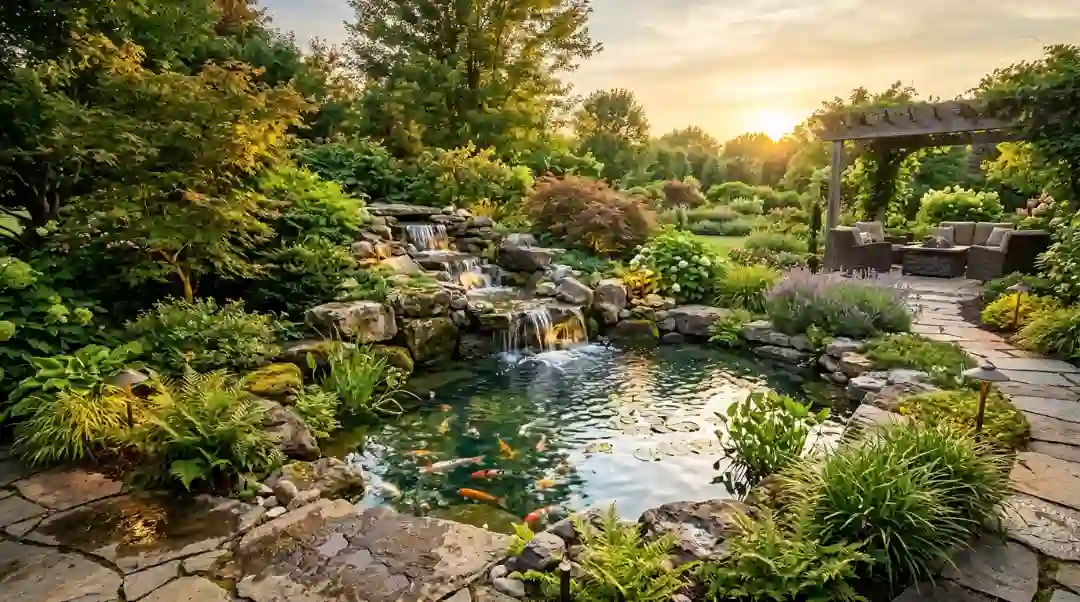
| Water feature or pond | $3,680 – $14,500 |
Data sourced from national contractor surveys and regional landscaping cost data across U.S. cities.
Landscaping Cost by Location
Where you live matters a lot. Landscaping labor costs in a major metro like New York City run noticeably higher than in rural Indiana. California, where Robert’s Complete Care operates, falls on the higher end of the national scale.
| City / Region | Average Hourly Rate | Average Project Total |
| New York, NY | $64/hr | $1,779 – $2,102 |
| Los Angeles / OC, CA | $55/hr | $1,439 – $1,703 |
| Chicago, IL | $56/hr | $1,521 – $1,799 |
| Seattle, WA | $47/hr | $1,531 – $1,812 |
| Miami, FL | $46/hr | $1,251 – $1,481 |
| Houston, TX | $52/hr | $1,252 – $1,483 |
| Austin, TX | $56/hr | $2,000 – $3,500 |
| Whittier / Southern CA | $55 – $65/hr | $1,500 – $4,000+ |
Hourly rates across the U.S. start at around $36 in lower-cost states like Idaho and New Mexico, and can reach $70 per hour in higher-cost states like Wisconsin and New York.
Landscaping Cost Per Square Foot

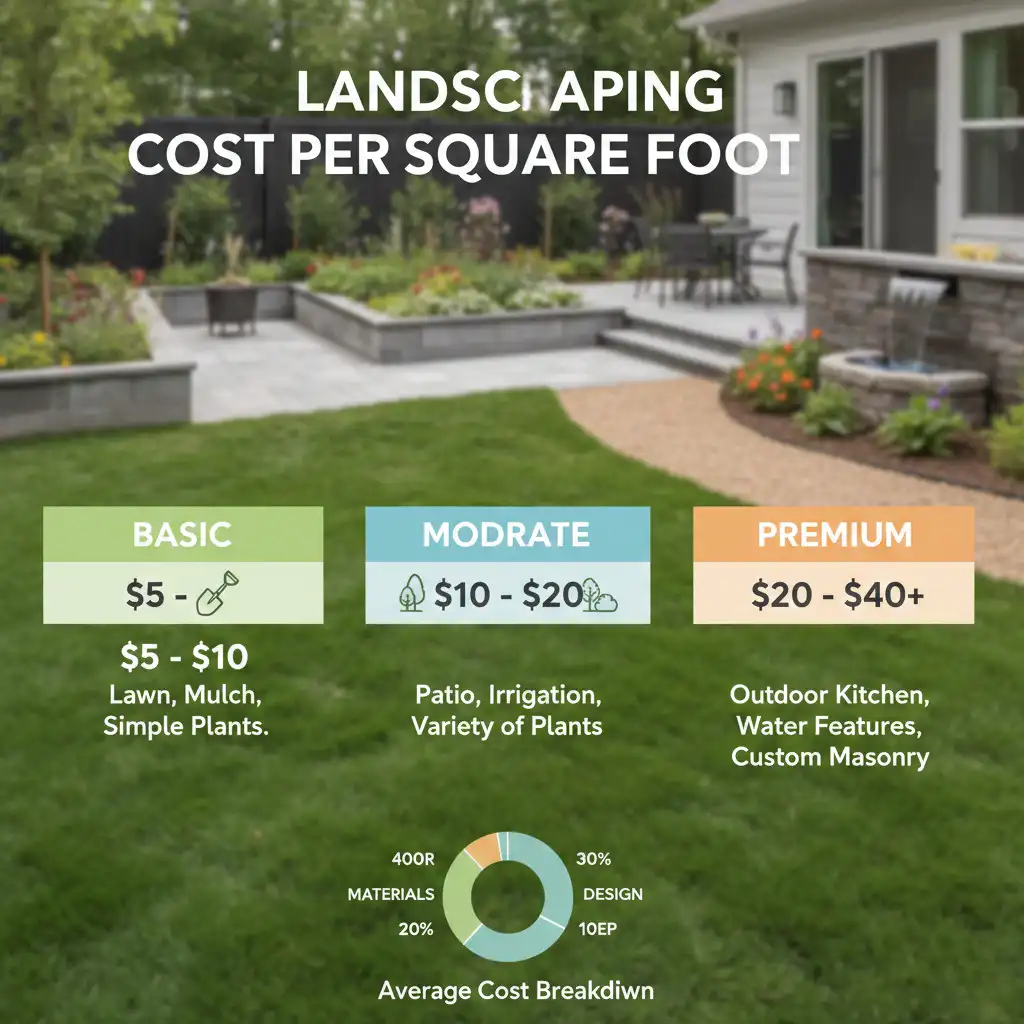
Most landscapers price projects using a square footage formula. The landscaping rates per square foot typically range from $4.50 to $17 per square foot, depending on complexity.
Simple softscaping like planting shrubs and laying sod sits closer to $4–$6 per square foot. More involved hardscaping work like patios and retaining walls pushes toward $10–$15 or more per square foot.
| Yard Size (sq ft) | Basic Softscaping | Full Landscape (Mixed) |
| 200 sq ft | $800 – $1,200 | $900 – $2,900 |
| 500 sq ft | $2,000 – $3,000 | $2,250 – $7,250 |
| 1,000 sq ft | $4,000 – $6,000 | $4,500 – $14,500 |
| 2,000 sq ft | $8,000 – $12,000 | $9,000 – $29,000 |
Tip: You don’t have to budget for your entire yard — only the areas where you want new work done.
Landscaping Cost Per Hour
Some landscapers charge by the hour instead of by the job, especially for smaller jobs, upkeep, or consultations. In the U.S., the typical hourly wage for landscaping work is $50. A professional landscape architect might charge between $150 and $250 per hour for design and planning work.
For 2 hours of yard work, expect to pay $100 to $200 on average depending on your location and the type of work. Basic cleanup and weeding sits at the lower end; precision trimming or grading work is higher.
$100 an hour is not too much for a skilled landscaper especially if the job involves heavy equipment, technical grading, or irrigation work. For basic lawn maintenance, anything over $80/hr may be worth shopping around.
How Much Does Each Type of Landscaping Cost?
Landscaping breaks into two main categories: softscaping and hardscaping. Knowing the difference helps you understand why quotes vary so much.
Softscaping (Living Elements)
Softscaping covers the organic, living parts of your yard lawn, plants, mulch, shrubs, and trees. It’s generally more affordable than hardscaping and forms the foundation of most residential projects.
| Softscaping Service | Average Cost |
| Landscape design (full plan) | $1,390 – $6,850 |
| Land grading / resloping | $1,175 – $3,645 |
| Mulching (per cubic yard) | $77 – $200 |
| Planting flower beds | $865 – $3,000 |
| Sod installation (per sq ft) | $0.35 – $1.65 |
| Planting shrubs (each) | $25 – $230 |
| Planting trees (installed) | $565 – $1,000 per tree |
| Sprinkler / drip irrigation system | $2,500 – $5,000 full install |
| Xeriscaping (per sq ft) | $5 – $20 |
Hardscaping (Built Structures)
Hardscaping includes permanent structures and non-living features. These cost more because they require skilled labor, materials, and often permits.
| Hardscaping Service | Average Cost |
| Patio installation | $2,000 – $5,800 ($8–$24/sq ft) |
| Walkways and pathways | $8 – $22 per sq ft |
| Retaining wall | $1,500 – $9,400 |
| Fencing | $26 – $69 per linear foot |
| Landscape edging | $3.50 – $8.80 per linear foot |
| Landscape lighting | $2,000 – $4,500 |
| Fire pit | $200 – $5,000 |
| Pergola | $2,100 – $6,000 |
| Outdoor kitchen | $5,057 – $17,276 |
| Gazebo | $5,358 – $9,058 |
| Pond or fountain | $300 – $14,500 |
| Deck (per sq ft) | $19 – $86 |
How Much Does Landscape Maintenance Cost?
Landscaping is not a one-time expense. After installation, your yard needs regular care to stay healthy and well-maintained. Most homeowners spend $200 to $300 per month on ongoing upkeep.
| Maintenance Service | Average One-Time Cost |
| Lawn mowing | $49 – $147 per visit |
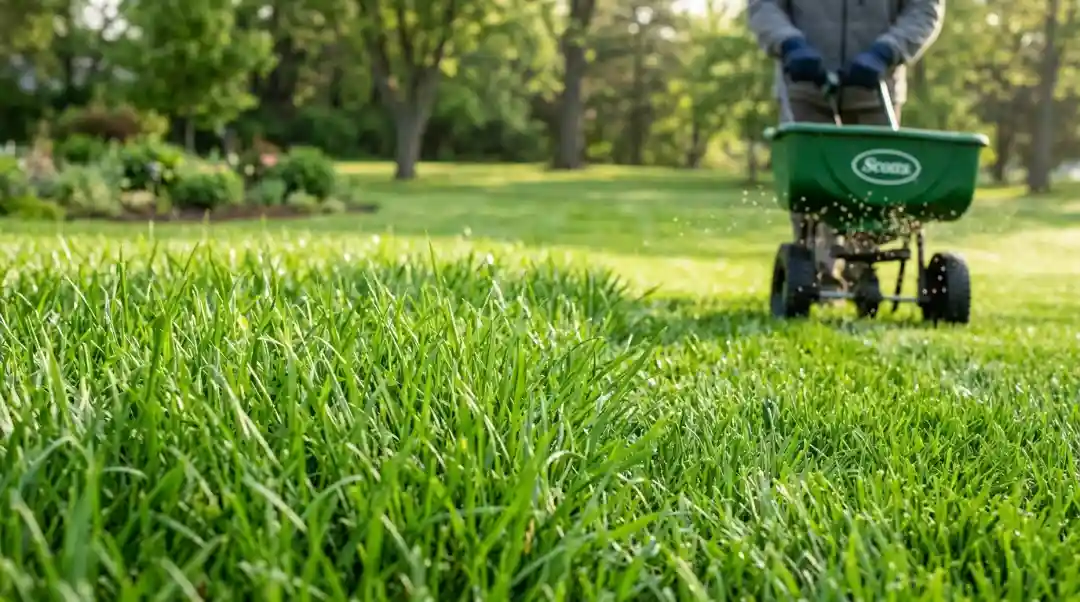
| Lawn fertilization | $67 – $405 |
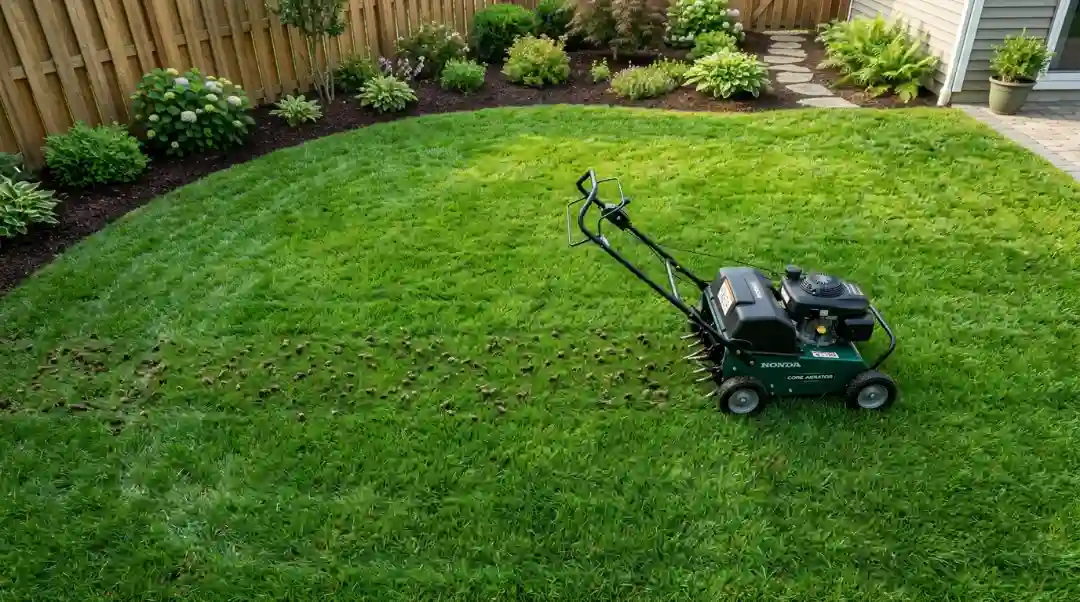
| Lawn aeration | $107 – $202 |
| Yard cleanup (seasonal) | $216 – $462 |
| Tree trimming (per tree) | $430 – $640 |
| Lawn seeding | $427 – $1,514 |
| Pruning and weeding | $50 – $200 per visit |
Signing up for a recurring plan (weekly, bi-weekly, or monthly) often brings the per-visit price down compared to one-off jobs.
What Factors Affect Landscaping Cost?
Understanding what drives the cost estimate for landscaping helps you ask better questions and avoid surprises. Here are the biggest factors:
Labor vs. Materials Split
Labor is where most of your money goes. In a typical landscaping project, 70 to 80 percent of the total cost is labor. Only 20 to 30 percent covers plants and materials. This is why two quotes for the same job can look completely different depending on who’s bidding.
Yard Size and Site Conditions
More square footage means more of everything: more materials, more workers, and more tools. Sloped yards, soil that is compacted or rocky, small entry points, and drainage problems that are already there all add time and money. If a crew wants a skid steer or trencher, they have to pay for both the equipment and the workers.
Design Complexity
Straight lines and simple shapes are cheaper than sweeping curves, multi-level patios, or custom lighting plans. Every design element that requires more precision adds skilled labor hours and increases the total landscaping services cost.
Materials Selected
Pavers made of concrete are cheaper than natural stone. Young trees are cheaper than old ones. Rubber mulch costs more up front, but it lasts longer than bark chips. You might not think that the materials you choose will have a bigger effect on your budget than they do.
| Material | Typical Cost |
| Sod | $0.35 – $0.85 per sq ft |
| Artificial turf | $2 – $6 per sq ft |
| Rocks / gravel | $40 – $100 per cubic yard |
| Mulch (per bag) | $2 – $15 |
| Retaining wall blocks | $3 – $40 per sq ft |
| Pavers | $1 – $25 per sq ft |
| Topsoil | $12 – $55 per cubic yard |
Location and Timing
In states with a high cost of living, like California and New York, landscaping costs are usually greater. This is more about the labor market than the materials. Timing is also important. Prices tend to be higher in the spring and summer, which are the busiest times of year. If you plan your project for the fall or winter, you may have more opportunity to negotiate.
New Builds vs. Existing Yards
New homes starting from bare soil need more upfront investment. There are no existing beds, no irrigation, and no soil preparation done. Existing yards can often be refreshed for less, as long as you’re working with healthy soil and established plants.
Hidden or Unexpected Landscaping Costs to Consider
These are the costs that rarely show up in the first quote but tend to appear mid-project. Planning for them upfront will save you a lot of stress.
- Permits: $20 to $3,000 depending on the work and your municipality. Retaining walls, major grading, and decks often need permits.
- Soil testing: $15 to $2,000 especially important before planting on a new property.
- Land surveying: Up to $750 if property lines need to be confirmed before fencing or retaining walls.
- Site cleanup: $1,150 to $3,680 for removing old plants, clearing debris, or grinding stumps before new work begins.
- Debris hauling: Often not included in base quotes. Ask specifically if removal is covered.
- Drainage fixes: Standing water or incorrect slope can require French drains or regrading both add significant cost.
- Irrigation conflicts: Unmarked sprinkler lines or utility pipes discovered during digging require rerouting or repair.
- Water features: $2,000 to $30,000 if you want ponds, fountains, or bubbling rocks.
- Material delivery fees: Heavy stone or bulk soil often comes with separate delivery charges not in the original estimate.
DIY vs. Hiring a Landscaper
Some things are really easy to do yourself. Most homeowners can handle mulching, planting little flowers, cleaning up the yard, and making the garden beds look new again. These jobs might save you a lot of money on labour.
But patios, retaining walls, irrigation systems, electrical lighting, and grading are all types of hardscaping that require professional tools and skills. Fixing these mistakes will cost a lot of money. Poor drainage can lead to soil erosion, difficulties with the foundation, and plants dying.
A good middle ground is to hire a contractor to do the structural work and then do the planting and mulching yourself. In this manner, a lot of people can save 20 to 30 percent without losing quality.
| Task | DIY-Friendly? | Why |
| Mulching | Yes | Low skill, basic tools |
| Planting flowers / shrubs | Yes | Manageable with guidance |
| Lawn mowing / cleanup | Yes | Equipment is affordable |
| Sod installation (small) | Maybe | Labor-intensive but doable |
| Patio / pavers | No | Requires precise leveling |
| Retaining wall | No | Structural and drainage risks |
| Irrigation system | No | Needs plumbing/zoning knowledge |
| Landscape lighting | No | Electrical work involved |
| Land grading | No | Heavy equipment required |
Does Landscaping Add Value to Your Home?
Yes and by more than most homeowners expect. Well-maintained landscaping can increase a home’s value by 15 to 20 percent on average. Homes with quality curb appeal and functional outdoor spaces consistently sell faster and at higher prices than comparable homes with bare or neglected yards.
The features that add the most resale value include healthy trees and shrubs, stone or paver pathways, automatic sprinkler systems, outdoor lighting, and functional backyard living areas. These upgrades serve both aesthetics and practicality which is exactly what buyers look for.
Research also shows that homes with professional landscaping have a 5 to 12 percent cost advantage over similar homes without it. That’s a real return on a project that you also get to enjoy every day.
How to Choose a Landscaper
The right landscaper makes a big difference not just in cost, but in how long the results last. Here’s how to find one worth hiring.
- Start on platforms with verified reviews and photos of completed work.
- Match experience to your project someone who specializes in hardscaping may not be the best fit for a planting design job.
- Share clear details upfront. Photos, measurements, and style preferences help contractors give accurate estimates rather than ballpark numbers.
- Ask for a written quote that itemizes scope, materials, labor, cleanup, and any potential add-on costs.
- Get at least 3 quotes. The cheapest bid isn’t always the best deal, and the most expensive one isn’t always the highest quality.
- Clarify what’s included. Does the quote cover debris removal? Permits? Irrigation adjustments?
- Be cautious of vague or unusually low estimates. These often signal inexperience or future change orders that inflate the final bill.
- Check licensing and insurance. In California, landscaping contractors should carry a valid CSLB license.
Get a Landscaping Estimate in Whittier, CA
If you’re in the Whittier area and want honest, accurate pricing without the runaround, Robert’s Complete Care handles full Landscape Installation Services in Whittier from initial design consultations through complete installation and ongoing care.
The team works across softscaping and hardscaping projects, including irrigation systems, hardscape design, lawn installation, tree and shrub services, and more. A free estimate takes the guesswork out of budgeting and gives you real numbers for your specific yard.
Contat us Robert’s Complete Care at (562) 208-0148 or visit the site to request your free estimate today.
Frequently Asked Questions About Landscaping Cost
Is spending money on landscaping worth it?
Yes, landscaping is worth the investment for most homeowners. It increases property value by 15 to 20 percent on average, improves curb appeal, and enhances the everyday usability of your outdoor space. When done right, it pays back more than it costs.
Beyond resale value, a well-designed yard reduces stress, increases privacy, and lowers ongoing maintenance costs when you choose the right plants and irrigation setup from the start.
What is the rule of 3 in landscaping?
The rule of 3 in landscaping means planting in odd-numbered groups of three to create a natural, balanced look. Single plants often look isolated, while pairs can feel too symmetrical. Groups of three give depth and visual flow.
How much to landscape a 20×20 yard?
A 20×20 yard (400 square feet) typically costs between $1,600 and $6,800, depending on what services are included. Basic softscaping (sod, mulch, shrubs) sits at the lower end, while hardscaping elements like a small patio or retaining wall push costs higher.
For a 400 square foot project at the national average of $4.50 to $17 per square foot, you’re looking at $1,800 to $6,800 as a realistic range.
Is $100 an hour too much for landscape work?
$100 per hour is on the higher end for standard landscaping labor but not unreasonable for specialized work. For general yard maintenance, $50 to $75 per hour is more typical. For skilled tasks like grading, irrigation installation, or complex hardscaping, $100/hr or more is fair.
If you’re in a high cost-of-living area like Southern California, hourly rates naturally run higher. Always compare at least 3 quotes to understand what’s fair for your market.
What is the most expensive part of landscaping?
Hardscaping is consistently the most expensive part of any landscaping project. Features like outdoor kitchens, retaining walls, pergolas, and inground water features involve construction-grade labor, permits, and premium materials that drive up costs quickly.
Among softscaping services, landscape design and large tree installation tend to cost the most. Custom design plans can run $1,390 to $6,850 on their own before a single plant goes in the ground.
How much for 2 hours of yard work?
Two hours of professional yard work typically costs $100 to $200, based on the national average rate of $50 to $100 per hour. The final cost depends on the type of work, your location, and the contractor’s minimum fee.
Some landscapers have a minimum charge for any job regardless of time spent — typically $75 to $150. Always ask upfront whether there’s a job minimum before booking.
What is the cheapest option for landscaping?
Mulch, ground cover plants, and basic lawn maintenance are the most cost-effective landscaping options. A simple mulched bed with low-maintenance native plants can refresh a yard for as little as $200 to $600.