
Irrigation Systems

Explore sprinkler and drip systems and smart watering solutions.

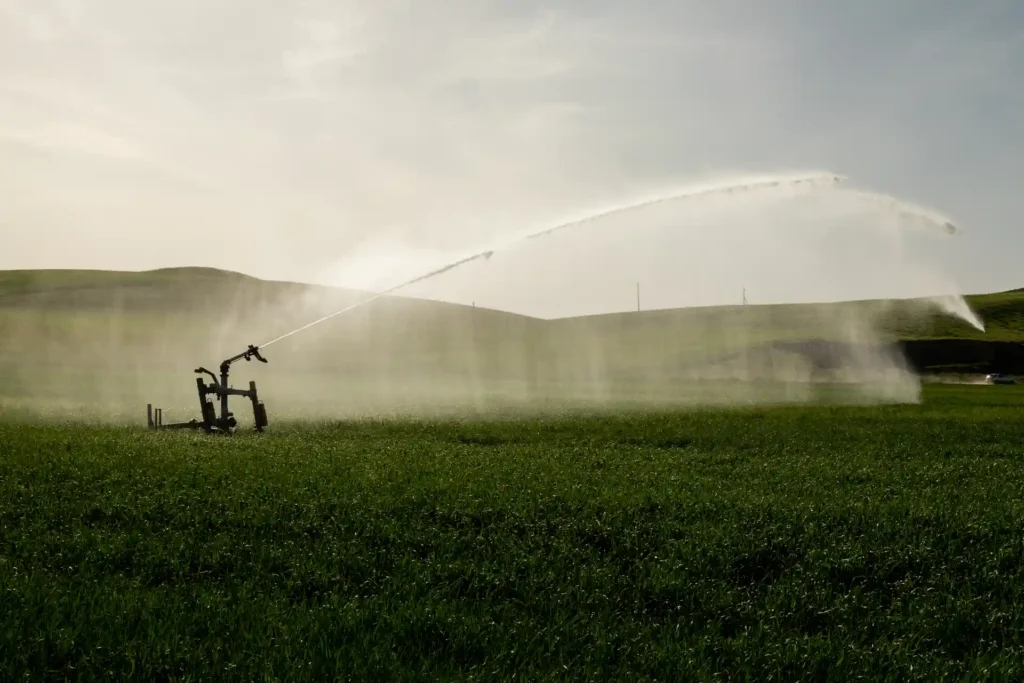
What is a irrigation system shown by a sprinkler irrigating green farmland with controlled water spray

What Is a Irrigation System?

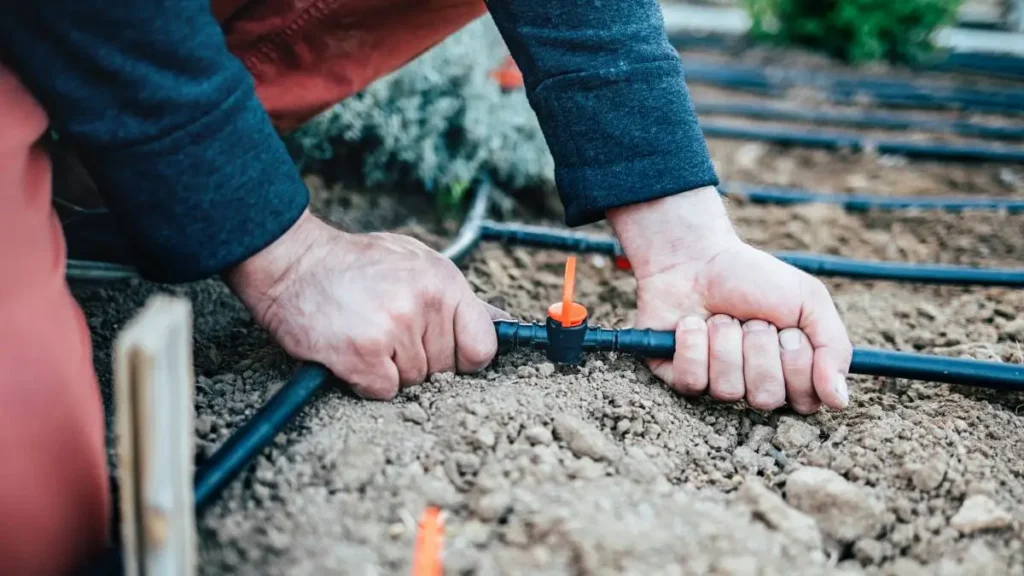
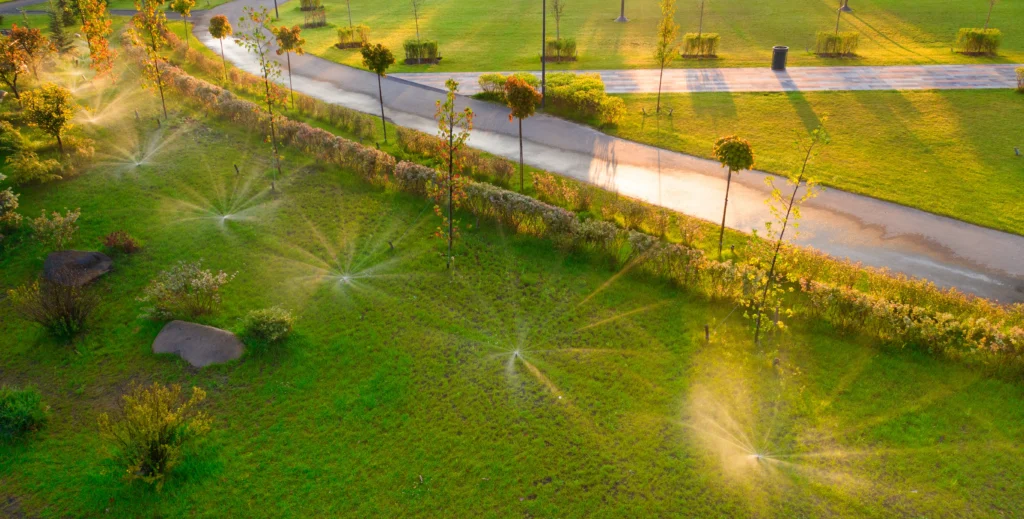
Most people water their plants when they remember to. That’s the problem. Inconsistent watering stresses plants, wastes water, and quietly kills lawns and gardens over time. If you’ve watched a garden struggle despite your best efforts, the fix might be simpler than you think. What is an irrigation system? It’s a network of pipes, valves, and emitters that delivers water directly to plants, lawns, or crops on a controlled schedule. It removes guesswork from watering and makes sure every plant gets the right amount of water, at the right time, without waste. What is an irrigation system, and how does it work? An irrigation system is a structured setup that moves water from a source, like a municipal supply or a well, to plants through a series of pipes, valves, and outlets. The system is controlled manually or by a timer, delivering water to specific zones. Most residential systems run on 20 to 30 PSI of water pressure. At its core, the system works in three stages: water intake, distribution, and delivery. A backflow preventer protects your water supply, a pressure regulator keeps the flow steady, and emitters or sprinkler heads release water at ground level or above. A basic controller (timer) automates the whole process so you don’t have to think about it. Modern systems can connect to soil moisture sensors and weather-based smart controllers. These tools adjust watering schedules based on real-time data, like rainfall or soil saturation, which reduces runoff and prevents overwatering. Different kinds of irrigation systems are great for gardens. There are several kinds of irrigation systems, and each one has a different job. The type of plant, soil, and climate all play a role in choosing the proper one. Irrigation on the Surface This is one of the oldest ways of irrigation. Gravity pulls water through the soil. Farmers commonly use this in big fields. It’s easy to use, but if you don’t take care of it, it wastes water. Irrigation using sprinklers Like rain, sprinklers blast water into the air. This kind is common for gardens and lawns. It does a good job of covering everything, though wind can cause it to lose water. Irrigation via Drip Drip systems let water out slowly at the roots of plants. This strategy reduces waste and makes plants healthier. Many experts call it the most efficient irrigation system for gardens. Irrigation underneath the surface Water is sent below Earth’s surface. Roots take in water directly. This keeps leaves dry and slows down evaporation. There are good and bad things about each choice. Knowing these things will help you make a good choice. The Secret Weapon of a Garden: Drip Irrigation Drip irrigation is the most water-efficient option for home gardens, and it’s not even close. According to the U.S. Environmental Protection Agency, drip systems can be up to 90% efficient, compared to 50 to 70% for conventional sprinklers. For a drip irrigation system for tomato plants, you’d run half-inch mainline tubing along each row, then use quarter-inch feeder lines with 0.5 to 1 GPH emitters at each plant base. Tomatoes need deep, infrequent watering, so a twice-weekly schedule of 30 to 45 minutes works well in most climates. Drip irrigation in maize is equally effective. Farmers using subsurface drip irrigation for maize report water savings of 30 to 50% compared to surface methods, while maintaining or even improving yields. Underground drip irrigation in maize fields also suppresses weeds because the soil surface stays dry. A Simple Explanation of Parts of Irrigation Systems Knowing the parts of irrigation helps you maintain your system better.  Most systems have the same basic parts. Water source: a city line, a well, or a tank Pipes: Move water between areas Valves: Manage the flow of water Controller: Sets times for watering Sprinklers or emitters: Bring water Regulators and filters: Keep components of the system safe These parts of irrigation work together to ensure that water reaches where it needs to go safely and evenly. A malfunction in one element of the system impacts the whole system. Managing water use well in irrigation systems Water efficiency isn’t just good for the environment. It saves money. The average American household spends about $1,000 per year on water, and roughly 30% of that goes to outdoor use, according to the EPA. A few practices that actually make a difference: Schedule by zone, not by property. Grass needs different watering than flower beds. A single schedule for everything leads to overwatering or underwatering in at least one area. Use the 30/30 rule for irrigation. Water for 30 minutes, pause for 30 minutes, then water again. This lets water soak in rather than run off, especially useful on slopes or clay-heavy soils. Time irrigation to early morning. Watering between 4 AM and 8 AM reduces evaporation significantly. Midday watering can lose up to 30% of water to evaporation before it reaches roots. Install a rain sensor. A $20 to $40 rain shut-off device can prevent your system from running during or after rainfall. Some municipalities require them by code. Things to think about when picking a lawn irrigation system Planning ahead is necessary to pick the proper system. Not every lawn needs the same kind of setup. First, think about the size and shape of your grass. Sprinklers with zones are often needed for big lawns. Drip or hose systems could be all that small lawns need. The type of soil is also important. Sandy earth drains quickly. Clay keeps water longer. The type of plant and how much sun it gets also determine how much water it needs. Local laws about water use can limit when you can water. A skilled installer can help you find the correct solution for your lawn. Benefits of Irrigation Systems Beyond a Pretty Lawn The obvious benefit is a green lawn. But the real advantages go deeper. Consistent plant health. Plants watered on a schedule grow stronger root systems. Erratic watering stresses plants and makes them more vulnerable
What Is a Irrigation System? Read More »

How to Install a Lawn Irrigation System – Step-by-Step Guide

How to Install a Lawn Irrigation System | A Complete Step-by-Step Guide

Watering your lawn by hand every day gets old fast, especially in summer. If you’re tired of dragging hoses around or watching your grass go brown during a dry spell, you’re already halfway to deciding you need a smarter solution. Learning how to install a lawn irrigation system isn’t as complicated as it sounds, and the payoff, a healthy lawn that basically waters itself, is absolutely worth the weekend effort. Here’s the quick answer: you plan your layout, dig trenches, lay PVC pipe, install valves and sprinkler heads, wire everything to a controller, and set your schedule. This guide walks through every step clearly, including gaps most tutorials skip, like water pressure calculation, winterization, and troubleshooting. What Is a Lawn Irrigation System? A lawn irrigation system is a network of underground pipes, valves and automatic pop-up sprinkler heads that deliver water to a landscape. It is hard wired into your primary water line or a secondary utility meter. The brain of the system is the central electronic controller that instructs particular valves to open and close according to a programmed schedule. Unlike manual sprinklers, an underground system offers targeted hydration through pressurized lines, meaning no waste of resources. It divides your yard into different areas called zones to keep the pressure correct for operation. Modern systems employ smart Wi-Fi controllers that automatically adjust watering times based on local weather forecasts. Is DIY Irrigation Installation Right for Your Yard? DIY irrigation installation is right for your yard if you have a property under a half-acre, flat terrain, and a basic comfort level with physical tools. Large properties with complex slope changes or heavy stone retaining walls require heavy commercial machinery and specialized engineering. If you are willing to handle intense physical labor like trenching and pipe assembly, a self-installed project is highly practical. Consider your personal schedule and physical limits before buying materials. Digging hundreds of feet of trenches by hand or operating a heavy walk-behind trencher strains your back and shoulders. However, managing the project yourself gives you total familiarity with your property’s plumbing, making future troubleshooting and repairs simple. Why Install a Sprinkler System? A sprinkler system will keep your deep soil moist all over, keep from overwatering, add to the value of your home and get rid of the daily manual labor.  An automated system delivers the exact amount of water your root zones need to thrive. Modern systems also use less water, so you may notice a decrease in your monthly utility bills. Water loss from evaporation and wind drift will be minimized by scheduling irrigation for the early morning hours. It also protects your costly investments in sod, ornamental trees and fragile flower beds in the middle of the brutal summer heat waves. Calculate Water Pressure and Flow Rate You measure the water pressure by connecting a pressure gauge to an outdoor spigot, and you measure the flow rate by timing how quickly a bucket fills. These two metrics determine the maximum number of sprinkler heads that can be on a single valve at the same time. Too many nozzles in a zone and the operating pressure drops and the heads will not pop up or spray properly. Be sure that all indoor faucets, washing machines, and showers are turned all the way off so that you can measure your static water pressure. Screw a standard $PSI$ (pounds per square inch) gauge onto the outdoor faucet nearest your water meter. Open the valve all the way. The normal range of pressure for a residential home should be between $40\text{ and }65\text{ PSI}$. Now do the bucket test to find out the $GPM$ (gallons per minute) capacity of your system. Place a clean 5-gallon bucket under the open spigot and time the exact number of seconds it takes to fill to the brim using a stopwatch. Use this math equation to figure out your ability: How to Install a Lawn Irrigation System: Step-by-Step 1. Plan Your Layout and Zones Never guess where to place your sprinkler heads. Draw a map of your property to scale on graph paper, marking the location of the house, driveway, sidewalks, and major trees. Divide the yard into square or triangular grids to ensure total head-to-head coverage. Head-to-head coverage means the spray from one sprinkler head must physically reach the base of the neighboring head. This overlapping design prevents dry patches caused by wind distortion or natural spray drop-off. Group your heads into separate zones based on your calculated $GPM$ limit and the sun exposure of each area. 2. File for Permits and Call 811 Before your shovel touches the dirt, you must contact your local building department regarding building codes and required plumbing permits. Most municipalities require a certified backflow preventer to stop non-potable lawn water from siphoning back into your clean domestic drinking supply. You must dial 811 at least a few days before digging to have your local utility lines marked for free. Utility technicians will spray paint or place small flags over buried gas, electric, and fiber optic lines. Striking an underground power cable or gas main is incredibly dangerous and carries massive financial liabilities. 3. Dig the Trenches Mark your planned pipe paths across the lawn using white landscape spray paint or string lines. Rent a walk-behind power trencher from a local tool supply yard for approximately $100 to $200 a day to save your back. These machines are heavy and vibrate intensely, so pull the unit backward slowly along your painted lines. [Image Idea: Real photo of a homeowner operating a rented mechanical walk-behind trencher, showing the machine carving a clean 8-inch deep trench in a front yard while leaving the churned dirt neatly piled on one side.] Dig your main line trenches to a depth of 8 to 12 inches to protect the pipe from lawn aerators and heavy traffic. Run your secondary zone lines at a minimum depth of 6 inches. When working near utility flags or tree roots, put away the power

How to Install a Lawn Irrigation System | A Complete Step-by-Step Guide Read More »

Different types of irrigation systems including sprinkler, drip, surface, subsurface, and manual methods used for efficient landscape watering.

5 Types of Irrigation Systems You Must Know for Your Property

A green grass helps a property stand out. Each week sees hours spent on hand-watering. With a permanent installation, your plants will continue to live and your weekends will be saved. If you want the greatest watering system, you need to know the 5 Types of Irrigation Systems accessible for properties. The best option relies on your specific soil and landscape design. The major alternatives are drip lines, pop-up sprinklers, subsurface systems, surface channels and micro-sprinklers. Here’s how each arrangement works, so you can pick the best option. What Is an Irrigation System and Why Does It Matter? An irrigation system is a structured network of pipes, valves, and emitters designed to distribute water across a landscape. These systems replace manual watering to deliver specific amounts of moisture directly to turfgrass, flower beds, and trees. They maintain soil moisture balance while preventing water waste from wind drift or overwatering. Manual watering often leads to shallow root zones. Water applies too fast and runs off into the street. A dedicated setup applies water at a rate the soil can absorb. This helps build healthy plants that resist pests and disease. Proper watering keeps your property looking its best. If you plan to create outdoor living space zones, a green backdrop makes the area look complete. A well-planned yard increases overall curb appeal and property value. The 5 Types of Irrigation Systems for Residential Properties Every property has unique watering needs based on plant types and terrain. Mixing the right methods across different zones keeps every plant healthy. Here is a breakdown of the primary options for your yard. 1. Drip Irrigation Systems (Best for Flower Beds & Gardens) Drip irrigation uses a network of flexible plastic tubes with small holes called emitters. These tubes sit on top of the soil or under a layer of wood mulch. They slowly drop water directly onto the soil surface at the base of your plants. Water Savings: This method uses 30% to 50% less water than standard overhead sprinklers. Disease Control: Keeping foliage dry prevents fungal growth and leaf spot diseases. Weed Reduction: Water only hits the plants you want, leaving bare soil dry so weeds cannot sprout. This setup works best for tight spaces, vegetable gardens, and ornamental flower beds. It applies water slowly over long periods. This allows moisture to penetrate deep into heavy clay soils without causing messy runoff. 2. In-Ground Pop-Up Sprinkler Systems (Best for Turf & Open Lawns) In-ground systems use solid PVC pipes buried beneath the lawn. When water pressure rises, the sprinkler heads rise above the grass line to spray water. When the watering cycle finishes, the heads drop back down below the soil level. Fixed Spray Heads: These nozzles produce a constant fan of water over a specific radius. Gear-Drive Rotors: These heads rotate back and forth, throwing a thick stream of water over long distances. Automated Scheduling: A central control panel runs the system at the best times of day. This setup offers excellent customization for large lawns. It distributes water evenly across flat or sloping terrain. The heads stay out of the way so you can use a lawn mower without. 3. Subsurface Drip Irrigation (Best for Arid and Windy Areas) Subsurface irrigation places the watering lines several inches completely below the soil surface. Emitters deliver moisture directly into the root zone of the grass or plants. Nothing sits above the ground. Zero Evaporation: Water never hits the air, so wind cannot blow it away. Zero Damage: Mowers, aerators, and pets cannot crack or break the buried components. Dry Topsoil: The very top layer of soil stays dry, which stops weed seeds from finding moisture. This system works wonders in hot climates where evaporation rates are high. It requires careful planning during installation to prevent dirt from clogging the small emitters. It keeps your grass perfectly green without a drop of water showing on the surface. 4. Surface Channels and Furrows (Best for Flat, Large-Scale Zones) Surface irrigation relies on gravity to move water across the ground. Small, parallel channels called furrows are dug into the dirt. Water flows from a central valve or canal into these ditches to soak the surrounding soil. Low Cost: This setup requires no expensive pumps, nozzles, or subterranean pipes. Simplicity: Fewer mechanical parts mean the system rarely breaks down. High Volume: It moves large amounts of water quickly across flat areas. This method does not fit small residential lawns. It works well for large properties growing row crops or fruit trees. The ground must be completely flat to ensure water distributes evenly without pooling in low spots. 5. Micro-Sprinklers and Bubblers (Best for Trees and Dense Shrubs) Micro-sprinklers combine the slow application of drip lines with the coverage of a small spray head. They sit on short plastic stakes a few inches above the ground. They spray a soft mist or stream over a small, localized area. Low Pressure: They operate on lower pounds per square inch (PSI) than large pop-up systems. Targeted Saturation: Bubblers flood a small basin around a tree trunk for deep soaking. Adjustable Flow: You can turn individual heads up or down based on plant size. This setup is ideal for mature trees and dense shrub borders. It delivers water gently to prevent soil compaction around sensitive root systems. It provides a steady soak that matches the absorption rate of most local soils. Smart Irrigation Systems: The Future of Lawn Watering Smart irrigation controllers use local weather data and soil moisture sensors to manage your watering schedule automatically. These digital timers connect to your home Wi-Fi network. You can monitor and adjust the entire system using an app on your smartphone. Traditional timers run on a fixed schedule even during a heavy rainstorm. Smart systems check the daily forecast. If rain is coming, the system delays the watering cycle to prevent soggy soil and water waste. Soil moisture sensors add another layer of accuracy. They measure the actual water content in the dirt.

5 Types of Irrigation Systems You Must Know for Your Property Read More »