You’re planning to lay turf, and the last thing you want is to order too little or waste money ordering way too much. It’s a common problem, and it usually starts with one missing piece of information: how much turf actually comes on a pallet? The short answer is that a standard turf pallet covers between 400 and 500 square feet, but that number shifts based on where you buy, what grass type you choose, and how the sod farm cuts and packages it.
In this guide, we’ll walk through exactly how much turf on a pallet you can expect, what affects coverage, how to calculate the right amount for your yard, and what each pallet weighs. By the end, you’ll have everything you need to place a confident order and avoid costly surprises on install day.
What Is a Turf Pallet?
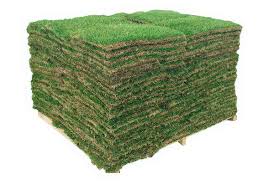
A turf pallet is a wooden shipping platform stacked with pre-cut pieces of sod, ready for installation. Each pallet holds enough grass to cover a specific area of your lawn, typically measured in square feet. The sod itself is harvested from a farm, cut into uniform pieces, and stacked tightly for transport.
Turf and sod are the same thing. “Turf” is just the more common term used in Canada and parts of the UK, while “sod” is the go-to word in the United States. Whether your supplier calls it turf or sod, you’re getting pre-grown grass with the soil and root system still attached.
Think of a pallet of turf like a flat-pack of puzzle pieces. Each piece is a ready-made section of lawn. You lay them out, and within days the roots knit into the soil below.
Understanding Sod Pallet Coverage (Without the Corporate Jargon)
Let me break this down the way I’d explain it to a friend over coffee.
When sod arrives at your house, you’re getting grass that’s been grown for months. It comes with soil attached, roots and all. It’s basically instant lawn. Each piece measures about 16 inches by 24 inches—think of it like a small yoga mat made of grass. That one piece covers about 2.67 square feet.
Here’s what actually matters: A typical pallet of sod square feet usually lands somewhere around 450 square feet. But I’m saying “usually” because I’ve genuinely seen variation. One supplier we work with regularly gives us about 165 pieces per pallet. Another gives us 155. Same grass, different farms, different coverage.
The difference comes down to a few things. Some grass types are just naturally thinner. Bermuda grass, for instance, isn’t as dense as St. Augustine. So when they lay it on a pallet, you get more pieces but they’re lighter overall. St. Augustine is thicker and heavier, so fewer pieces but denser coverage. Both end up covering roughly the same area, just differently.
Then there’s thickness. Some suppliers grow their sod thicker for durability during transport. Others keep it thin to save money. The standard size of a piece of sod doesn’t change, but that thickness affects how many pieces fit on a pallet and how the grass performs after installation.
When we order for Robert Complete Care customers, we’ve learned to ask our suppliers exactly what we’re getting. Not just the price. Not just the coverage number they put in their brochure. We actually ask questions like: “How many pieces?” “How thick?” “Is that 450 square feet measured how?” This matters.
Turf vs. Sod: Is There a Difference?
No. They’re interchangeable terms for the same product. In Canada, “turf” is more widely used by homeowners and landscapers. In the US, most farms and suppliers say “sod.” When searching online, you’ll find results for both. If a Canadian supplier calls it turf and a US site calls it sod, they’re describing the same thing.
One separate question worth addressing: some people searching “how much turf on a pallet” are thinking about artificial turf, not natural grass. Artificial turf is sold by the roll, not by the pallet, and coverage is completely different. This guide focuses on natural, live sod pallets.
What Factors Affect Grass Cost in Whittier
Now let’s talk about the part that actually hits your wallet.
The pallet of sod cost in Whittier isn’t fixed. I wish it were. It’s influenced by things you’d expect and things you wouldn’t.
First, the grass itself. Not all sod is created equal. In Whittier, your main options are typically Bermuda, St. Augustine, or Zoysia. Bermuda is usually the most affordable—usually runs you around $150 to $250 per pallet depending on the supplier. St. Augustine is middle ground, hitting somewhere between $250 and $350. Zoysia? That’s the premium option. You’re looking at $300 to $400 per pallet, sometimes more if you want specialty varieties.
Why the price difference? It’s about growing time, durability, and performance in our Whittier climate. Cheaper grass isn’t necessarily bad. It just means different characteristics and different establishment speed. We recommend whatever matches your yard conditions and your water access honestly.
Timing matters way more than people think. Spring and summer? That’s peak season. Everyone wants their lawn installed May through September. Prices are higher because demand is crushing supply. Fall and winter, especially September through February? Prices drop. You’ll find better deals, though you’re installing into a slower-growth season. We’ve had customers save 20 to 30 percent ordering in fall versus spring.
Where you buy from changes the price. Some suppliers include delivery if you’re within a certain distance (like 10 miles). Others charge per mile after that. Some just give you one flat price and you figure it out. We always get the actual total cost to your property, not just the pallet price. There’s a massive difference.
And here’s something most people don’t think about: Quality affects pricing, and pricing affects outcome. We’ve seen homeowners buy the cheapest sod available, have it installed, and then watch it struggle in our heat. Then they’re calling us six months later asking why it’s not thriving. Turns out, that cheap sod either wasn’t grown properly or wasn’t handled right before delivery. Now they’re looking at sodding again.
Quality sod costs more upfront. But it roots faster, establishes better, and actually lasts. That’s a fact we’ve confirmed through years of installations.
Standard Turf Pallet Sizes
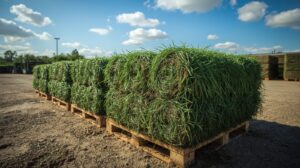
Sod is packaged in three main ways: slabs, mini hand rolls, and large rolls. Each has different dimensions, different coverage numbers, and suits different grass types and regions.
Slabs
Slabs are the most common packaging type in southern parts of the US and Canada. Each piece typically measures 16 × 24 inches, covering about 2.66 square feet. A full pallet holds roughly 150–170 slabs and covers 400, 450, or 500 square feet.
Common grass types sold as slabs: Bermuda, Zoysia, St. Augustine, and Centipede.
Mini Hand Rolls
Mini hand rolls are gaining ground in northern regions. Each roll measures roughly 40 × 18 inches, covering about 5 square feet per roll. A pallet holds 80, 90, or 100 rolls for coverage of 400, 450, or 500 square feet respectively.
Common grass types: Kentucky Bluegrass, Fescue.
Large Rolls
Large rolls are mainly found in northern cool-season markets. These rolls measure 60–80 × 18–24 inches, covering 10 square feet each. Pallets cover 500, 600, or even 700 square feet. You’ll need special equipment to unroll these they can weigh 1,700 to 2,200 lbs on their own.
Turf Pallet Size Chart
| Region | Coverage per Pallet | Rolls/Slabs | Weight |
| U.S. | 400–500 sq. ft. | 50–70 rolls | 1,500–3,000 lbs |
| UK / Europe | 40–50 sq. m | 60–75 rolls | 700–1,400 kg |
| Australia / UAE | 35–45 sq. m | 55–70 rolls | 650–1,200 kg |
Always check with your supplier, because sizes can be different.
Calculating Sod Requirements for Your Lawn
Knowing how much turf a pallet covers is only half the job. You also need to know exactly how much your lawn requires.
Step 1: Measure your lawn area
For a rectangle or square, multiply length × width. A 30 ft × 40 ft lawn = 1,200 sq ft.
For a circle, use: π × radius². A circular patch 10 ft across has a radius of 5 ft → 3.14 × 25 = 78.5 sq ft.
For a triangle, use: 0.5 × base × height.
For an irregular yard, break it into smaller rectangles, calculate each, and add them together.
Step 2: Divide by pallet coverage
Take your total square footage and divide by the pallet size your supplier uses. If your lawn is 1,200 sq ft and each pallet covers 450 sq ft: 1,200 ÷ 450 = 2.67 pallets. Round up to 3.
Step 3: Add 5–10% extra
Always add a buffer. Cutting around curves, trees, flower beds, and obstacles creates waste. Measurement errors happen. Order at least 5–10% more than your calculated total.
Quick Lawn Size Reference
| Lawn area (sq ft) | Pallets needed (at 450 sq ft/pallet, +10% buffer) |
| 450 sq ft | 1.1 → order 2 |
| 900 sq ft | 2.2 → order 3 |
| 1,800 sq ft | 4.4 → order 5 |
| 2,700 sq ft | 6.6 → order 7 |
How Much Does a Pallet of Turf Weigh?
A pallet of turf typically weighs between 1,500 and 3,000 pounds, depending on moisture content, grass type, and pallet format. Wet sod can weigh up to 50% more than dry sod. Always confirm weight with your supplier before arranging transport.
This matters if you’re picking up the sod yourself. A half-ton truck can usually handle one pallet. For two or more, you’ll need a trailer or a delivery truck. The pallet itself measures roughly 4 ft tall, 5 ft wide, and 5 ft deep. You need at least 5–6 ft of clearance in each direction
How Long Can Turf Sit on a Pallet?
This question doesn’t get nearly enough attention, and it’s one gap in most competitor content. Once turf is cut and palletized, it’s a living product with a ticking clock.
In warm weather (above 20°C / 68°F), you should install palletized turf within 24–48 hours. In cooler conditions, you have a bit more time up to 72 hours if the pallet is kept in shade and the sod remains moist. Heat causes the grass to yellow quickly, and once it sits too long, it can start to rot from the inside of the stack outward.
Tips to keep turf alive while waiting to install:
- Keep it in a shaded area.
- Lightly water the outside of the pallet if it looks dry.
- Don’t leave it on concrete in direct sun.
- Never leave pallets stacked inside a trailer or enclosed space.
Tips for Laying Turf After Delivery
Getting the sod laid correctly is just as important as ordering the right amount.
Prepare the soil first. Test your soil’s pH, remove weeds, and till to at least 4 inches deep. Add a 2-inch layer of compost and work it into the top layer. This gives roots something to grab.
Lay in a staggered pattern. Start from a straight edge — a fence line, driveway, or sidewalk works well. Lay pieces in a brick-like pattern so the seams don’t line up. Push edges tightly together; gaps dry out and the grass dies back.
Roll after laying. A sod roller removes air pockets and firms up root-to-soil contact. This is one of the most skipped steps, and it makes a big difference in how quickly the grass establishes.
Water immediately. Soak the sod right after laying. For the first 7–10 days, water daily. Drop to every other day in week 3. After that, twice per week is usually enough.
Wait before mowing. Let the turf hit 3 to 3.5 inches before the first mow. Cut it back to 2–2.5 inches. Never cut more than a third of the blade in one pass.
Common Mistakes to Avoid When Buying Sod
As a longtime professional in this field, I’ve seen a lot of people buy sod incorrectly. One of the worst things you can do is buy sod without calculating how much you will need. Before, I would suggest calculating how much square footage you will need, and then double check it before you order.
You would also like to avoid the common mistake of purchasing sod while not doing your due diligence on how to take care of it for the long haul. Make sure you purchase sod that is correct for your soil and weather.
Final Thoughts
Ordering turf doesn’t have to be a guessing game. Once you know your lawn’s square footage, understand that a standard pallet covers 400–500 sq ft, and account for a 5–10% buffer, the math becomes straightforward. The bigger mistakes happen when people skip soil prep, wait too long to install after delivery, or forget to confirm pallet specs with their supplier before ordering.
Whether you’re tackling a small backyard patch or a full front lawn, the steps are the same: measure accurately, order the right amount, and install within 48 hours of delivery.
If you’re in the Whittier area and want a professional to handle it from start to finish, Robert’s Complete Care offers full Lawn Care and Maintenance Services in Whittier from soil preparation and turf installation to ongoing seasonal maintenance. Our team knows the local conditions and gets the job done right the first time.
Ready to get your lawn looking its best? Contact Robert’s Complete Care today and let’s talk through your project
Professional Sod Installation Services
Let our experts handle your sod installation for a lush, beautiful lawn.
FAQs About Turf Pallets
How many square feet is one pallet of turf?
Most pallets cover 400, 450, or 500 square feet. The 450 sq ft pallet is the most common for residential projects. Large roll pallets in northern regions can cover up to 700 sq ft. Always confirm with your supplier.
How many pieces of sod are on a pallet?
For standard 16 × 24 inch slabs, expect around 150–170 pieces per pallet. Mini hand rolls run 80–100 per pallet. The piece count varies by farm and cut size.
Is one pallet of turf enough for a small yard?
A single pallet at 450 sq ft covers a 15 × 30 ft lawn, for example. Measure your space first. Add 10% for waste and cutting. If your lawn is over 500 sq ft, you’ll likely need two or more pallets.
Can I pick up turf myself or do I need delivery?
You can pick up sod yourself if you have a truck or trailer rated for the weight. A single pallet weighs 1,500–3,000 lbs depending on moisture. Confirm payload capacity before scheduling pick-up.
How much does a pallet of turf cost in Canada?
Prices vary by grass type, region, and supplier. In Canada, expect to pay roughly $150–$350 CAD per pallet for standard varieties like Kentucky Bluegrass or Fescue. Warm-season grasses like Zoysia can run higher. Always compare price per square foot rather than per pallet.
How long can turf sit on a pallet before it dies?
In warm weather, install within 24–48 hours. In cooler conditions, up to 72 hours with shade and moisture. The longer sod sits stacked, the more heat builds up inside the pile and damages the grass.