How to Choose a Tree Service Company?
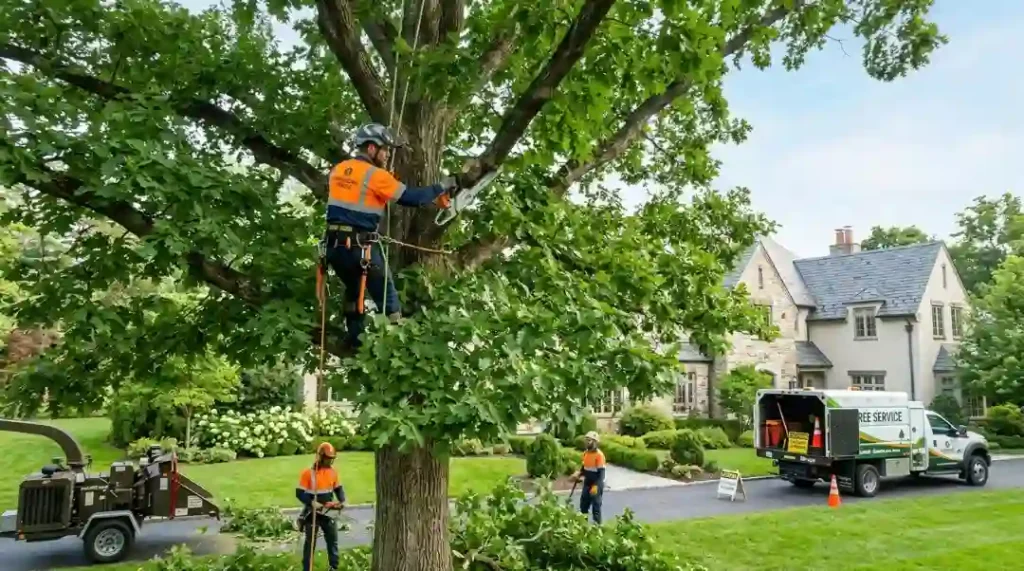
It’s not just about cutting branches or taking down a tree when you hire a tree service. It’s about keeping your home safe, your safety, and the long-term health of your yard. Trees add beauty, value, and shade, but bad tree work can hurt people, damage property, and make trees sick. This in-depth guide explains how to choose a tree service company the right way. It is for homeowners who want clear answers, honest advice, and professional-level insight without any sales talk or confusing language. Why Hiring the Right Tree Service Company Matters Trees are one of your property’s biggest assets and biggest liabilities if managed poorly. A large tree hanging over your home, a sick oak near a power line, or roots creeping toward your foundation are situations where the wrong call can turn into a disaster. Professional tree service isn’t just about looks. It’s about protecting your property, your neighbors, and your family. Beyond safety, the cost of hiring a bad tree company can spiral fast. An unqualified crew might leave a hazardous stump, cut a tree incorrectly, or injure a worker on your property and leave you holding the bill because they had no insurance. Knowing how to hire a professional tree service the right way isn’t optional. It’s essential. Certified Arborist vs Tree Service Company What’s the Difference? A tree service company is a business that offers tree-related work pruning, removal, stump grinding, and more. A certified arborist is an individual who has passed a rigorous exam through the International Society of Arboriculture (ISA) and holds active credentials in tree biology, pruning techniques, and risk assessment. Why the ISA Certification Matters In the tree care industry, the ISA certification is widely seen as the best. A certified arborist can not only use a chainsaw, but they also know a lot about trees. They know how to cut a tree without hurting it, how to spot disease, and how to keep trees healthy and safe while doing work that needs to be done. Always ask the tree care company, “Do you have ISA-certified arborists on staff?” It’s a simple question that shows the difference between serious professionals and cheap ones. Not every crew member needs to be certified, but the company should have at least one certified arborist in charge of the work. Essential Credentials Every Tree Service Company Must Have Before you agree to any work, verify that the company is properly licensed and insured. This is the single most important step in choosing the right tree service company. Licensing Requirements Licensing requirements vary by state. Some states require a specialty contractor license; others don’t regulate the industry heavily. Check with your state’s contractor licensing board to know what’s required in your area. If a company can’t provide a license number, that’s a major red flag. Insurance: Liability and Workers’ Compensation A company needs two types of insurance. General liability coverage protects your property if something goes wrong. Workers’ compensation insurance covers any worker injured on your property. Without workers’ comp, you could be sued if a tree worker falls off a ladder in your yard. Don’t just take their word for it. Ask the company to send you a certificate of insurance directly from their insurer. A legitimate tree service company will have no problem doing this. If they hesitate, walk away. How to Verify a Tree Service Company’s Experience and Reputation Credentials matter, but so does track record. Here’s how to research a company before you hand over your project. Check Online Reviews But Read Smart Google, Yelp, and the Better Business Bureau are good starting points. Look for companies with a consistent history of positive reviews over several years, not just a handful of recent five-star ratings. Pay attention to how the company responds to negative reviews. A professional, solution-focused response tells you a lot about how they handle problems. Ask for References From Past Clients A reputable tree removal company should be happy to connect you with two or three past clients. Call those references and ask: Was the crew professional? Did they clean up after the job? Were there any unexpected costs? Questions to Ask Before Hiring Are you licensed and insured? Can you provide proof? Do you have ISA-certified arborists on your crew? Can you provide a written, itemized estimate? Who will be doing the work, employees or subcontractors? How will you protect my lawn and property? Do you handle cleanup and debris removal, or is that extra? Do you offer emergency tree services for storm damage? Tree Service Pricing Explained What Impacts the Cost? One of the most common questions is: how much does professional tree service cost? The honest answer is: it depends. Here’s a general breakdown: Service Type Estimated Cost Range Small tree removal (under 30 ft) $150 – $500 Medium tree removal (30–60 ft) $500 – $1,000 Large tree removal (60+ ft) $1,000 – $2,500+ Tree pruning and trimming $200 – $900 Stump grinding $75 – $400 per stump Emergency / storm damage cleanup $300 – $3,000+ Is It Cheaper to Remove a Tree Yourself? In theory, yes. In practice, it’s rarely worth it. DIY tree removal without proper equipment and training is genuinely dangerous. Falls, power line contact, and uncontrolled tree drops cause serious injuries every year. For any tree larger than a small ornamental, professional removal is worth every dollar. Beware of Unusually Low Estimates If one company quotes $300 and everyone else quotes $900 for the same job, that gap is a warning sign. Low-ball estimates often come from unlicensed, uninsured operators who cut corners on safety and cleanup. You could end up paying more to fix the problems they leave behind. Equipment, Safety Standards and Professional Practices to Look For When the crew arrives, look at their gear. Are they wearing helmets, eye protection, and “chaps” (chainsaw-resistant pants)? A professional tree service takes safety seriously. Modern Equipment A reputable company like Robert’s Complete Care uses well-maintained saws, chippers, and rigging gear.
How to Choose a Tree Service Company? Read More »