You walk outside one morning, coffee in hand, and there it is: a ugly, spreading brown circle sitting right in the middle of your lawn. If you’ve been asking what causes brown patches in grass, you’re not alone. Millions of homeowners deal with this exact problem every summer, and the frustrating part is that the cause isn’t always obvious. The good news? Every brown patch has a reason, and most of them have a clear fix.
This article covers the most common causes of brown patches, how to tell them apart, and what you can actually do to get your lawn looking green again. Whether it’s a fungal disease, heat stress, grubs, or watering habits, we’ll walk through it all step by step.
What Causes Brown Patches on Your Lawn and How to Get Rid of Them
There are various reasons why grass can turn brown, and the first step to correcting the problem is to figure out what is causing it. Fungal infections (particularly brown patch disease), watering problems, heat stress, soil compaction, nitrogen burn from fertilizer, pet urine, insect damage, and even just normal wear and tear from foot activity are some of the most common causes.
In the summer, you might discover that what makes the brown patches worse is an even worse problem. The mix of excessive heat, humidity, and stressed grass makes it easy for issues to happen. When you water your lawn too much, it might develop brown spots because the extra moisture helps lawn fungus spread.
You might see brown areas in the grass, but if the green is still growing underneath, it usually implies the grass isn’t dead yet and can come back with the right care. This is not the same as brown patches in grass that are not dead. In this case, the grass has become brown, but the roots are still alive and healthy.
Brown Patch Lawn Disease Description
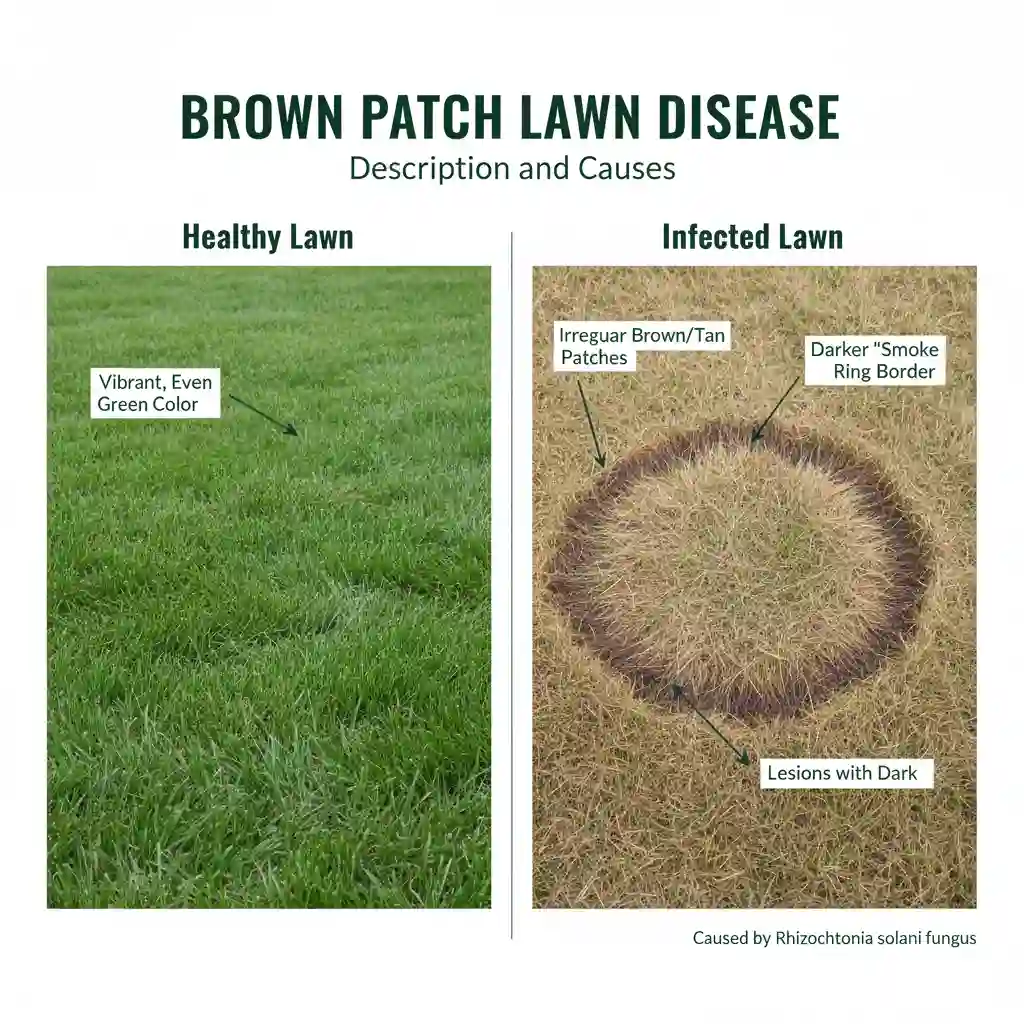
Brown patch disease is a fungal infection caused by Rhizoctonia solani, a soil-borne pathogen that attacks grass blades and sheaths. It thrives in hot, humid weather (75°F to 90°F nights) and spreads rapidly when lawns stay wet overnight. The patches it creates are typically circular, ranging from a few inches to several feet wide.
This isn’t just cosmetic damage. The fungus attacks the base of the grass blade, cutting off nutrient flow. You’ll often see a dark, water-soaked ring called a “smoke ring” around the outer edge of the patch, especially in the early morning before the dew dries.
The inside of the patch usually turns tan or straw-colored, while the border stays darker. In severe cases, the entire turf within the ring collapses.
How to Spot Brown Patch Fungus
Identifying brown patch fungus early gives you the best chance of stopping it before it spreads. Here’s what to look for:
Circular brown spots: The patches usually appear as circular or irregular brown areas that can grow quickly. They often have a characteristic “smoke ring” or dark outer edge in the early morning when dew is present.
Size and spread: Brown circles in yards caused by this fungus typically start small (a few inches) but can expand to 2-3 feet or more in diameter. In severe cases, the patches can merge together, creating large dead areas.
Grass blade appearance: The affected grass blades often look water-soaked or greasy at first, then turn tan or light brown as they die. The grass may feel slimy when you touch it during early morning hours.
Timing: Brown patch is most active during hot, humid weather in summer and early fall. If you see brown lawn spots caused by fungus appearing after several days of warm, muggy weather, brown patch is likely the culprit.
Pattern: Unlike damage from insects or pet urine, brown patch in turf often appear in multiple spots across your lawn rather than just one isolated area.
Will Brown Grass Turn Green Again?
Yes, in most cases brown grass will turn green again once you identify and address the root cause. Grass damaged by drought stress, heat, or light fungal infection typically recovers within 2 to 4 weeks after conditions improve and treatment begins. Severely diseased or dead grass may need reseeding.
If the grass blades are brown but the crowns (the base just above the soil) are still white and firm, the plant is likely dormant or stressed, not dead. Tug on the grass gently. If it resists pulling, there’s still root life. If it pulls out easily like a wet napkin, that section may be gone.
Most Common Grass Types Impacted by Brown Patch
Brown patch disease hits certain grasses harder than others. Here’s what’s most at risk:
- Tall fescue is highly susceptible, especially in humid southern climates.
- Perennial ryegrass can develop brown patch quickly during summer heat.
- Bermudagrass is somewhat resistant but can still develop patches under prolonged stress.
- St. Augustine grass is vulnerable to a related disease called large patch (Rhizoctonia solani AG 2-2).
- Kentucky bluegrass is moderately susceptible and often shows thinning rather than hard-edged rings.
How to Treat Brown Patch Fungus
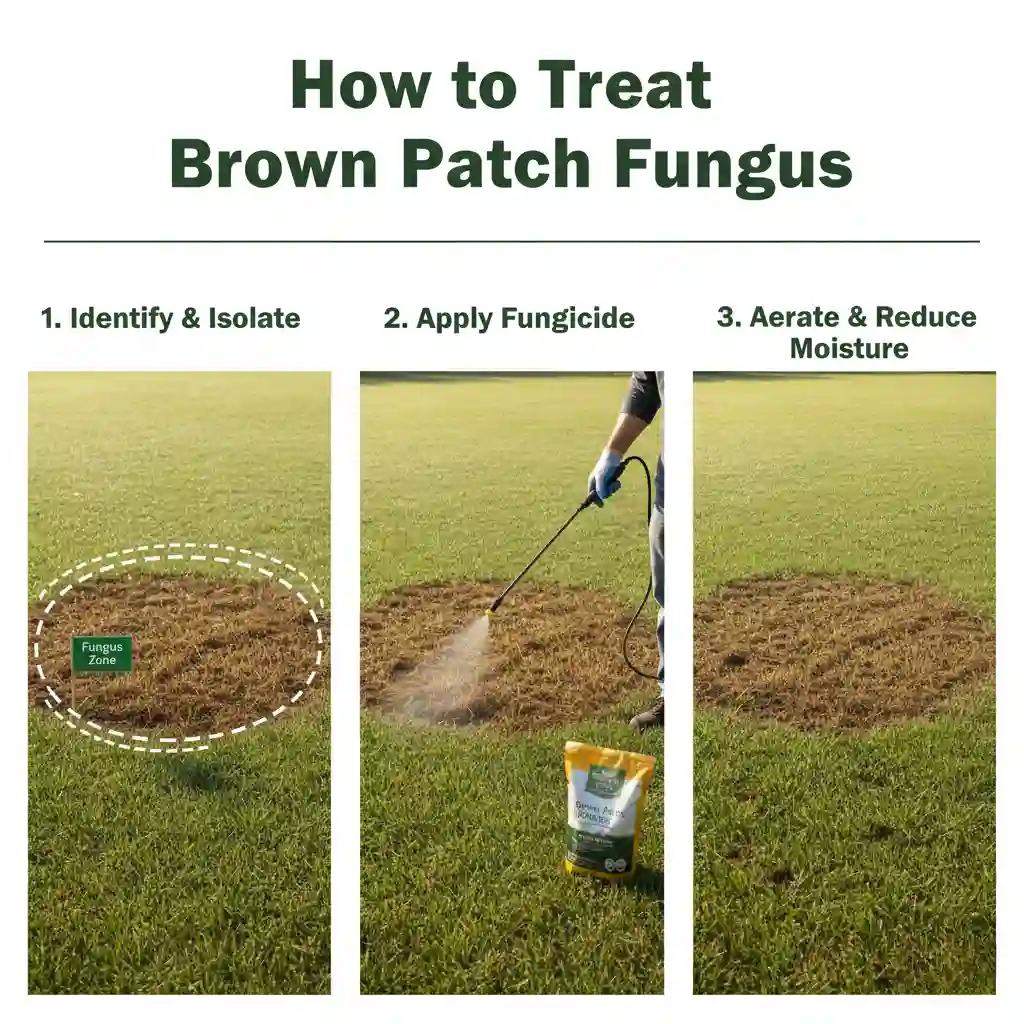
Once you’ve confirmed that brown patch fungus is causing your lawn problems, it’s time to take action. Here’s your complete brown patch lawn care treatment plan:
Immediate Actions
Stop overwatering: Fungal illness loves wetness. Stop watering right after, and only do it in the early morning so the grass blades dry quickly. Don’t water in the evening because this keeps the grass damp all night, which is great for fungi.
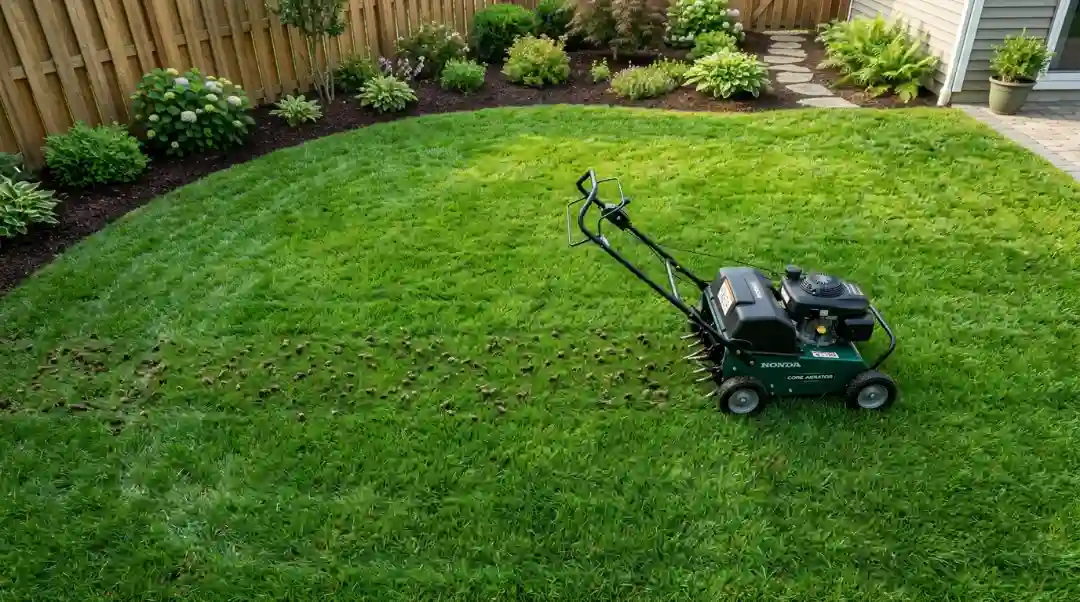
Improve air circulation: If you have thick grass, consider dethatching to improve airflow at the soil level. Better air movement helps grass dry faster and makes conditions less favorable for fungal growth.
Adjust mowing: Keep mowing, but remove no more than one-third of the grass blade at a time. Bag your clippings instead of mulching them to avoid spreading fungal spores across your lawn.
Treatment Options
Fungicide application: Using a fungicide that is particularly designated for brown patch helps stop the disease from spreading in cases of severe illness. Azoxystrobin, propiconazole, or myclobutanil are all good ingredients. For optimal results, always read the label carefully and use it in the early stages of an infection.
Natural alternatives: Some homeowners prefer organic approaches. Neem oil and compost tea can help suppress fungal growth, though they may not be as fast-acting as chemical fungicides.
Proper fertilization: Avoid high-nitrogen fertilizers during hot weather, as too much nitrogen can promote fungal growth. Nitrogen burn from excessive fertilizer can also cause brown patches that look similar to fungal damage.
How to Identify the Exact Cause (Step-by-Step)
Not every brown circle is brown patch disease. Before you spray anything, spend five minutes diagnosing properly. Here’s how:
Step 1: Look at the shape. Brown patch fungus creates distinct circular or semi-circular patterns. Irregular, scattered brown areas usually point to something else, like drought or compaction.
Step 2: Check the edges. Fungal patches often have that dark “smoke ring” border in the morning. Drought damage has soft, faded edges. Dog urine patches are often bright green around the outer ring with dead brown in the center.
Step 3: Pull up a sample. If the grass pulls out easily and the roots are dark brown or black, you likely have grub damage or root rot. White, healthy roots with brown blades point to a surface-level issue (drought, fungus, or chemical burn).
Step 4: Check your watering schedule. Overwatering at night is one of the biggest contributors to fungal disease. If you water after 6 PM, that’s a red flag.
Step 5: Check for insects. Peel back the turf at the edge of a brown patch. If you see small white C-shaped grubs in the soil, you’ve got a grub infestation. Sod webworms leave small green droppings (frass) in the thatch.
Other Common Causes of Brown Patches in Grass
Understanding what causes brown patches in grass comes down to separating disease from stress from pest damage. Here’s a breakdown of each:
1. Brown Patch Fungal Disease (Rhizoctonia solani)
Already covered above, but worth repeating: this is the most misdiagnosed cause. People assume drought and ignore the fungus, which lets it spread for weeks.
2. Drought Stress and Heat
During hot, dry spells, cool-season grasses go dormant. The entire lawn thins and browns evenly, rather than in defined patches. This is a survival mechanism, not death.
3. Overwatering
Soggy soil blocks oxygen from reaching roots. Roots suffocate and die, leaving yellow-to-brown patches that look like drought damage. Check soil moisture before watering, not just a schedule.
4. Dog Urine
The concentrated nitrogen in dog urine burns grass in a predictable pattern: dead brown center, lush green outer ring. This is a consistent visual signature.
5. Grub Damage
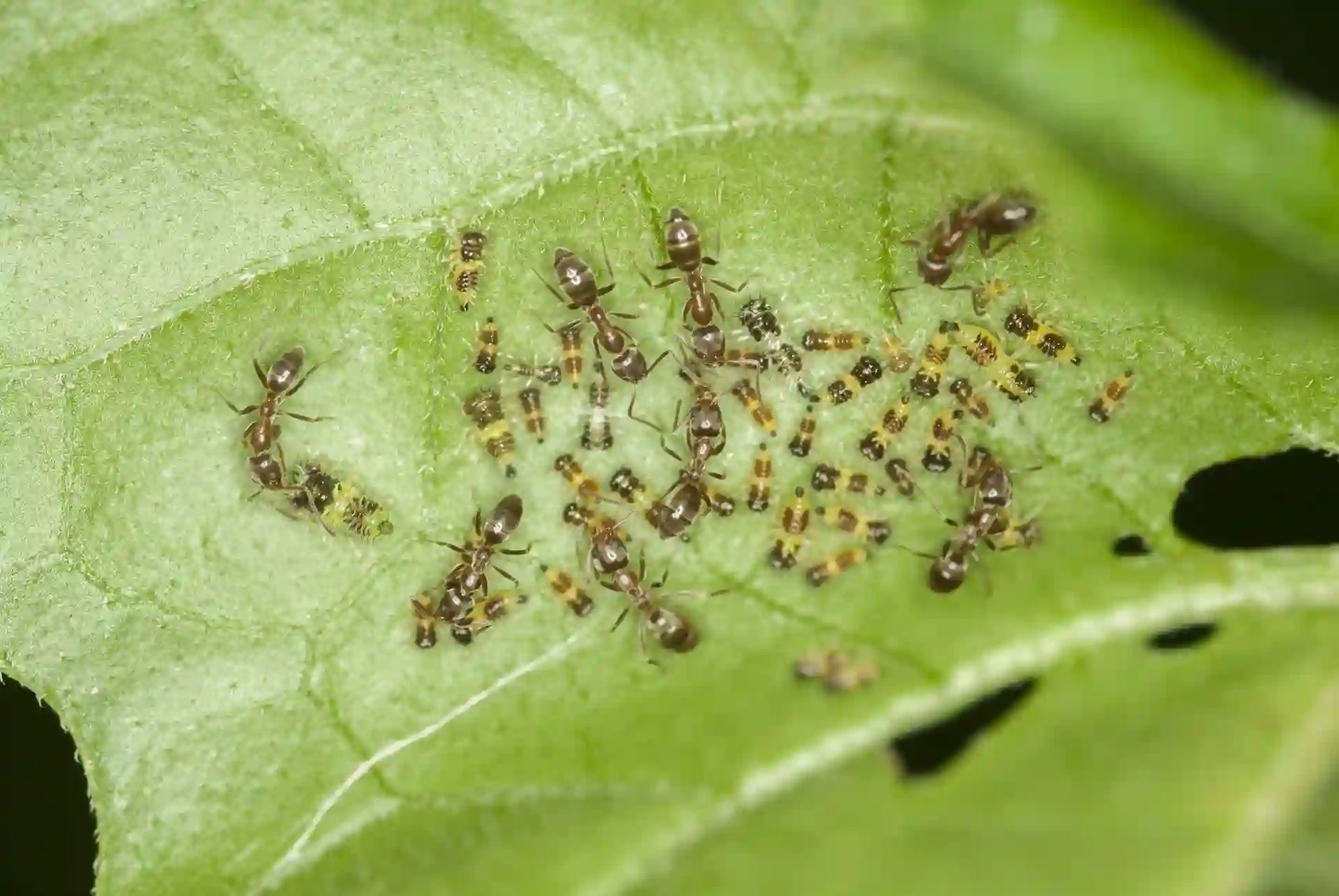
Grubs (the larvae of beetles like Japanese beetles and June bugs) feed on grass roots underground. By the time you see brown patches, the root system is already gone. The turf peels back like carpet.
6. Thatch Buildup
A thick thatch layer (over ½ inch) blocks water and nutrients from reaching the soil. It also creates a humid microclimate that promotes fungal growth.
7. Soil Compaction
Compacted soil suffocates roots and prevents water penetration. Compacted areas brown out faster during dry periods because water runs off rather than soaking in.
8. Fertilizer Burn
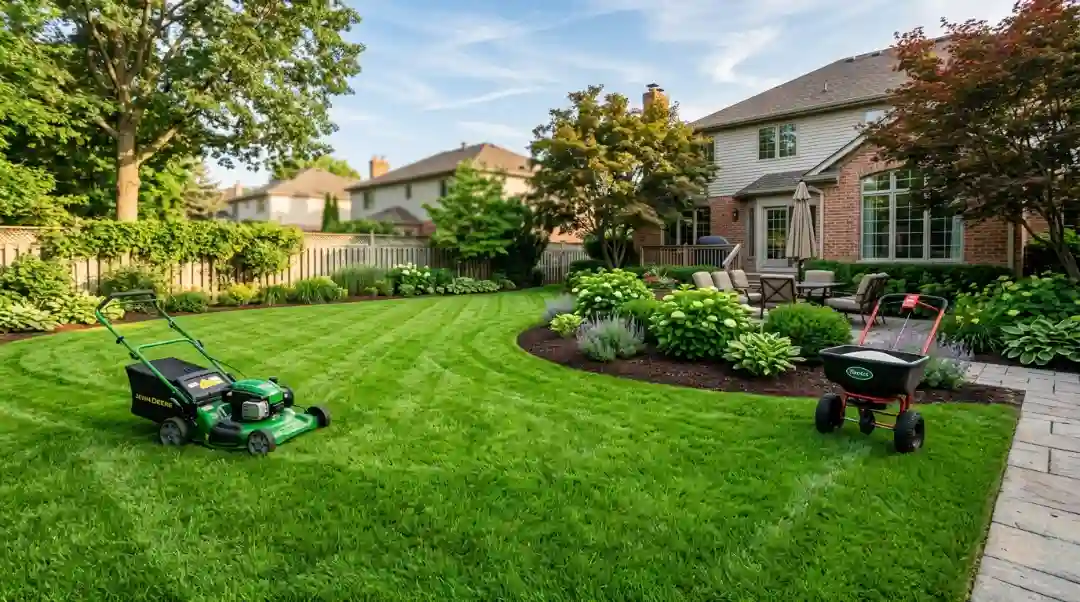
Too much synthetic fertilizer, applied unevenly, scorches grass. The pattern is usually irregular and follows the path of your spreader.
9. Chemical Spills
Gasoline, herbicide overspray, or even a lawn mower fuel leak will kill turf in an irregular, hard-edged pattern. The grass in these areas typically won’t recover without removal and reseeding.
10. Scalping
Mowing too low removes too much of the blade at once, stressing the grass and exposing the crown to heat and sun. This is especially common on slopes where mower wheels dip.
How to Treat Brown Patch Fungus
To treat brown patch fungus, apply a systemic fungicide containing azoxystrobin, propiconazole, or thiophanate-methyl as soon as you identify the disease. Water the lawn in the morning (not evening), reduce nitrogen fertilizer, and improve air circulation by dethatching and aerating.
Here’s a step-by-step treatment plan:
- Stop watering at night. Switch to early morning watering so blades dry before evening.
- Apply a fungicide. Products like Heritage (azoxystrobin) or Spectator (propiconazole) work well. Follow label rates exactly.
- Reduce nitrogen. High nitrogen feeds fungal growth. Avoid quick-release fertilizers until the disease is gone.
- Dethatch if needed. If your thatch layer is over ½ inch, remove it to improve airflow.
- Don’t mow wet grass. Mowing spreads fungal spores across the yard.
- Repeat applications. Most fungicides need a second application 14 to 28 days later.
Why Choose Us
At Robert’s Complete Care, lawn care is based on real experience, not guesswork. Every lawn is different, and diagnosing the correct problem is the key to long-term results.
If you’re dealing with repeated brown patches, professional evaluation saves time and protects your investment. This is also where services like Lawn Installation Services in Whittier can be naturally mentioned for homeowners needing full lawn restoration.
Conclusion
If you are continually getting brown spots or don’t know what’s hurting your grass, hiring an expert can assist. Robert’s Complete Care is ready to look at your lawn, find out what’s really wrong, and give you the proper remedy for long-term results. Contact us immediately to set up a consultation and get your lawn back to a healthy, green state, whether you need professional help, grass recovery, or full restoration.
FAQs
What causes brown patches in grass even after watering?
This is often due to soil compaction or a “hydrophobic” soil condition where the water runs off instead of soaking in. It could also be a sign that a fungal infection has already damaged the roots.
Are brown patches in grass fungus or insects?
The “Tug Test” is the best way to tell. If it pulls up like a rug, it’s insects (grubs). If the blades are spotted or have a “smoke ring,” it’s fungus.
Can dog urine cause brown spots in grass?
Yes. To fix this, flush the area with water immediately after your dog goes to the bathroom to dilute the nitrogen.
How do you fix brown patches in the lawn fast?
Finding out what caused it is the quickest way. Give it water if it’s thirsty. Use a fungicide if it’s fungus. The only “quick” cure is to put down new sod if the grass is dead.
Will brown grass turn green again?
If it’s just dormant from heat, yes! It usually bounces back in 2–3 weeks with proper care. If the “crown” (the base of the plant) is mushy or brown, it’s likely dead.