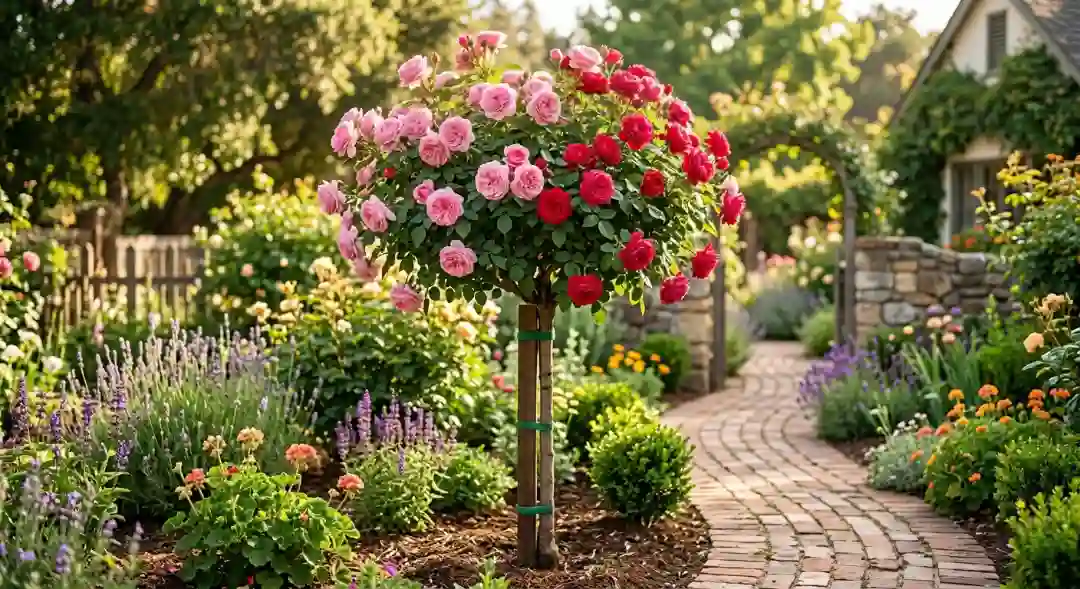
Many people believe that growing a rose tree is hard. No, it isn’t. It merely needs the appropriate measures to be taken in the right order. If you’ve tried previously and failed, something likely went wrong. This tutorial will help you correct it.
One of the best things you can do for your yard is learn how to grow a rose tree. A rose tree is taller, more structured, and more colorful than a standard rose bush. This guide will help you choose the correct circumstances, plant your rose tree step by step, propagate it from cuttings, care for new growth, and keep it safe all year long.
What Is a Rose Tree?
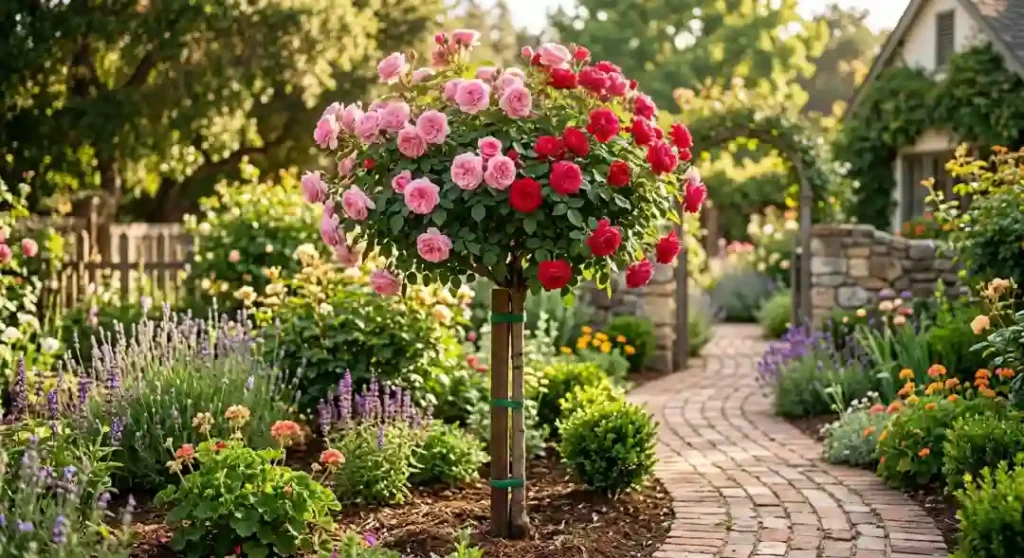
A rose tree, also called a rose standard, is not a naturally occurring tree. It’s a grafted plant where a rose variety is budded onto a tall, straight rootstock stem, creating the appearance of a small ornamental tree. The key difference from a rose bush is height, structure, and visual impact.
A rose bush grows low and wide from the ground. A rose tree grows upright on a single trunk, with blooms sitting at eye level or above. That elevated bloom placement is what makes it so striking near entryways, patios, and walkways.
Rose trees come in 24-inch and 36-inch trunk sizes. The 24-inch works perfectly in containers and small spaces. The 36-inch makes a bold statement in garden beds or lining a walkway.
Why Grow Tree Roses?
These plants provide a vertical element that standard shrubs lack. They’re space-efficient, making them ideal for patios or tight garden corners. Since the blooms sit higher up, you don’t have to bend over to enjoy their fragrance.
They also add a formal, architectural feel to any home. If you have a small balcony, you can grow them in pots. This flexibility is why they remain a favorite for modern landscaping.
What Roses Need to Grow Well
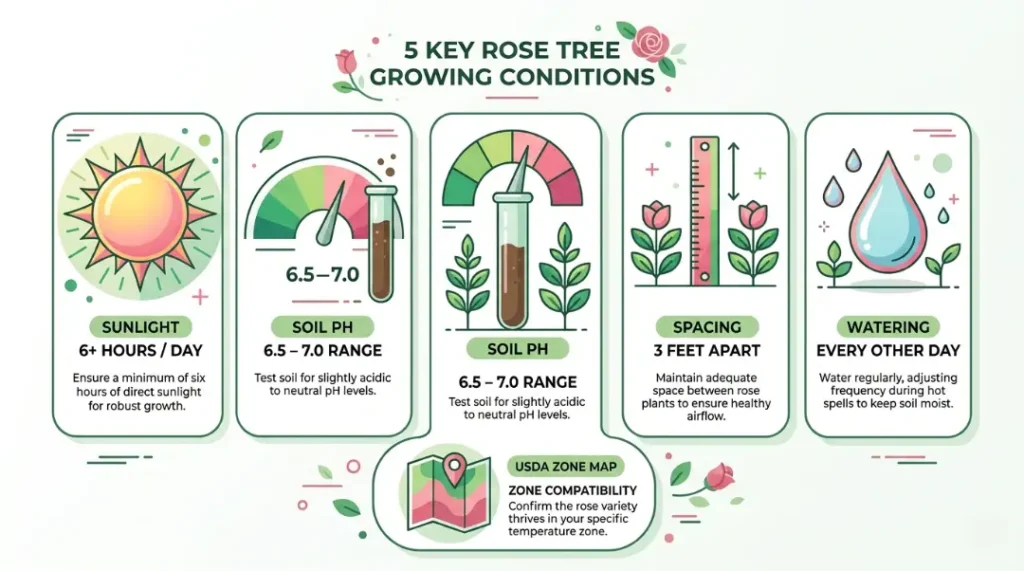
Before you plant anything, get these basics right. Skip one and you’ll spend months wondering why your rose isn’t thriving.
Sunlight: Roses need at least 6 hours of direct sun daily. Less than that and you’ll get weak stems, fewer blooms, and more disease.
Soil pH: The sweet spot is 6.5 to 7.0. Outside that range, the plant can’t absorb nutrients properly even if the soil is rich. Test your soil before planting — it’s a 10-minute task that saves months of frustration.
Drainage: Roses hate sitting in wet soil. If water pools after rain, amend the soil with compost or choose a raised bed or container setup.
Air circulation: Roses are prone to fungal diseases like black spot and powdery mildew. Spacing plants at least 3 feet apart keeps air moving around them and reduces disease pressure significantly.
| Factor | Ideal Range |
| Sunlight | 6+ hours/day |
| Soil pH | 6.5 – 7.0 |
| Planting spacing | 3 feet minimum |
| Watering frequency | Every other day (new plants) |
| Hardiness zones | Varies by variety (check USDA map) |
Where to Plant Roses
The best spot for a rose tree is a location with full morning sun, some protection from harsh afternoon heat in hot climates, and shelter from strong winds. Avoid planting near large trees they compete for water and nutrients, and falling branches can damage the trunk.
South or east-facing spots work well in most climates. If you’re in USDA Hardiness Zones 10–11, afternoon shade actually helps the plant during peak summer.
Never plant rose trees directly under a tree canopy. The shade is too heavy and the root competition is brutal. Your rose tree will struggle from day one.
How to Plant a Rose Tree Step by Step
Planting in the Ground
Step 1: Prepare the soil. Spread 2–4 inches of compost over the planting area and mix it into the soil to a depth of 12 inches. Do this 2–3 days before planting to let it settle. If the soil is heavily clay or sandy, this step is non-negotiable.
Step 2: Dig the hole. Make it slightly wider than the root ball but the same depth. The graft union should sit just at or slightly below soil level when planted.
Step 3: Soak the roots. If you’re planting a bare-root rose tree, soak the roots in lukewarm water for 12 hours before planting. This rehydrates the plant and dramatically improves early root establishment.
Step 4: Plant and backfill. Place the tree in the hole, keep the trunk vertical, and fill with the native soil and compost mixture. Water after every few inches to remove air pockets.
Step 5: Stake the trunk. Rose trees need support. Drive a sturdy stake into the ground next to the trunk and tie it loosely tight enough to support, loose enough to allow slight natural movement.
Step 6: Mulch and water. Add 2–3 inches of mulch around the base, keeping it away from the stem. Water deeply after planting.
Planting in Containers
With container planting, you can regulate the quality of the soil, how well it drains, and how well it protects plants in the winter. In colder places, this is the best way to go.
Get a pot that is 16 to 18 inches wide and has holes for drainage. Put a good potting mix with organic stuff in it. Avoid regular garden soil in containers it compacts quickly and holds too much moisture.
Put the rose tree in the middle of the container, maintain the trunk straight, and fill up the space around it carefully. Put the container in a place where it will get at least six hours of sun every day.
How to Grow a Rose Tree from Cuttings
This section covers something both top-ranking competitors completely skip. If you want to propagate roses rather than buy grafted standards, here’s how it works.
How to Take a Rose Cutting
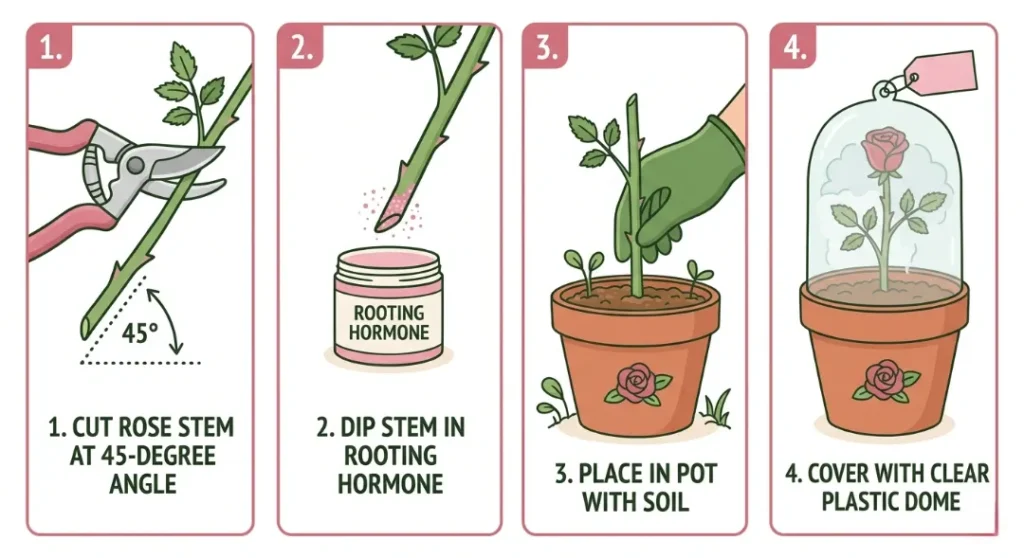
Cutting rose plant material correctly is the first step to successful propagation. Take a 6–8 inch cutting from a healthy stem that has just finished blooming. The cut should be made at a 45-degree angle, just below a leaf node, using clean, sharp pruning shears.
This is called a softwood rose cutting taken from new, flexible growth rather than old woody stems. Softwood cuttings root faster and have a higher success rate for beginners.
Remove all leaves from the bottom half of the cutting. Leave 2–3 leaves at the top to continue photosynthesis during rooting.
How to Plant a Cutting from a Rose Bush
- Dip the cut end in rooting hormone powder (available at any garden center)
- Insert it 2–3 inches deep into a pot filled with moist, well-draining potting mix
- Cover loosely with a plastic bag or clear dome to retain humidity
- Place in indirect light not direct sun while roots develop
- Check for resistance after 3–4 weeks by gently tugging; if it resists, roots have formed
Caring for New Rose Cuttings
Once you see new leaf growth usually within 4–6 weeks the cutting has rooted successfully. At that point, remove the humidity cover gradually over several days. Move it into brighter light.
Propagating rose cuttings won’t give you a true rose tree/standard form (that requires grafting onto rootstock). But it’s a great way to grow rose bushes from cuttings of your favorite varieties at zero cost.
When rooting roses from cuttings reaches the stage where the plant has 4–6 inches of new growth, it’s ready to transplant into a larger pot or garden bed.
How to Care for a Rose Tree
Watering
Water new rose trees every other day for the first few weeks. Once you see new growth, the plant has started establishing switch to once a week, watering deeply rather than frequently. Deep watering encourages roots to grow downward rather than staying shallow.
In frost-free climates, keep watering through winter during dry spells.
Fertilizing
Don’t fertilize at planting time. This is one of the most common mistakes. Wait six weeks after planting, then apply a granular rose fertilizer or a balanced 10-10-10 fertilizer. Fertilize again after each flush of blooms, roughly every six weeks through the growing season. Stop fertilizing six weeks before your expected first frost date.
Pruning
Cut back rose trees in early spring, when the buds are just starting to swell. Take out canes that are dead, broken, or crossing. Cut about a quarter inch above a bud that is facing outward and at a 45-degree angle. This makes new growth grow outward and maintains the canopy open for air to flow through.
To get flowers to bloom again, deadhead wasted blooms throughout the season.
Pest and Disease Management
Watch for these common problems:
- Aphids Tiny green or black insects clustered on new growth. Knock them off with a strong water spray or apply insecticidal soap.
- Black spot Dark spots on leaves that yellow and drop. Remove affected leaves immediately and apply a fungicide labeled for roses.
- Powdery mildew White powdery coating on leaves. Improve air circulation and treat with a baking soda spray or neem oil solution.
Winter Care for Rose Trees
Rose trees are less cold-hardy than shrub roses. In zones colder than their hardiness rating, they need extra protection.
For container rose trees: Move them to an unheated garage, shed, or sheltered porch before the first hard frost. They need cool (but not freezing) temperatures during dormancy, not a warm living room.
For in-ground rose trees: Mound mulch 6–8 inches deep around the base. Wrap the trunk loosely in burlap. If the head of the tree is particularly exposed, you can construct a simple cage around it filled with straw for insulation.
Common Mistakes to Avoid
- Planting in part shade Even one or two fewer hours of sun causes noticeably fewer blooms
- Skipping the soil test Wrong pH locks out nutrients regardless of how much fertilizer you apply
- Fertilizing at planting time It pushes top growth before the roots are ready to support it
- Not staking the trunk Wind stress on an unsupported trunk causes long-term structural damage
- Mulch touching the stem Keeps the bark wet and invites rot and disease
- Over-watering established plants More roses die from overwatering than underwatering
Tree and Shrub Services in Whittier
If you’re in the Whittier area and want professional help with planting, pruning, or caring for rose trees and other ornamental plants, Robert’s Complete Care offers dedicated tree and shrub services tailored to your garden’s needs. Whether it’s seasonal pruning, disease treatment, or new planting guidance, the team brings hands-on experience to every job
Final Thoughts
Growing a rose tree is genuinely one of the most satisfying things you can add to your garden. Get the sunlight right, prepare the soil properly, and stay consistent with watering and fertilizing and your rose tree will reward you with blooms season after season. Whether you’re planting a grafted standard or trying your hand at propagating rose cuttings from scratch, the process is straightforward once you know what you’re doing. If you’re in the Whittier area and need hands-on help with planting, pruning, or seasonal rose tree care, Robert’s Complete Care is here for you. Contact us today and let our team handle the hard work so your garden looks its absolute best.
Frequently Asked Questions
How long does it take to grow a rose tree?
A grafted rose tree from a nursery will grow and blossom in its first growth season, which is usually 8 to 12 weeks following planting. It takes longer to grow from cuttings. It takes 4 to 6 weeks for the roots to grow, and then another full season for the plant to reach the size it needs to bloom.
Are rose trees easy to grow?
Yes, with the right conditions. The biggest requirements are 6+ hours of sun, well-draining soil, and consistent watering during establishment. The main challenge is winter protection in colder zones, which is easily managed with containers or mulching.
Does a rose tree come back every year?
Yes. Rose trees are perennials and return each year when planted in their appropriate hardiness zone. In colder zones, container-grown trees moved indoors for winter reliably return each spring.
What is the difference between a rose bush and a rose tree?
A rose bush grows directly from the ground in a multi-stem form. A rose tree (rose standard) is grafted onto a single tall rootstock trunk, creating an upright tree-like shape with blooms elevated above ground. The growth habit, visual impact, and care needs differ between the two.
How big does a rose tree get?
Most rose trees reach 4–6 feet in total height, depending on the trunk size (24-inch or 36-inch) and the grafted variety on top. The canopy spread is typically 2–3 feet wide.