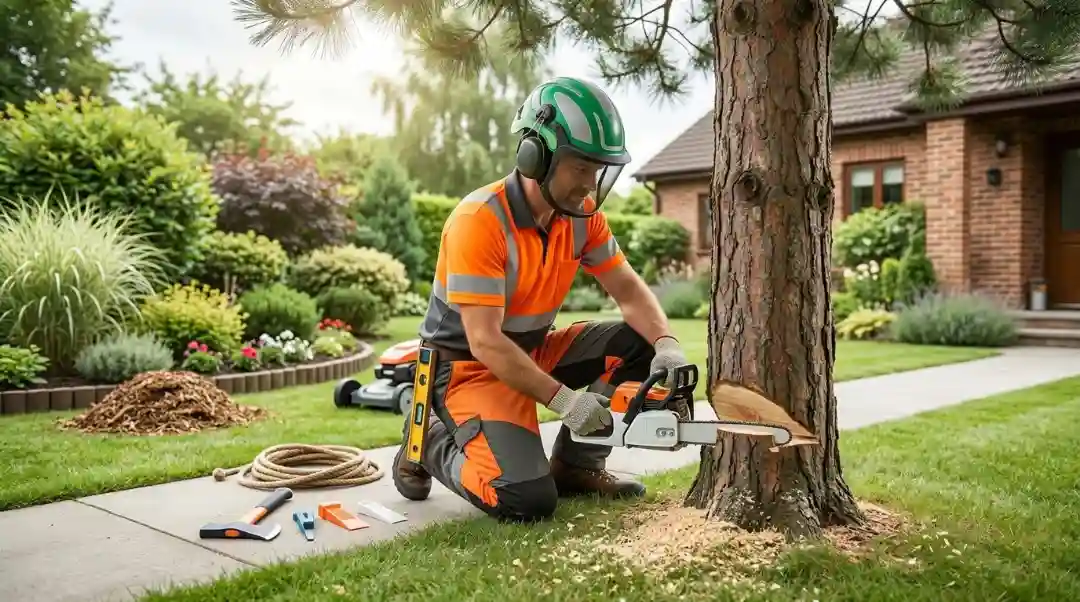
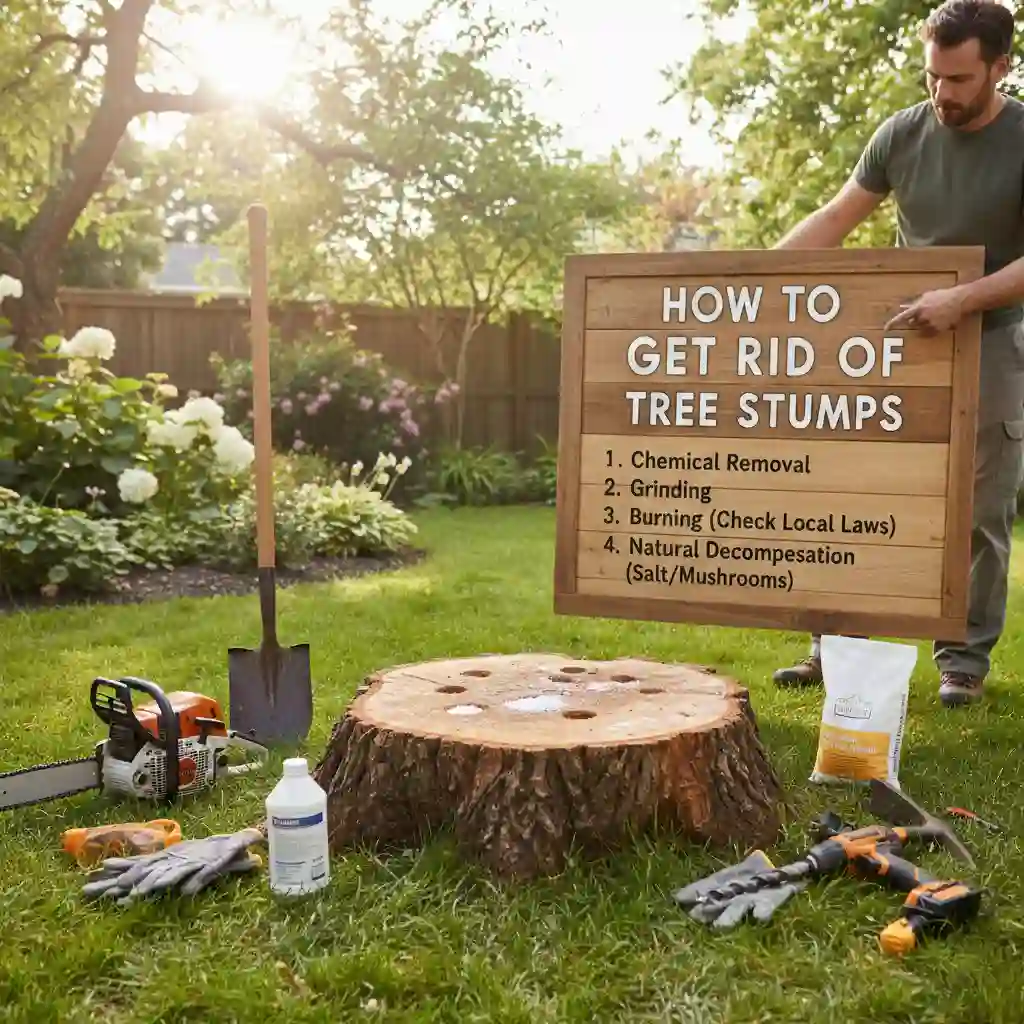
You just had a tree taken down, and now you have to look at an ugly stump in the middle of your yard. Or you may have an old tree stump that has been there for years, is slowly rotting, taking up space, and making it hard for your kids to walk. No matter what, the question is the same: how to get rid of tree trunks for good?
You are not alone. A lot of people look for this yard care question online, and for good reason. A chopped tree trunk or stump isn’t merely ugly. It can draw in bugs, fungus, and termites. It takes up room that could be used for something else. And if you don’t do anything about it, the roots might keep coming up through your lawn for years.
Tree Trunk vs. Tree Stump What’s the Difference?
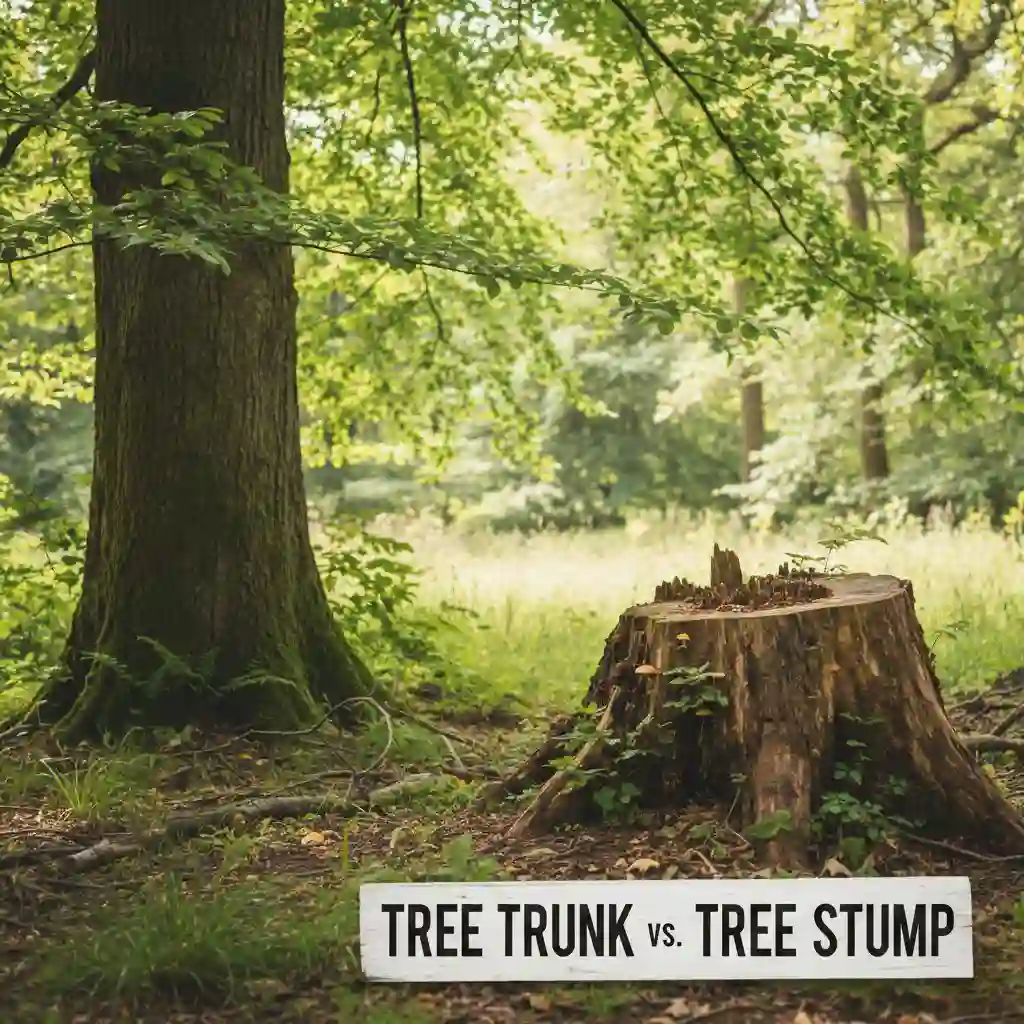
Before we get into how to remove things, let’s get something straight. “Tree trunk” and “tree stump” are two words that people often use to mean the same thing; they are not the same thing.
The trunk of a tree is the primary woody stem that is above the ground. The part of a tree that is left sticking out of the ground after it is cut down is called the stump. This part is usually a few inches to a foot or more long. Arborists normally take the trunk away or split it up for firewood.
Most homeowners are really dealing with the stump, which is the flat, round part of the base that is left over, and the root system that is still underground. Most of the time, when people look up “how to get rid of tree trunks,” they are talking about this stump problem.
DIY Methods to Remove an Old Tree Stump
If you aren’t afraid of a little sweat equity, you can handle old tree stump removal yourself. Here are the three most common DIY paths:
1. The Digging Method (Best for Small Stumps)
This is the “old school” way. You’ll need a shovel, a pickaxe, and a heavy-duty saw.
- Dig: Clear the dirt around the stump to reveal the main “taproot.”
- Cut: Use an axe or saw to cut the secondary roots.
- Lever: Use a long bar to wiggle the stump until it pops loose.
2. Using Chemical Treatment (The Patient Way)
If you aren’t in a rush, chemical treatment is the cheapest way to get rid of a tree trunk.
- Drilling holes in stump: Use a large drill bit to make deep holes (about 12 inches) into the top.
- Fill: Pour in a nitrogen-rich fertilizer or a commercial stump remover.
- Wait: These chemicals speed up stump decay. It can take several months, but eventually, the wood becomes soft enough to break apart with a shovel.
How Long Does It Take for a Tree Trunk to Decompose?
This is one of the most popular inquiries we get. The answer depends on the type of tree, the size of the stump, the weather where you live, and whether you are actively assisting it grow.
Here’s a general breakdown:
- Without any treatment: 3–7 years for most hardwoods, 2–5 years for softer species
- With chemical stump remover: 4–8 weeks to soften, then manual removal
- With nitrogen-rich fertilizer and moisture: 1–2 years
- With professional stump grinding: Same day removal
So if you’re wondering how long does it take for a tree stump to rot naturally, the honest answer is: a long time. If speed matters, you’ll need to either use chemicals or call a professional.
What Is the Fastest Way to Get Rid of a Tree Trunk?
Without a doubt, stump grinding is the quickest way. A professional stump grinder utilises a cutting disk that spins to chip the wood down below the earth, usually 6 to 12 inches deep. The whole operation takes anywhere from 30 minutes to a couple of hours, depending on how big the stump is.
Manual digging (for small stumps) is the next fastest alternative, and chemical treatment is the last. The slowest way exists in natural decay.
Is Stump Grinding Better Than Stump Removal?
Great question and the answer depends on your goals.
Grinding down a stump is faster, cheaper, and less invasive. The machine turns the stump into mulch, which you may use in your garden. The roots are left in the earth to break down on their own over time. The bad news? If you’re planting a new tree in the same area, the roots are still there, which can be an issue.
Removing the entire root ball, or stump, completely gets rid of the root system. If you want to replant in the same spot, build something like a deck or patio, or are worried about roots growing back or pests coming back, this is best. But it takes more work and is frequently more expensive.
For most homeowners, stump grinding is the better option unless you have a specific reason to remove the roots entirely.
Burning a Tree Stump: Is It Safe Or Legal?
Many homeowners wonder if they can just “fire and forget.” While burning a tree stump is a common stump removal method, you must be careful.
- Check Local Laws: Many cities have strict “no-burn” ordinances.
- Safety First: Never use gasoline. It’s too volatile. Instead, use charcoal or wood scraps to build a fire on top of the stump.
- The Deep Burn: You often need to drill holes and fill them with kerosene (letting it soak for weeks) before lighting it to ensure the fire reaches the roots.
Warning: Root fires can smolder underground for days and travel to other parts of your yard. Always monitor a burning stump.
Learn How to Kill Stubborn Tree Stumps Naturally

Natural approaches can work for homeowners who don’t want to use chemicals at all; they need to be patient and consistent.
The most natural method involves three things: fertiliser with a lot of nitrogen, keeping the stump moist all the time, and covering it to keep the sun out. Put fertilizer (fresh compost or high-nitrogen lawn fertilizer) immediately on the stump and in the holes you dug. Give it water on a regular basis. Put a black tarp or plastic sheet over it to keep heat and moisture in. This speeds up the growth of microbes and the breakdown of wood.
Some people also put mushroom spores, like those of oyster mushrooms, right on the stump. Fungi are the organisms that break down wood in nature, and they can speed up the process a lot. This method can break down even a massive tree stump into crumbly, transportable material in 12 to 18 months.
How to Stop a Tree Trunk from Growing Back
Regrowth is a problem that many homeowners don’t expect. Some types of trees, such as willows, cottonwoods, and some oaks, will send up new sprouts from their roots even after the main trunk is gone. A lot of the time, this step to stop regrowth is skipped.
The best technique to halt regrowth is to put a chemical treatment directly on the freshly cut surface right after the tree is chopped down. People often use products that have triclopyr or glyphosate in them for this. You put them on the cambium layer, which is the outer ring of the stump, shortly after you cut it, before the tree can seal itself off.
If sprouts are already coming up from the roots, trim them back and put brush killer on the ends right away. Repeat as needed. The root system will eventually die because it can’t photosynthesise without leaves, and the cut-backs keep taking away nutrients.
What To Do After the Stump Is Gone
After you get rid of the stump and surface roots, you’ll have a hole or dip in your yard. What you should do is:
Put a mix of compost and topsoil in the hole. Before adding soil, you may need to put some crushed wood chips or gravel at the bottom of the area if it is big. As you proceed, make sure to tamp the soil down well so it doesn’t settle later.
Wait a few weeks for the soil to settle completely before reseeding or laying sod. Before you plant grass seed, put down a coating of lawn starting fertilizer. Water the young grass every day for the first few weeks to help it grow.
This is a fantastic time to add compost to the space and plant something new if you took out a stump in a garden bed.
How Much Does Tree Stump Removal Cost?
Costs vary based on the size of the stump, your location, and which method you choose.
- DIY chemical treatment: $10–$30 for product
- Renting a stump grinder: $75–$200 per day
- Professional stump grinding: $100–$400 per stump (depending on diameter)
- Complete professional removal (with root ball): $300–$800 or more for large stumps
- Multiple stumps: Many companies offer discounts when removing several at once
Using natural decomposition or Epsom salt to get rid of a tree trunk yourself is the cheapest way to do it. But if time is money, professional grinding is typically the best deal when you add up the hours you work.
Wondering How to Remove a Tree Trunk Quickly? Call the Pros
If you want to get rid of a big tree stump in your yard quickly, you need to hire a professional. A competent arborist or tree care firm has the proper tools, the skills to remove massive tree stumps safely, and the ability to take everything away, leaving you with a clean slate.
At Robert’s Complete Care, we’ve helped hundreds of homeowners across the area tackle exactly this problem. Whether you’re dealing with one stubborn old stump or cleaning up after a major storm, we bring the tools and know-how to get the job done right. If you’re looking for professional Tree and Shrub Services in Whittier, our team is ready to help you reclaim your yard.
Why Choose us
There are plenty of stump removal companies out there, but not all of them deliver the same level of care and quality. Here’s what sets Robert’s Complete Care apart:
- Local expertise: We know the tree species, soil types, and climate conditions specific to this area which means smarter, more effective treatment plans.
- Full-service approach: We don’t just grind the stump and leave. We handle cleanup, fill the area properly, and make sure your yard looks great when we’re done.
- Transparent pricing: No surprise fees. We give you a clear quote before any work begins.
- Licensed and insured: You’re protected, and so is your property.
- Real results: We focus on doing the job right the first time, not just getting it done quickly.
Conclusion
If you’re still not sure which way is ideal or want the job done securely and quickly, the team at Robert’s Complete Care can help. We make it easy and stress-free to remove tree trunks and stumps. We will look at your yard and suggest the best way to do it. Contact us today to set up an inspection or get a free quotation. Our skilled workers can fix up your outside space in the best manner.
FAQs
What is the fastest way to get rid of a tree trunk?
Professional stump grinding is the fastest method. A grinder can chip an entire stump below ground level in under an hour for most residential stumps.
Can you remove a tree trunk yourself?
Yes, especially for small to medium stumps. Manual digging, chemical stump removers, and the Epsom salt method are all viable DIY approaches. Large stumps may require professional equipment.
How long does it take for a tree trunk to decompose?
Naturally, 3–7 years for hardwoods. With chemical help, the stump softens enough for removal in 4–8 weeks. Natural methods with fertilizer and moisture can speed it up to 1–2 years.
Is stump grinding better than stump removal?
For most homeowners, yes. It’s faster, less disruptive, and cheaper. Full removal (including root ball excavation) is better when you plan to replant trees or build structures in the same spot.
How do I stop a tree stump from sprouting new growth?
As soon as you chop down the tree, use a brush killer or stump treatment chemical that contains triclopyr or glyphosate on the freshly cut surface. Cut back any existing sprouts and treat the cut ends regularly until the root system is gone.