Synthetic grass is supposed to be lush and green all year without much work, but “low maintenance” doesn’t mean “no maintenance.” Dust, dust mites, pet waste, spills, and heavy foot traffic may also have an impact on how it looks and smells. Turf fibres can flatten, odours can develop, and drainage efficiency may be reduced if it is not well-maintained.
Knowing how to Clean Artificial Turf the right way helps retain its appearance, lengthen its life, and keep your outdoor environment healthy. If your turf is in a backyard, playground, rooftop, or commercial space, this guide will teach you the best tools, methods, and maintenance habits to help keep it looking great and performing well for years.
Why Regular Artificial Turf Maintenance Matters
Regular maintenance of turf is important as it undergoes continual exposure to weather and wear with outdoor use. Dust, pollen, leaves , and other airborne debris slowly accumulate between the fibres, making the turf look dull and, if left for too long, can impact the drainage.
Cleanliness is a major part of hygiene, apart from looking nice. When turf is used by pets or children, it can harbor bacteria and odors if not cleaned correctly. Routine care of the material also prevents buildup and reduces allergens, which means a safer surface for daily use.
Regular maintenance will not only preserve the attractiveness of your lawn but will also pay for your investment. The artificial turf is strong enough, but neglect can cause the turf mats, infill displacement, and premature wear-off. Simple, regular cleaning can help maintain the turf structure and keep it looking almost new.
Essential Tools and Supplies for Turf Cleaning
Cleaning synthetic turf is easy and cheap without needing any special tools. Most homeowners can easily do their routine maintenance with simple equipment that’s small enough to fit in a closet and for which they can find daily use.
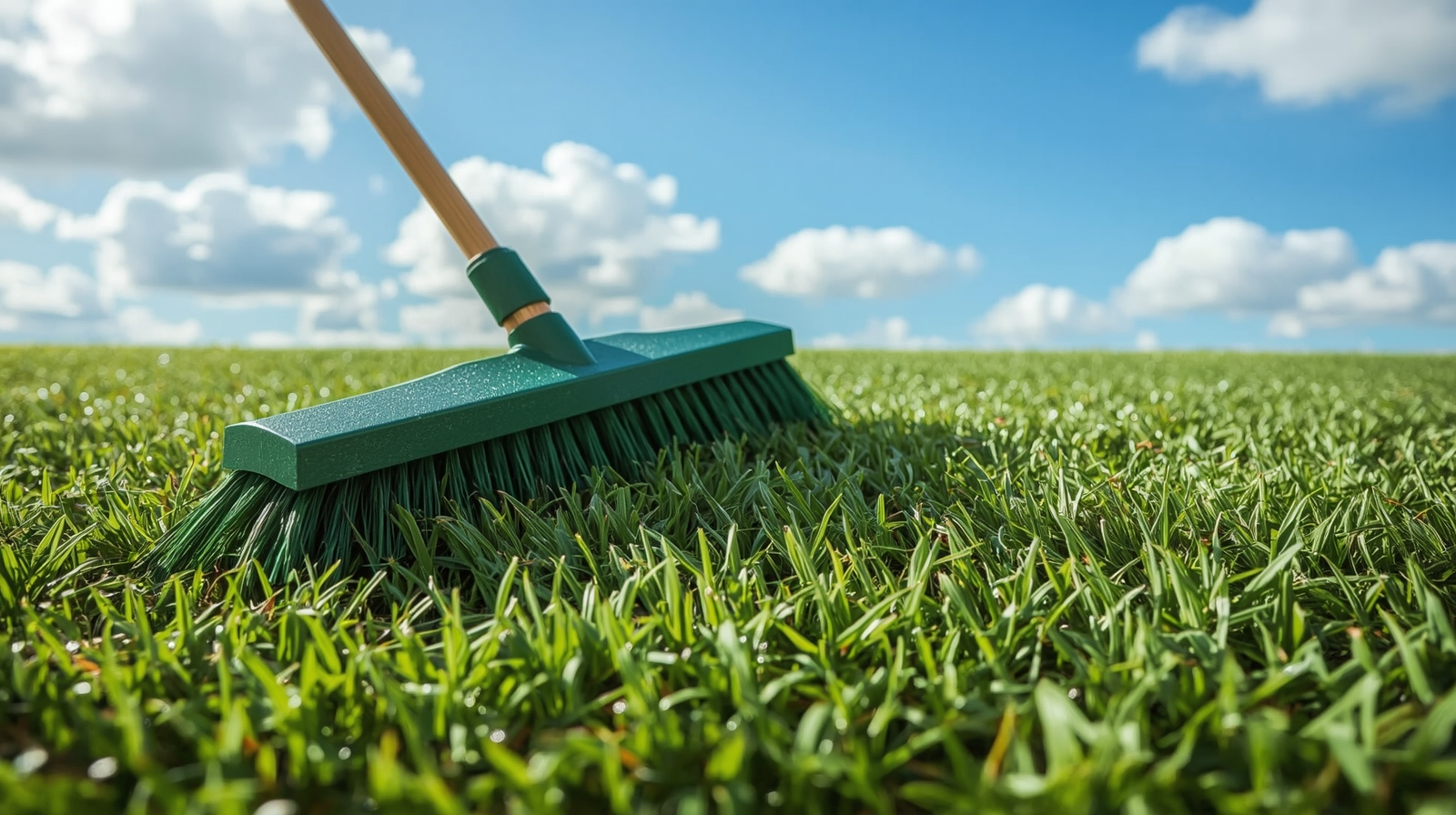
A stiff broom or turf rake is needed to raise the matted-down fibers and to remove the loose debris on top. A garden hose with a gentle stream is perfect for rinsing dirt, pollen, and small stains from grass blades without damaging the turf’s back.
For most synthetic turf cleaning simple soaps, vinegar solutions, or the like will suffice. Avoid harsh chemicals, chlorine, or abrasives as these can strip the color and damage the fibres and/or the structural integrity of the turf.
Step-by-Step Guide: How to Clean Artificial Turf Properly
Knowing how to clean ensures you get the best results for your turf without damaging it. Maintenance is straightforward and achievable when you stick to a routine.
Remove Loose Debris and Organic Matter
Start by removing loose debris such as leaves and twigs. Rake, broom, or blow leaves and other debris, then repeat this a few times from different directions; don’t crush the blades of grass. Removal of organic material at an early stage prevents mulling and drainage problems.
This is required weekly in high-use areas and seasonally or as required in low-use areas. Keeping the debris cleaned off the artificial turf not only keeps the artificial turf surface breathable, but also keeps it looking great.
Rinse the Surface Thoroughly
When all debris is removed, hose down the turf. Wet and dry by hand. Dust, spills, and pet residue tend to build up in certain places. Water acts as a vehicle for transporting contaminants from the surface through the drainage system and keeps debris from accumulating under the turf.
Do not use high-pressure washers unless the manufacturer specifically advises so. Too much pressure can push out infill or unglue seams, making the turf less stable.
Spot Clean Stains and Odors
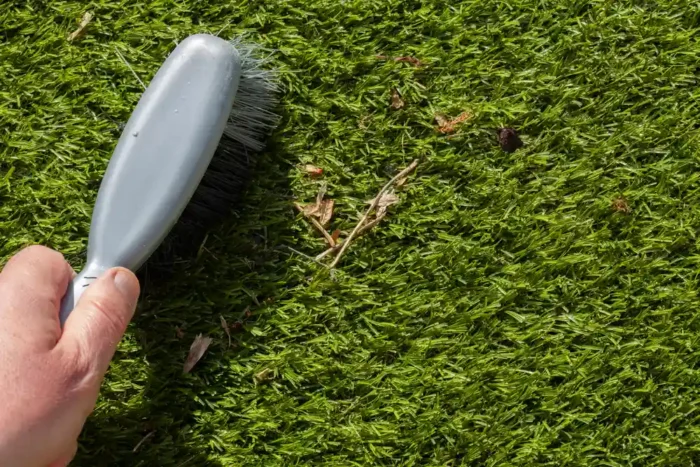
For food, drink, or pet waste stains, use a soft-bristle brush to apply a solution of mild soap and water. Gently rub the area and rinse well. The technique is excellent for routine artificial turf cleaning that won’t harm fibers.
Long-lasting odors can be treated with enzyme cleaner or diluted vinegar solutions. They neutralize smells, rather than covering them up, so the turf stays fresh and clean for everyday use.
You may read How Much Does Lawn Care Cost?
Managing Pet Waste and Hygiene on Artificial Turf
Maintaining cleanliness on pet turf is necessary to avoid penicillin or bacterial buildup. It is a good idea to clean up solid waste promptly, as you would on natural grass.
After removal, rinse the area with water to get rid of residue. For households with multiple animals, periodic deep cleaning will help the home stay fresh and keep odors from becoming ingrained.
Pet-safe enzyme cleaners used from time to time enhance the sanitation as well as the synthetic turf cleaning effectiveness without putting your pets at risk from dangerous chemicals.
Understanding Turf Flattening and Fiber Recovery
With time, the persuasion of the feet to the ground tends to make the fibres tired and liedown so to speak, giving it a more worn-out look. This is a routine process and is not indicative of turf failure.
Brushing the turf against the nap repositions fibers. The process evenly redistributes the infill and brings the turf back to its natural look. Regular brushing also promotes better drainage and foot comfort.
Often described as synthetic turf reblooming, this fiber renewal process is an important element in both immediate and long-term turf care.
Artificial Turf Reblooming | Restoring a Like-New Appearance
Reblooming is an important upkeep procedure for aged or heavily trafficked turf fields. Artificial turf reblooming means the artificial grass fibers are brushed upright, and the infill that has become compacted over time is redistributed.
In certain applications, a supplemental infill may be applied to help support fiber structure and cushioning. This treatment ensures that the turf keeps its natural look and that you don´t get an early wear out.
Although professional reblooming services can be hired, light reblooming is something many homeowners can do themselves if they have the right tools and a bit of patience.
Seasonal Cleaning Tips for Long-Term Turf Care
There are various challenges for turf maintenance in each season. Changing the cleaning strategy with the time of year guarantees a uniform execution and appearance.
More leaf debris is falling in autumn, so you need to sweep more regularly to stop solids from building up. In the summertime, dust and pollen may need to be rinsed off regularly to keep colors bright.
Winter maintenance is preventative in nature, aimed at deterring debris accumulation and not encouraging the use of sharp tools for snow and/or ice removal. Mild cleaning methods protect the fibers and backing, no matter what the season.
Common Turf Cleaning Mistakes to Avoid
A lot of turf problems are caused by cleaning techniques gone awry and not by a lack of cleaning. Harsh chemicals may cause discoloration of fibers and degradation of backing materials.
Don’t use metal rakes, stiff wire brushes or power wash too much; they can break up your turf. Neglecting maintenance also results in compaction of the infill and matting of the fibers.
Conclusion:
Keeping artificial turf clean is easy, effective, and stress-free—and with the right support, it’s even better. Regular debris removal, light rinsing, and occasional reblooming help maintain its fresh look and long-lasting performance. Proper care also improves hygiene, comfort, and durability over time. For homeowners who want hassle-free results, professional lawn care and maintenance service in Whittier ensures your artificial turf stays in top condition year-round.
Call Robert’s Complete Care today to schedule expert turf maintenance and enjoy a clean, beautiful lawn without the work.
Keep Your Artificial Turf Fresh & Spotless
Don’t let stains, odors, or debris ruin your lawn’s beauty. Get expert turf cleaning and maintenance services in Whittier, CA today!
Common FAQs About Cleaning Artificial Turf
How frequently should artificial turf be hosed down?
Light cleaning should be performed every week, while a deeper cleaning should be done monthly or as necessary due to usage.
Is household cleaner safe to clean fake grass with?
You can use a mild soap, but stay away from harsh chemicals and bleach because they can damage the fibers.
Is it necessary to have artificial turf professionally cleaned?
Most turf care can be taken care of at home, but professional services can be beneficial for a deep clean or for reviving older turf.
What is the best way to get rid of dog odors in fake grass?
Rinse frequently and use enzyme-based cleaners to neutralize odors.
Why does artificial turf go flat?
Flattening of the blades is mainly due to heavy foot traffic and the compaction of the infill.