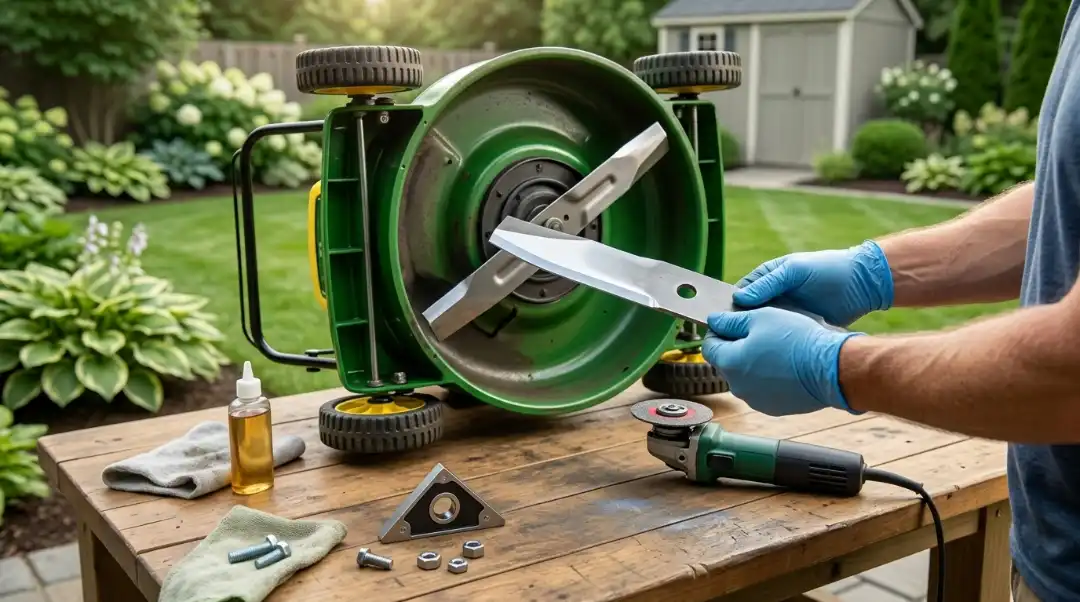
After you mow, your lawn looks tough. The tips are brown, the cut isn’t even, and you’re pushing twice as hard as you need to. Does this sound familiar? Most people don’t think about their mower blades until they see damage on their grass, which is too late. So, how often should you sharpen lawn mower blades? The quick answer is that most homeowners should do it once or twice a mowing season, or every 20 to 25 hours of use. But it’s not just a number.
This article tells you exactly when to sharpen, when to replace instead of sharpening, and how to do it effectively. You’ll know exactly what to do, whether you want to fix up your lawn on the weekends or make it really healthy.
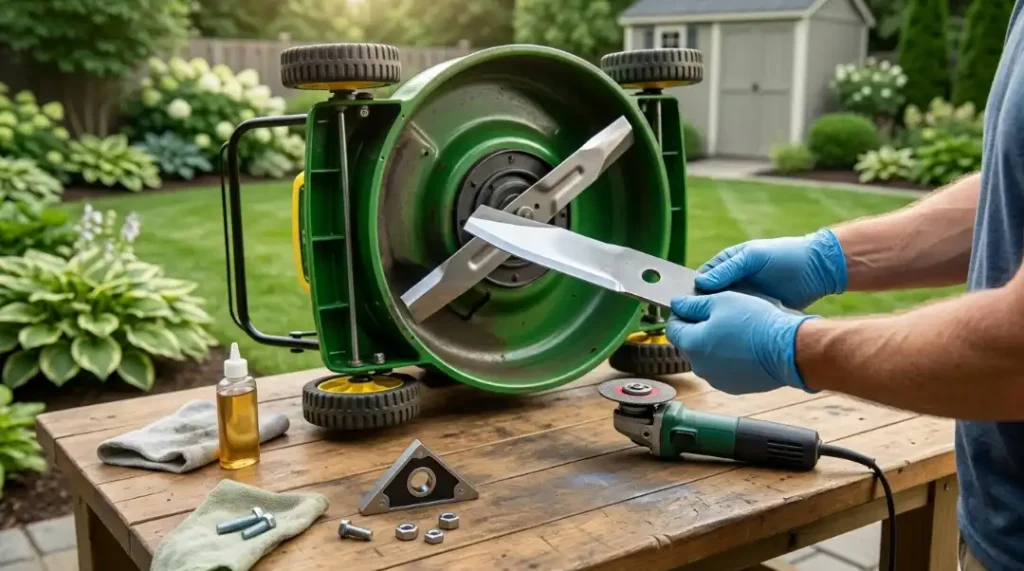
When to Sharpen Mower Blades
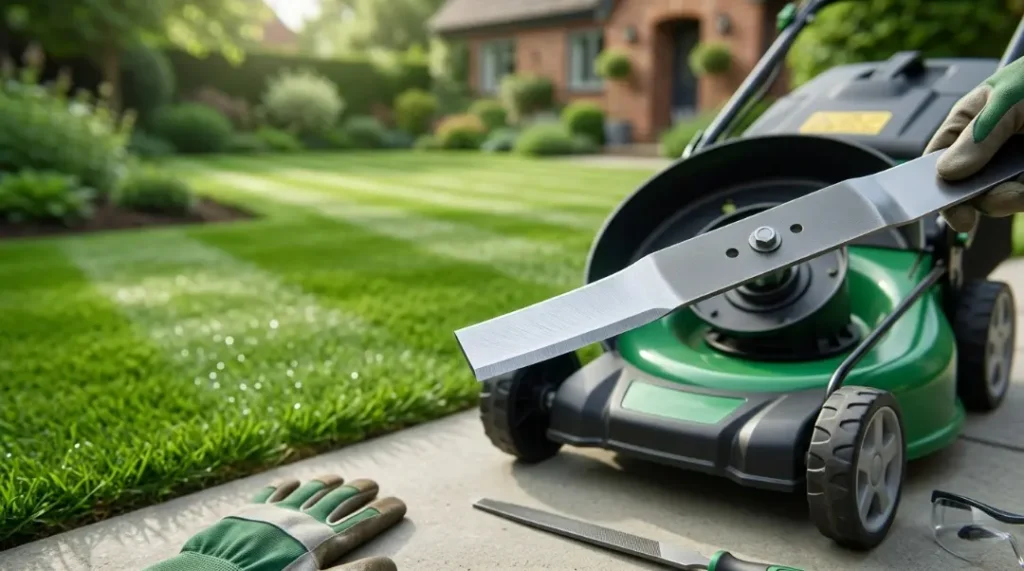
Sharpen your mower blades every 20 to 25 hours of runtime. For most homeowners who mow once a week during the growing season, this works out to one or two sharpenings per year typically at the start of spring and again mid-summer. If you mow a large property or deal with tough conditions, you may need to sharpen more frequently.
A simple way to track it: if your mowing sessions run about 45 minutes each, 20 to 25 hours means roughly 25 to 30 mows. That’s a practical timeline most people can actually follow.
Here’s where it gets more specific. The “20 to 25 hour” rule assumes normal conditions. Factors like sandy soil, coarse grass types (Bermuda, Zoysia, St. Augustine), or mowing over debris will dull blades much faster. In sandy soil especially, the abrasive particles act almost like sandpaper on the metal edge, wearing it down well before the hour mark. If you regularly mow in those conditions, check your blades every 10 to 15 hours instead.
Professional landscapers, for reference, sharpen or swap blades every 8 to 12 hours of use often daily during peak season. That’s a standard worth knowing, even if most homeowners don’t need to match it.
5 Signs Your Mower Blades Need Sharpening
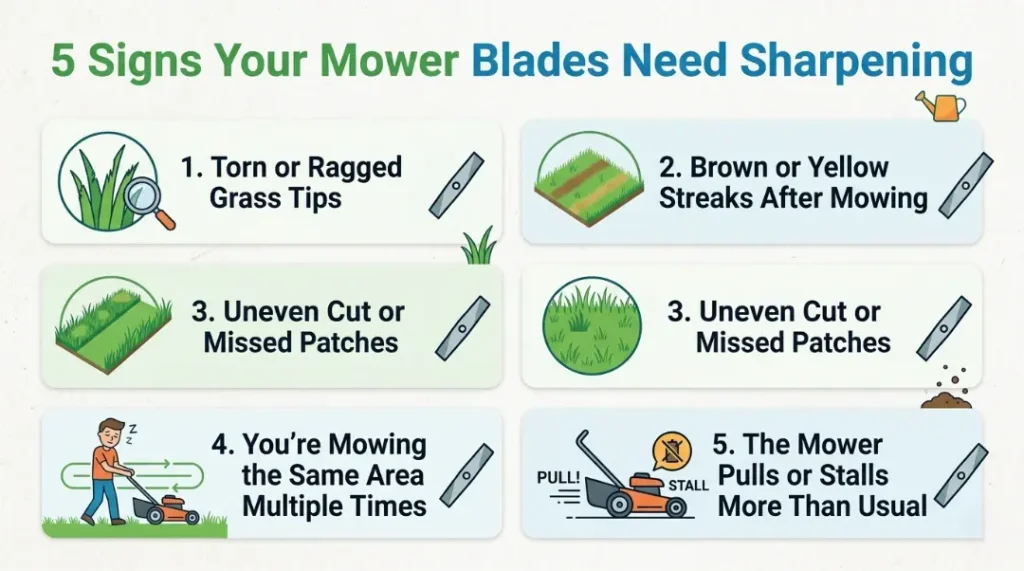
You don’t always need a clock to know it’s time. Your lawn will tell you.
1. Torn or Ragged Grass Tips
After mowing, crouch down and look at the individual grass blades. Sharp blades slice cleanly. Dull blades tear. If the tips look shredded or jagged rather than neatly cut, the blade edge is gone. Within a day or two, those torn tips turn brown or yellow — making your lawn look like it’s stressed or diseased even when it isn’t.
2. Brown or Yellow Streaks After Mowing
If your lawn looks yellowish and burned by the sun two to three days after you mow it, it’s probably because the blades are dull. A ripped blade of grass dries up faster and is more likely to get sick from fungi. People often think they need fungicide when all they need is a sharper blade for their lawn.
3. Uneven Cut or Missed Patches
You’re mowing straight lines, but the lawn looks patchy. Some sections are shorter, others are still tall. This usually means the blade is no longer making consistent contact with the grass. Dull blades push grass aside instead of cutting it cleanly, leaving uncut or unevenly cut spots behind.
4. You’re Mowing the Same Area Multiple Times
If you find yourself going over the same strip two or three times to get a decent cut, the blade isn’t working efficiently. That’s extra time, extra fuel, and extra wear on your mower for a result that still looks mediocre.
5. The Mower Pulls or Stalls More Than Usual
Blades that are dull make extra drag. The engine needs to work harder to make up for it, which can cause it to stall, especially while going through thick grass. According to studies, a mower with dull blades might use up to 22% more gas. Before you think there’s an engine problem, examine the condition of the blade if your mower is running slowly or stops in places it never used to.
When to Replace Mower Blades Instead of Sharpening
Sharpening has its limits. There comes a point where a blade is past saving, and putting it back on your mower is more dangerous than helpful.
Replace your mower blade, don’t sharpen it when it shows cracks, significant bends, or the metal has worn down to less than half an inch in width. A damaged blade can break apart at high speeds and become a serious projectile hazard. Sharpening cannot fix structural damage.
Here are the specific situations that call for a replacement:
- Visible cracks or breaks in the blade body
- A bend you can see even a slight warp means the blade is unbalanced
- Deep nicks or chips that would require removing too much metal to fix
- The blade is thinner than 1/2 inch in width
- More than one-third of the original blade material has worn away
- Excessive vibration during mowing, even after sharpening
How many times can you sharpen a lawn mower blade before replacing it: there’s no fixed number. It depends on the blade’s thickness and how much material gets removed each time. As a general rule, plan on replacing blades every one to two years with regular use, or every one to three seasons depending on your mowing conditions.
Do New Lawn Mower Blades Need to Be Sharpened?
In most circumstances, no. New blades are sharp and ready to use when you get them. Some manufacturers, on the other hand, put a protective coating on the cutting edge to keep it from rusting while it is being stored. If you see that the edge seems painted or coated, you can use a file to remove the paint and show the sharp metal underlying before you mow for the first time.
A lot of people get confused about this. A new blade that doesn’t cut well right away isn’t broken; it can merely have a protective coating on the edge. A brief look is generally all it takes.
Why Sharp Lawn Mower Blades Matter
A dull blade doesn’t just give you a bad-looking lawn. The consequences go deeper than aesthetics.
When a blade tears rather than slices grass, it stresses the plant. The open, ragged wound on each grass blade loses moisture quickly and becomes an easy entry point for fungal disease, insects, and lawn pathogens. Over time, consistent tearing weakens the root system, making your turf thin, patchy, and more susceptible to weeds taking hold.
Sharp blades, by contrast, create clean cuts that heal fast. The grass recovers quickly and keeps growing strong. You also get better nutrient uptake and a healthier overall turf, the kind of result that makes your yard stand out from the neighbors’.
There’s a mechanical side too. Dull blades put excessive load on the mower engine. That means more fuel consumption, more heat, more wear on the deck and drive components. Keeping blades sharp is genuinely one of the cheapest forms of mower maintenance available.
Safety Precautions for Blade Sharpening
Mower blades spin at roughly 3,000 RPM. Before you touch one, safety is non-negotiable.
Always disconnect the spark plug wire before removing any blade. This is the most important step: it prevents the engine from accidentally firing while your hands are near the blade. If you have a battery-powered mower, remove the battery entirely.
Wear thick work gloves and safety glasses throughout. Even a stationary blade can cause serious cuts, and sharpening creates metal fragments and sparks that can get into your eyes. Long sleeves are a good idea too.
Tip the mower on its side carefully, keeping the air filter and carburetor facing upward. This prevents oil from leaking into the air filter and causing problems on restart. Use a piece of wood wedged against the blade to stop it from rotating while you loosen the bolt.
Mark the underside of the blade with a paint marker before removal. This tells you which side faces down when you reinstall. Installing a blade upside down is a common mistake that leads to poor cutting and potential engine damage.
Tools You’ll Need
You don’t need a professional setup to sharpen mower blades at home. Here’s what works:
- Safety gloves and goggles non-negotiable
- Socket wrench or ratchet set to remove the blade bolt
- Vise or clamp to hold the blade steady while sharpening
- Flat metal file the slow but controlled option, good for beginners
- Angle grinder with a flap disc (80-grit) faster and highly effective
- Drill-mounted blade sharpening attachment a good middle ground
- Blade balancer critical; an unbalanced blade damages your mower over time
- Paint marker to mark the underside of the blade before removal
Of all the tools on this list, the blade balancer is the one most people skip and shouldn’t. An unbalanced blade vibrates excessively, which stresses the mower deck, bearings, and frame over time. Basic cone balancers are inexpensive and widely available at any hardware store.
Steps to Sharpen Your Mower Blades
Step 1 Disconnect the Power Source
Disconnect the spark plug wire completely. For battery mowers, remove the battery. Do not skip this step.
Step 2 Tip the Mower and Secure the Blade
Tilt the mower on its side with the carburetor and air filter facing up. Use a block of wood wedged between the blade and the deck to prevent rotation. Loosen the center bolt with a socket wrench note that it’s typically a reverse thread (turns clockwise to loosen).
Step 3 Mark and Remove the Blade
Before removing, mark the bottom (grass-side) of the blade with a paint marker. Remove the blade and take note of any washers or spacers in the order they came off.
Step 4 Inspect the Blade
Look for cracks, severe bends, or deep chips. If any are present, replace rather than sharpen. If the blade is just dull, proceed.
Step 5 Clean the Blade
Wipe off debris and built-up grass clippings with a wire brush or rag. Clean metal gives you a more accurate sharpening result.
Step 6 Sharpen the Cutting Edge
Using a file or angle grinder, follow the existing bevel angle typically 30 to 45 degrees. Work along the cutting edge in smooth, consistent strokes. Maintain the same angle throughout. Remove material evenly from both ends to keep the blade balanced. Aim for an edge similar to a butter knife sharp enough to cut but not razor-thin, which would dull too quickly.
Step 7 Check the Balance
Place the blade on a blade balancer or hang it on a nail through the center hole. If one end dips, it’s heavier to remove a small amount of metal from that side and recheck. A balanced blade sits perfectly level.
Step 8 Reinstall the Blade
Refit the blade with the marked (grass) side facing down. Replace any washers or spacers in the original order. Tightening the center bolt firmly under-tightening is a common mistake that can affect engine timing and cause the blade to come loose during use.
Step 9 Reconnect and Test
Reconnect the spark plug wire or battery. Start the mower on a small patch of grass and check for vibration or unusual sounds. If everything feels smooth, you’re done.
When to Call a Professional
There are times when you really need an expert. A shop can use a special blade grinder to get the factory angle back to where it should be if the blade is significantly chipped from hitting rocky terrain. This is better than most DIY approaches.
It usually costs between $5 and $15 to have a professional sharpen your blades. Some Ace Hardware stores, as well as most small engine repair shops and lawn equipment stores, offer this service. Most of the time, turnaround is quick, often the same day. If you don’t feel safe using power tools or if the blade is badly damaged and you’re not sure what to do, you should definitely consult a professional.
For complete lawn care including mowing, trimming, and year-round turf health maintenance Robert’s Complete Care offers professional Lawn Care and Maintenance Services in Whittier for homeowners who want a consistently well-maintained yard without the hassle. From blade health to full seasonal service, it’s one less thing to manage yourself.
One Final Thought
Sharp blades are the most overlooked part of lawn care. Most people invest in a decent mower, spend time mowing every week, and then wonder why the lawn never looks quite right. Nine times out of ten, the blade is the answer.
The rule is straightforward: check your blades at the start of the season, sharpen at the 20 to 25 hour mark, and watch your grass after every mow. Brown tips and uneven cuts are your cues. Catch them early and you’ll spend less time fixing problems and more time actually enjoying your yard.
FAQ About Lawn Mower Blades
How many times can you sharpen mower blades before replacing them?
There’s no fixed number of sharpenings before replacement is needed. The real indicator is blade condition: if the blade is thinner than 1/2 inch, has visible cracks or bends, or can no longer be balanced, it’s time to replace it regardless of how many times it’s been sharpened.
Most homeowners find blades last one to three seasons before replacement is necessary. The key variable is how much material gets removed during each sharpening and what conditions the blade works in.
Is sharpening lawn mower blades worth it?
Yes, sharpening is worth it in almost every case. A sharp blade produces a cleaner cut, reduces stress on your grass, lowers fuel consumption, and extends the life of your mower. The cost of sharpening ($5 to $15 at a shop, or a few minutes of your time DIY) is minimal compared to the cost of lawn repairs or mower issues caused by running dull blades.
What is the average cost to sharpen lawn mower blades?
Professional sharpening runs between $5 and $15 per blade at most small engine shops, hardware stores, and mower dealerships. Some places charge up to $30 for two blades, which is still reasonable considering the time and skill involved. If you DIY with an angle grinder and flap disc, the per-sharpening cost drops to almost nothing after the initial tool purchase.
Can you over-sharpen a mower blade?
Yes. Sharpening too often removes more metal than necessary and thins the blade faster than normal use would. It also increases the risk of creating an edge that’s too thin which dulls almost immediately in cutting conditions. Stick to the 20 to 25 hour schedule rather than sharpening out of habit every few weeks.
The goal is a clean, beveled edge not a razor. A blade sharpened to the factory angle (30 to 45 degrees) holds its edge far better than one ground too aggressively.
How much does Ace charge to sharpen mower blades?
Ace Hardware pricing varies by location, but most stores that offer the service charge between $5 and $15 per blade. Call your local store before bringing it in; not all locations offer sharpening, and some send blades to a third-party service, which affects turnaround time.