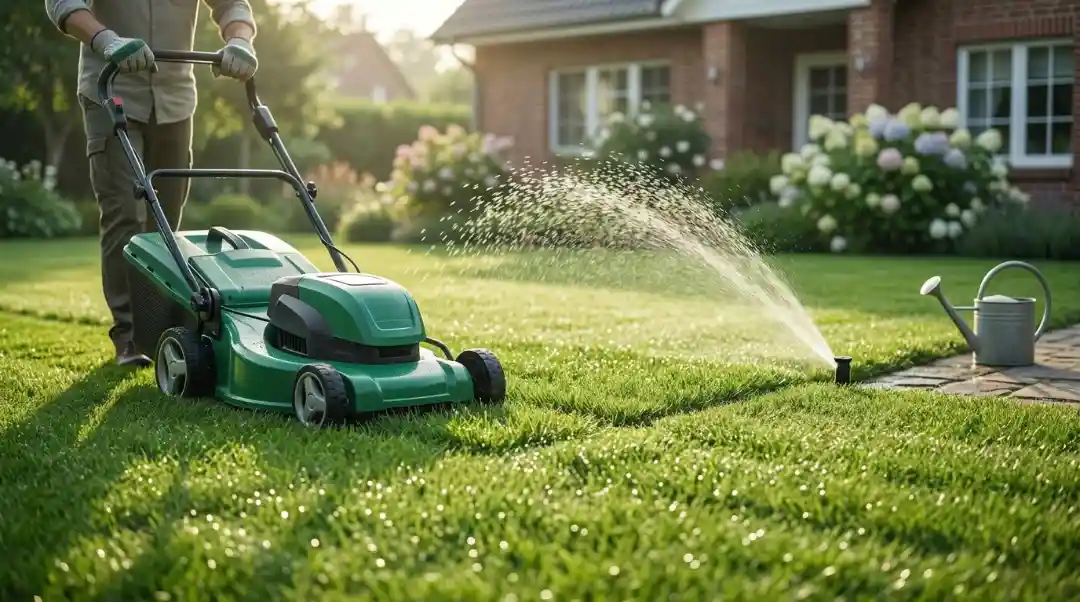
Watering your lawn right after you finish mowing is generally unnecessary, but it’s safe if your soil is already dry or due for its scheduled irrigation. Freshly cut grass faces immediate moisture loss through its newly sliced tips, making a drink helpful under drought conditions. However, adding water to a lawn that doesn’t need it invites fungal disease and shallow roots.
The true secret to a perfect lawn lies in separating your irrigation schedule from your mowing routine. Instead of treating watering as an automatic post-mow step, you must look at specific soil conditions and weather signals. Let’s look at exactly how to time your irrigation to keep your grass thick, resilient, and green.
Signs You Should Water Your Lawn After Mowing
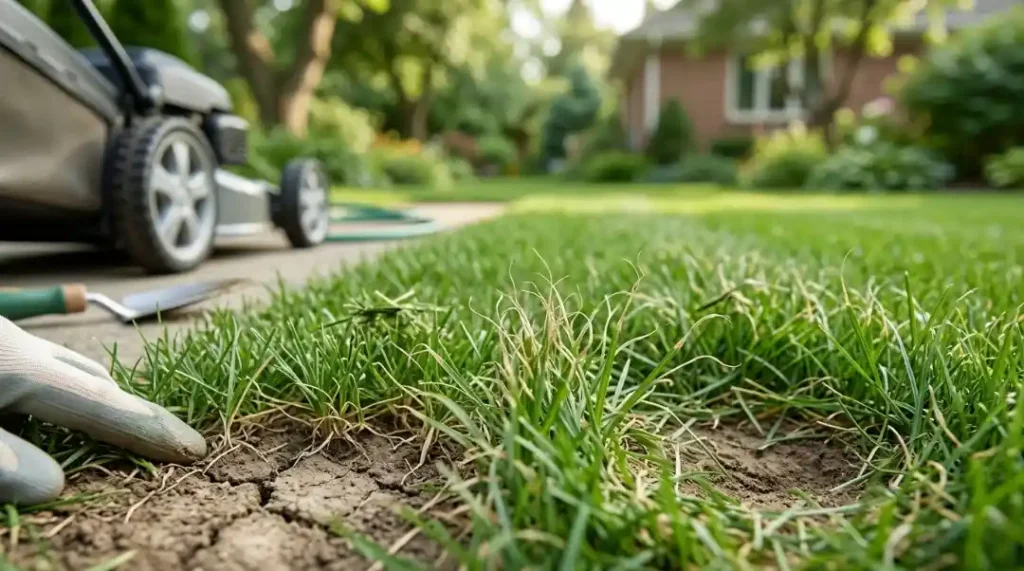
Your turf will tell you when it needs moisture after a fresh cut. Look for structural and color visual changes in the grass blades.
Lingering Footprints: Walk across your yard and look back. If your footprints remain flattened in the grass instead of bouncing back within a few seconds, the plant cells lack the water pressure to stand upright.
Color Shifts: Dehydrated turf loses its bright green hue. Look for dull, grayish-blue tints or slight yellowing across the surface.
Curled or Withered Blades: Examine individual grass stalks closely. Thirsty blades fold or roll inward along their lengths to reduce their surface area and conserve water.
Hard, Fractured Soil: Check the soil surface between grass clumps. If you spot surface cracking or the ground feels like concrete underfoot, your root zone is dry.
Why You Should Never Mow Right After Watering
Mowing a lawn that you just watered is a recipe for a damaged yard and ruined equipment. Wet grass blades bend easily under the weight of a mower instead of standing upright.
Shredded Grass Tips
When your mower blade hits pliable, wet grass, it rips and shreds the tissue rather than slicing it cleanly. These jagged, torn edges turn brown within 24 hours, making your entire yard look scorched and dull.
Soil Compaction Risks
Heavy residential and commercial mowers press deep into muddy, saturated soil. This crushing weight squeezes the tiny air pockets out of your soil structure, which suffocates grass roots and stops healthy nutrient flow.
Benefits of Watering After Mowing
While not always mandatory, strategic post-mow irrigation offers real physiological perks when your soil is dry. Every cut creates thousands of open microscopic wounds across your yard.
Immediate Stress Alleviation
Mowing forces grass out of its normal growth state. Providing deep moisture right after cutting allows the root system to pump water up to the open wounds, which stabilizes internal fluid pressure and speeds up recovery.
Washing Down Fertilizer and Amendments
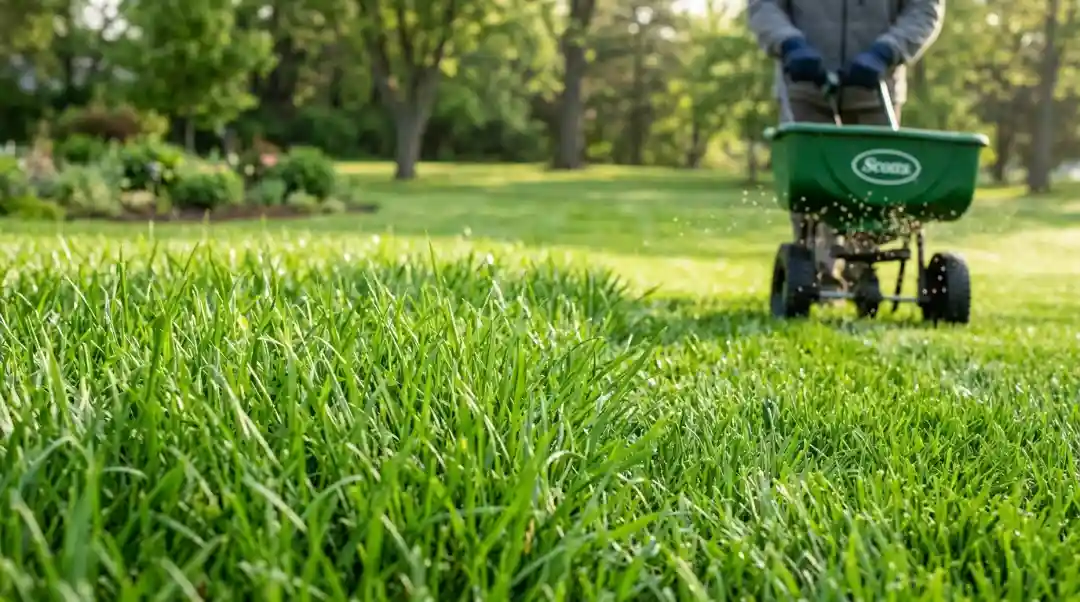
If you plan to apply a light topical treatment or organic fertilizer after cutting, a post-mow watering is perfect. The water washes the nutrients off the grass blades and down into the soil, preventing foliar burn and activating the product.
Benefits of Watering After Mowing
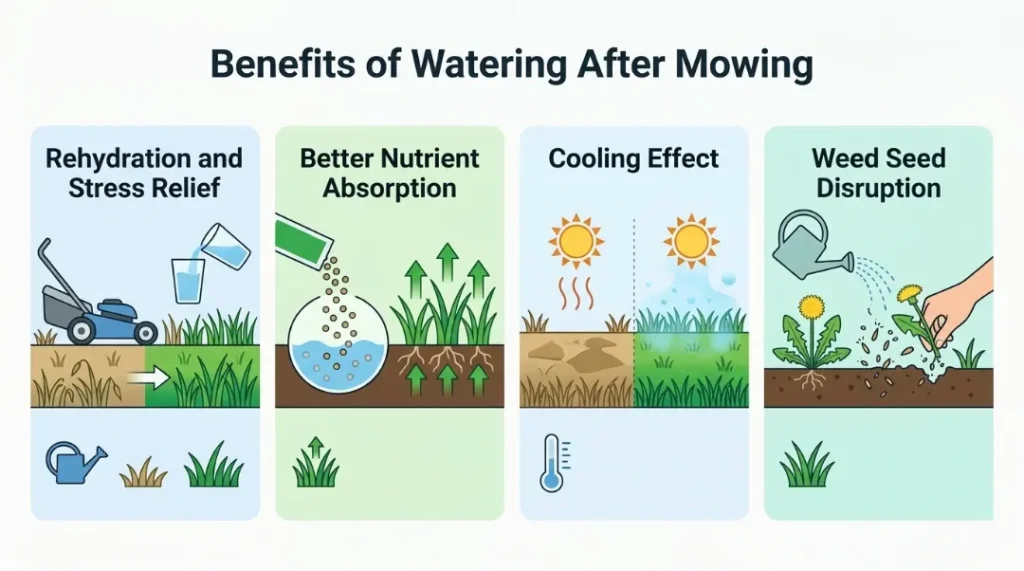
Watering after mowing isn’t just acceptable, it actively helps your lawn recover and grow stronger.
Rehydration and Stress Relief
Mowing removes a portion of each grass blade. That’s physical stress on the plant. Watering shortly after gives the grass the moisture it needs to bounce back faster and resume normal growth.
Better Nutrient Absorption
Water carries nutrients deeper into the root zone. After mowing, the soil is slightly more open to absorption. Watering at this point helps fertilizers and natural nutrients reach where roots need them most.
Cooling Effect
On hot summer days, freshly cut grass heats up quickly without its full blade length. A good watering cools the surface temperature and reduces the chance of heat stress turning your lawn brown.
Weed Seed Disruption
Watering right after mowing can wash away weed seeds that were disturbed during cutting. It won’t eliminate weeds, but it reduces the chances of new ones germinating in exposed soil patches.
Why Dry Grass Mowing Produces Cleaner Results
Cutting your lawn when the turf is bone-dry ensures a crisp look and protects your equipment. Dry grass stands up straight and separate, allowing your mower blade to slice each stem at an even height.
Uniform Cutting Height
Dry grass resists the wind energy created by the spinning blade, which keeps it from flattening out during a pass. This results in a completely level surface across your whole landscape.
Seamless Clipping Dispersal
Dry clippings scatter evenly across the yard without clumping together. They slip down past the top of the grass canopy to decompose naturally, acting as a free nutrient boost for your soil.
The Best Times of Day to Mow and Water
| Activity | Ideal Time Window | Why It Works |
| Lawn Mowing | 8:00 AM – 10:00 AM or 4:00 PM – 6:00 PM | Avoids the intense midday heat while ensuring morning dew has evaporated completely. |
| Lawn Watering | 4:00 AM – 8:00 AM | Low wind and minimal sun reduce evaporation, letting water soak deep into the root zone. |
The Morning Mowing Sweet Spot
The absolute best window to run your mower is mid-morning. The rising sun has already dried the heavy morning dew, but the temperature remains cool enough to prevent heat stress on both you and your freshly cut turf.
The Late Afternoon Alternative
If morning doesn’t work, aim for the late afternoon before dusk. The sun’s intensity is fading, giving your grass a long, cool night to heal its cut tips before facing the next day’s heat.
What Happens If You Water Before Mowing?
Watering right before you step out with your mower causes a cascade of maintenance headaches. Saturated grass forms a dense, sticky mat when cut.
Clogged Mower Decks
Wet clippings stick to the underside of your mower deck like wet cement. This buildup chokes the airflow inside the machine, stalls your engine, and drops thick, slimy clumps of grass all over your clean lawn.
Fungal Disease Transmission
Damp, torn grass blades are highly vulnerable to fungal spores. Walking and rolling heavy machinery through a wet, freshly cut lawn spreads pathogens like brown patch and dollar spot across your entire property.
Lawn Watering Frequency and Quantity
Most lawns need about 1 to 1.5 inches of water per week. The key is deep, infrequent watering not daily light sprinkles.
Deep watering encourages roots to grow downward, reaching moisture stored further in the soil. Shallow, frequent watering keeps roots near the surface. Surface roots make grass more vulnerable to drought, heat, and foot traffic damage.
Watering Guide by Grass Type:
| Grass Type | Water Per Week | Drought Tolerance |
| Kentucky Bluegrass | 1.5–2 inches | Low |
| Tall Fescue | 1–1.5 inches | Medium |
| Bermuda Grass | 1 inch | High |
| Zoysia Grass | 0.5–1 inch | High |
| St. Augustine | 1.5 inches | Medium |
This table fills a gap both top-ranking competitors miss entirely. Grass type determines how much water your lawn actually needs after mowing, not a one-size-fits-all answer.
How to Tell If the Lawn Really Needs Water
Never guess when it’s time to turn on your sprinklers. Use simple, physical testing methods to verify the moisture levels hidden beneath your green grass canopy.
The Screwdriver Test
Take a standard 6-inch screwdriver and push it straight down into your soil. If it slides in easily without much resistance, your soil holds plenty of moisture. If you have to muscle it in or it stops halfway, the ground is dry.
Soil Core Sampling
Use a trowel to pull a small, 4-inch deep wedge of soil from an inconspicuous area. Touch the dirt at the bottom of the wedge. If it feels cool and damp and holds its shape when squeezed, your lawn does not need water.
Determining Whether to Water Lawns After Mowing
Deciding whether to open your valves right after your maintenance run comes down to checking your overall weekly routine. Look at your calendar before turning on the tap.
Stick to the Main Schedule: If your weekly irrigation plan dictates that today is a watering day, go ahead and water after you finish mowing, provided it’s not the middle of a hot day.
Skip If Rain Is Coming: Check your local weather app. If rain is forecast within the next 24 hours, let nature handle the watering and keep your sprinklers turned off.
Watering for Newly Seeded or Overseeded Lawns
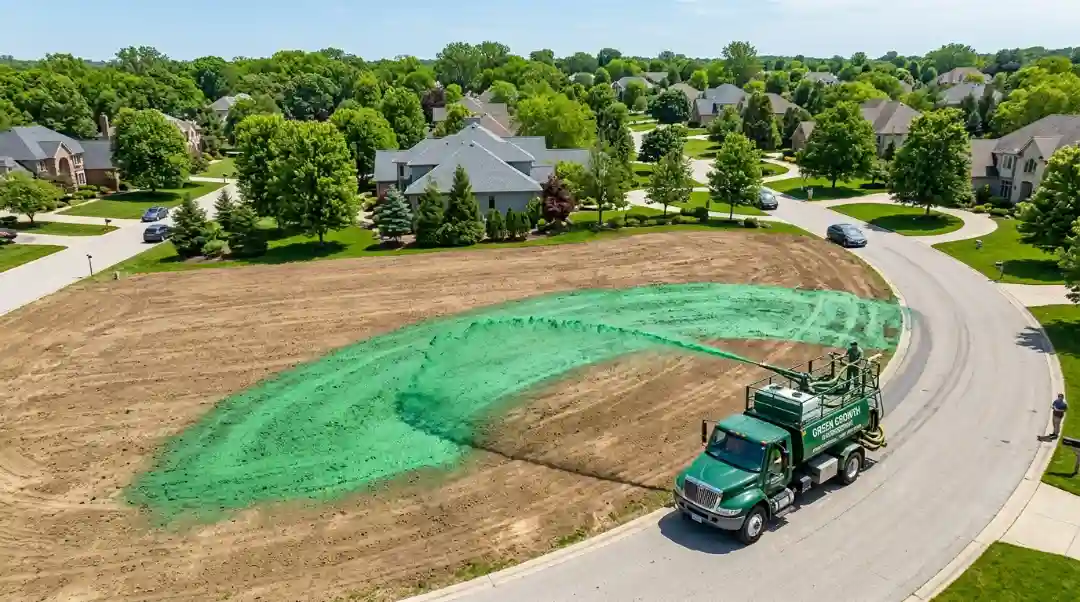
Fresh seed and young seedlings operate under an entirely different set of rules than an established yard. Newly planted grass seeds have zero root structures to pull moisture from deep in the earth.
Keep the Topsoil Moist
New seeds must stay continuously damp until they germinate and take root. If a seed dries out after it begins to sprout, it dies immediately. You must water these areas lightly two to three times every day.
Transitioning After the First Cut
Once your new grass hits 3.5 inches tall, it’s time for its first mow. Set your mower deck to 3 inches to avoid scalping. Water lightly immediately after this first cut to settle the disturbed soil around the young roots.
Water Conservation Tips
Maintaining a lush yard doesn’t mean you have to waste water or run up massive utility bills. Smart adjustments drastically reduce your outdoor water usage.
Install a Smart Irrigation Controller: These units sync directly with local weather stations via Wi-Fi. They automatically skip scheduled watering cycles if it rained last night or if high winds are expected.
Audit Your Sprinkler Heads: Periodically turn on your system and watch it run. Adjust any misaligned nozzles that are wasting water on your concrete driveway, sidewalks, or patio.
Water Conservation Tips
Responsible lawn care means not wasting water. A few practical habits make a real difference:
- Water early morning to cut evaporation loss by up to 30%
- Use a rain gauge to track actual rainfall and adjust irrigation accordingly
- Install a smart sprinkler controller that adjusts based on local weather data
- Collect rainwater with barrels and use it on the lawn during dry spells
- Create watering zones shaded areas need significantly less water than full-sun spots
If you need professional help setting up an efficient irrigation plan or want expert lawn maintenance, Robert’s Complete Care offers trusted Lawn Installation Services in Whittier for homeowners who want a healthy lawn without the guesswork.
Final Thoughts
Should you water your lawn after mowing? The answer isn’t always yes or no. It depends on the type of grass you have, the weather, how much it rained recently, and what the lawn is telling you. Mow the grass when it’s dry, wait 30 to 60 minutes, and then water it deeply and not very often. That’s the basis for a healthy routine.
Stop guessing and start looking at your yard. The signs are always there. The difference between a lawn that is having trouble and one that stays thick, green, and strong during the heat and dry spells of summer is following this method all the time.
Do you have questions concerning your lawn or need help in person? Contact Robert’s Complete Care and let us help you make a lawn care plan that works for your grass type, soil, and climate.
Frequently Asked Questions
How soon after mowing can I water my lawn?
Wait 30 to 60 minutes after mowing before watering. This gives grass blades time to seal microscopic cuts from the mower, reducing the risk of disease. After that short window, water deeply and let the lawn absorb moisture down to the root zone.
What is the 1/3 rule in mowing?
The 1/3 rule means never cut more than one-third of the grass blade’s total height in a single mow. Cutting more than that shocks the plant, increases water loss, and slows recovery. If your grass is 4 inches tall, don’t cut it shorter than about 2.7 inches in one session.
Is rain good for freshly cut grass?
Yes, light rain after mowing is actually ideal. It acts like a natural watering session: it cools the grass, replenishes moisture, and helps clippings break down faster. Heavy rain right after mowing can cause clipping clumps to mat, which blocks sunlight. Light to moderate rain is the sweet spot.
Will watering grass make it green again?
If the grass is dormant or drought-stressed but not dead, yes consistent deep watering usually restores green color within 1 to 2 weeks. If grass blades are completely brown and the crowns are dead, watering won’t revive them. The screwdriver test and footprint test help you figure out which situation you’re dealing with.
What to do after mowing a lawn?
After mowing, let the lawn rest for 30 to 60 minutes, then water if the soil needs it. Remove any clipping clumps that formed. Check the edges and trim if needed. If you applied fertilizer recently, this is a good time to water it in. Inspect for any bare patches that might need overseeding.