Clover doesn’t ask you whether it can take over your lawn. One season, it’s just a few patches here and there, then the next, it takes over your whole yard as it owns it. You’re not the only one struggling with this obstinate, spreading weed. The good news is that you can get rid of it without ripping up your whole grass.
This tutorial will show you step-by-step how to get rid of clover grass on the lawn using tried-and-true ways, such as pulling it up by hand or using herbicides. You’ll also find out what makes it grow in the first place, so it doesn’t come back. The quickest way to get rid of clover is to use a broadleaf post-emergent herbicide that has triclopyr or 2,4-D in it. However, the best method for you will depend on the size of your lawn, the type of grass you have, and how bad the infestation is.
How to Identify Clover in Your Lawn
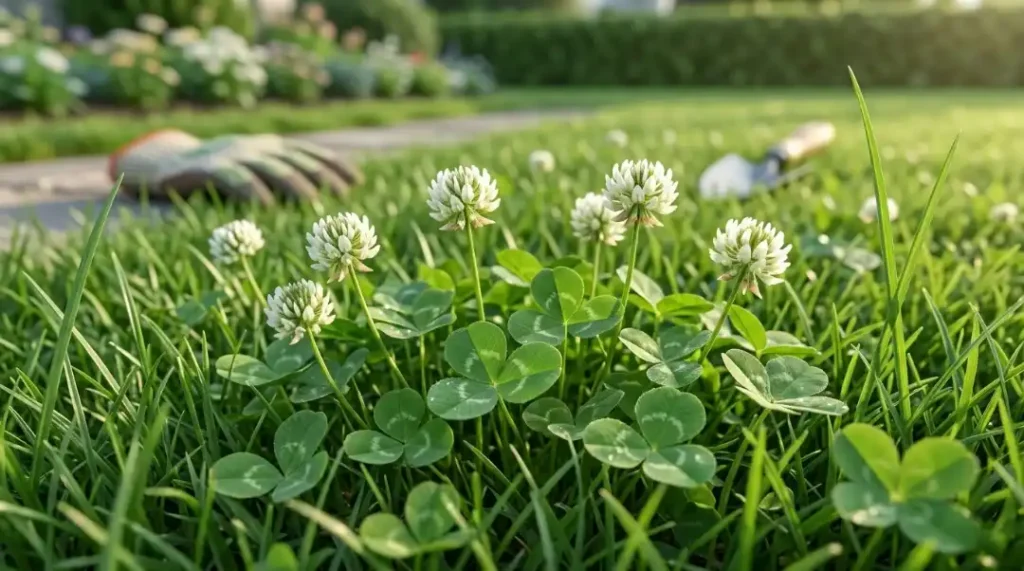
The most frequent type of clover weed in lawns is white clover (Trifolium repens). It has three circular leaflets, but sometimes four. There is a white or greenish V-shaped watermark on the leaflets called a chevron. It grows close to the ground and spreads through stolons (creeping stems), which makes it a quick colonizer of thin, nutrient-poor turf.
Look for little, spherical flower clusters that are white or pink. These are called inflorescences. Each cluster has 20 to 40 tiny flowers that draw in bees. This is good for pollinators, but not so good if you want smooth grass.
Clover and oxalis (wood sorrel) are not the same thing. Oxalis has heart-shaped leaves and yellow blooms. Clover leaves are more round and often have the watermark that makes them stand out.
What Causes Clovers to Grow in Your Lawn?
Clover isn’t just a random thing. It shows up for a reason, and resolving that reason is just as vital as getting rid of the weed.
The main reason is low nitrogen levels. Clover is a legume that fixes nitrogen, which means that it makes its own nitrogen by working with Rhizobium bacteria in its roots. Your grass can’t do that. When nitrogen levels drop, clover does well, but turf does poorly.
The earth being compacted is also very important. Most turfgrasses can’t grow roots correctly in compacted earth, but clover’s roots are all connected, so they can withstand it. If water collects on your grass when it rains, it’s probably because of compaction.
Here are the other main causes:
- Unbalanced soil pH Grass grows best at 6.0 to 7.0 pH. Clover tolerates a wider range, so it steps in when pH is off.
- Bare or thin patches Any open space in your turf is an invitation for clover weeds in grass to move in.
- Irrigation issues Overwatering washes out nitrogen; underwatering weakens turf. Either way, clover wins.
How to Get Rid of Clover Grass on Lawn (7 Methods That Work)
1. Hand-Pull Clover (Best for Small Patches)
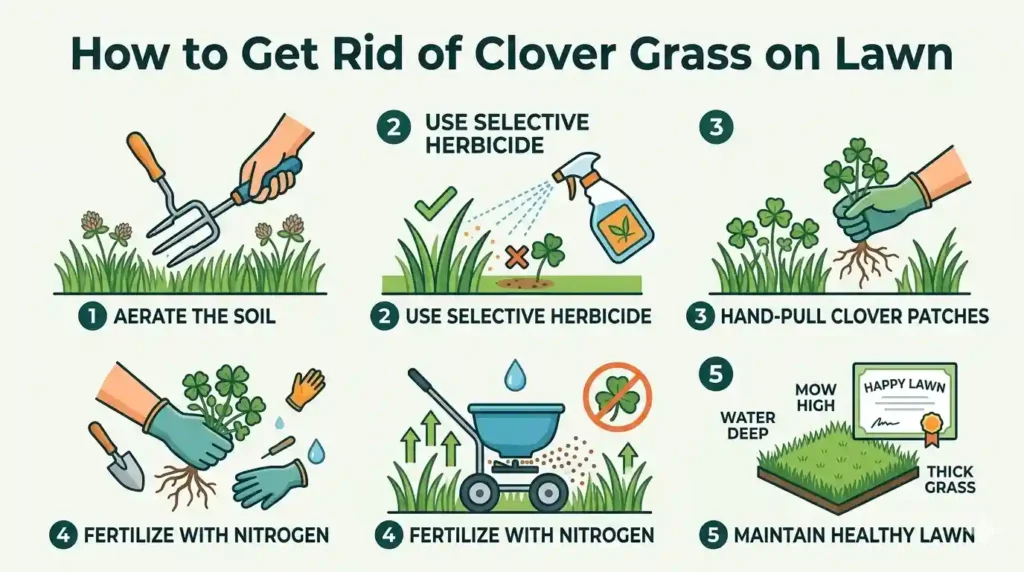
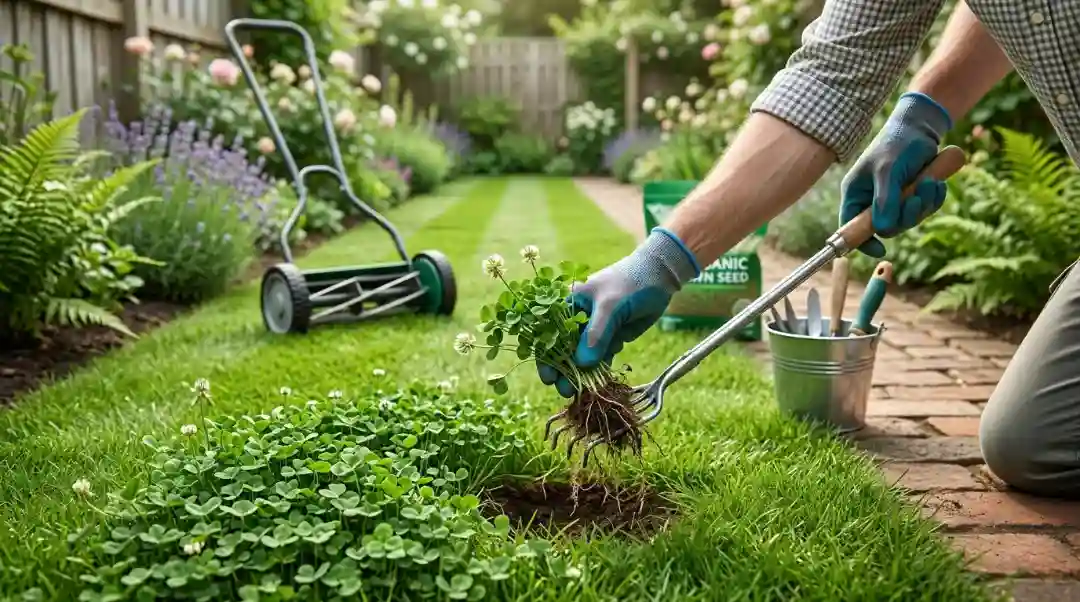
Hand-pulling is the most natural way to remove clover from lawn areas with light infestations. It costs nothing and avoids chemicals entirely. The key is getting the roots to leave any root fragments behind and the clover will regrow within weeks.
Moisten the soil first and wet soil makes pulling much easier. Use a garden spade to loosen the soil around the patch, then pull the entire clump out, roots and all. White clover has shallow roots, so this process is easier than dealing with dandelions.
Wear gloves and work in sections. Dispose of the pulled clover in a bag don’t compost it, as it may still spread seeds.
2. Smother It with Plastic Sheeting
Covering clover with an opaque plastic sheet or garbage bag blocks sunlight and air two things it can’t survive without. This method works best on large, concentrated patches rather than scattered clover weeds in grass mixed throughout your lawn.
Place the sheeting over the clover patch and secure the edges with bricks or rocks. Leave it in place for 4 to 6 weeks. After removing it, reseed the area with grass seed to fill the gap.
Don’t use this on small or irregular patches you’ll kill surrounding grass too.
3. Apply a Post-Emergent Broadleaf Herbicide
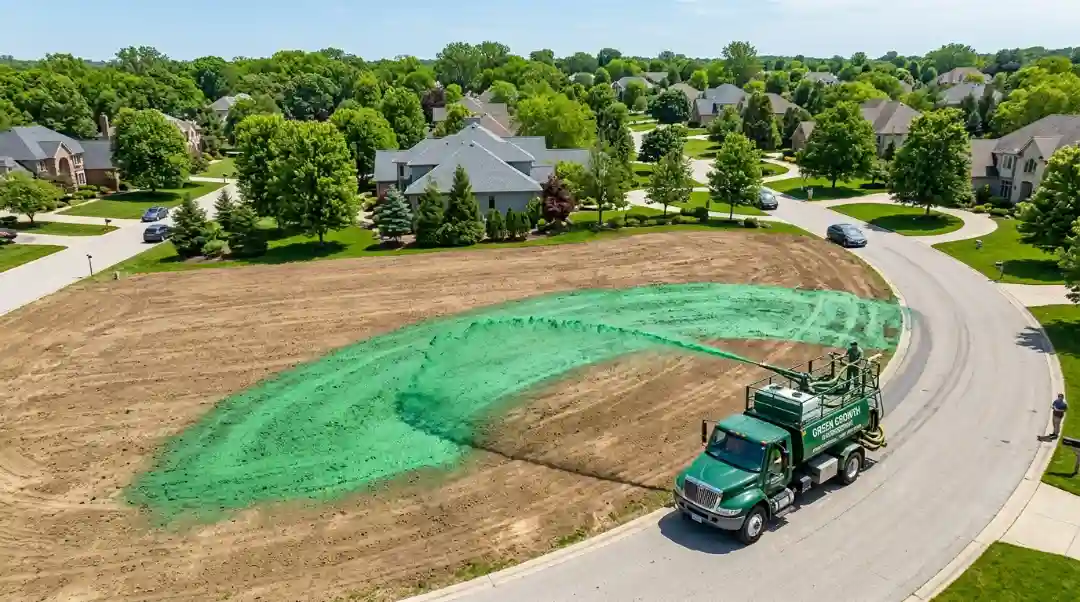
This is the most effective method for moderate to severe clover infestations. To kill clover in lawn areas that are already established, you need a systemic post-emergent herbicide one that travels from the leaf down to the root system.
Look for active ingredients like:
- Triclopyr
- Dicamba
- 2,4-D
- MCPP (mecoprop)
- Quinclorac
Always read the label before buying. Some of these can injure certain grass types like St. Augustinegrass or centipedegrass.
When to spray: Fall is the best time to spray broadleaf weeds. Clover is actively moving nutrients down to its roots to prepare for winter, so the herbicide gets carried deeper and kills more effectively. Spray when temperatures are between 65°F and 80°F, with no rain in the forecast and no wind.
4. Use an Organic or Pet-Safe Clover Killer
If you have kids or pets on your lawn, chemical herbicides aren’t always the right call. Organic options exist, but they require patience and multiple applications to remove clover from lawn areas completely.
Chelated iron (FeHEDTA) is one of the better organic options. It kills broadleaf weeds through iron toxicity while leaving grass unharmed; your turf may even green up a bit. Expect to spray 2 to 3 times per season for full results.
A.D.I.O.S. (Advanced Development In Organic Solutions) uses salt-based compounds to dry out clover. It works, but use it carefully and it can damage surrounding plants if over-applied.
Avoid straight white vinegar for lawn use. It’s a contact herbicide, so it burns the tops but doesn’t reach the roots. Clover regrows in days.
5. Fertilize with a Nitrogen-Rich Fertilizer
Boosting your lawn’s nitrogen levels is one of the most underrated ways to naturally suppress purple clover in lawn and white clover alike. Since clover already makes its own nitrogen, a fertilized, dense lawn gives it no competitive advantage.
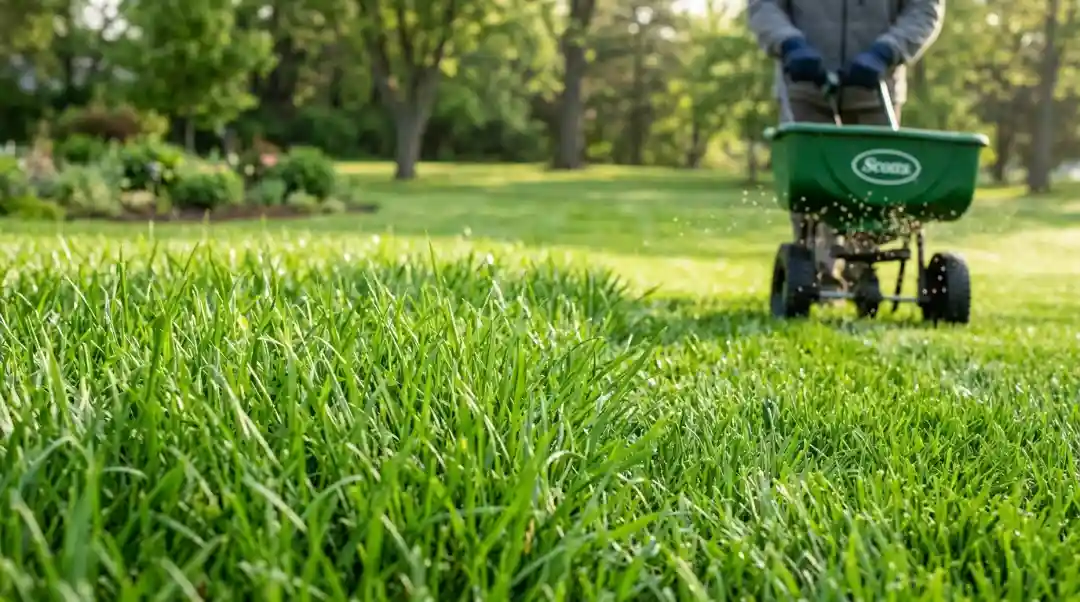
Choose a slow-release nitrogen fertilizer for long-term results. If your lawn is severely deficient, a quick-release fertilizer can boost levels fast and just don’t overapply, as excess nitrogen causes its own problems.
Get a soil test first. This tells you exactly what’s missing so you’re not guessing.
6. Aerate Your Lawn
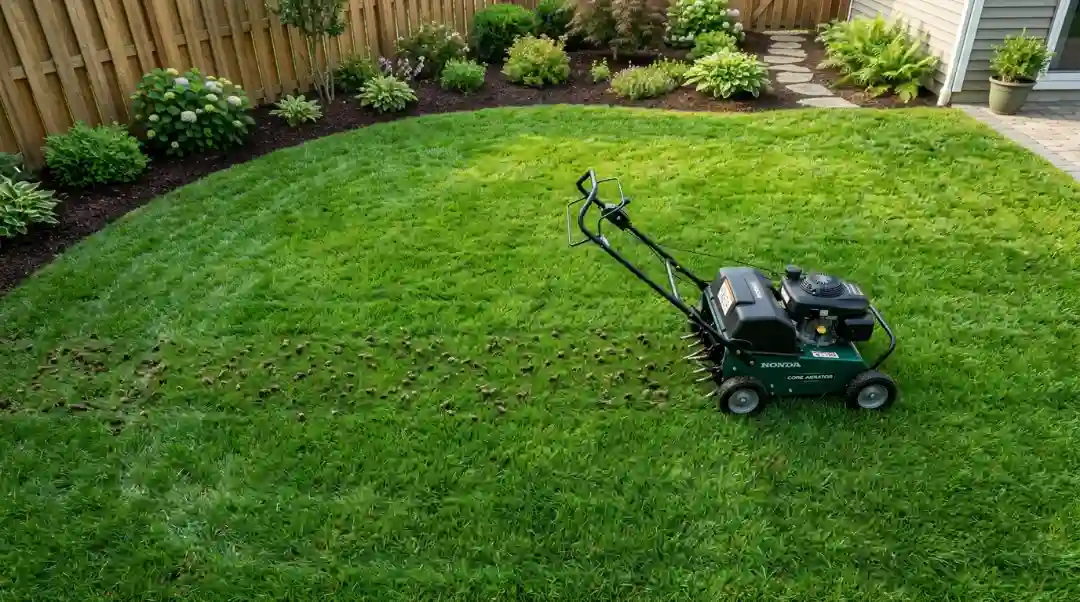
Core aeration breaks up compacted soil, allowing grass roots to spread deeper and access water and nutrients more effectively. It’s one of the best long-term fixes for lawns where creeping clover weed keeps coming back.
Aerate in early fall or spring, depending on your grass type. After aerating, overseed thin areas and apply fertilizer to give new grass the best start.
7. Correct Your Soil pH
If your soil is too acidic or too alkaline, your grass struggles and clover steps in to fill the gap. A simple soil test from your local garden center or cooperative extension office will tell you where you stand.
Most cool-season and warm-season grasses prefer a pH of 6.0 to 7.0. If your pH is off, apply lime to raise it or sulfur to lower it. Retest after 3 to 6 months.
How to Prevent Clover from Coming Back
Getting rid of clover is only half the job. Here’s how to keep it from returning:
Mow high. Cut your grass at 3 inches or above. Taller grass shades the soil, which stops clover seeds from germinating. This single habit makes a bigger difference than most people realize.
Apply a pre-emergent herbicide. Pre-emergents won’t kill established clover, but they stop seeds from sprouting. Apply in early spring before soil temps hit 50°F. Corn gluten meal is an organic alternative, though it’s less reliable than synthetic options.
Overseed bare patches immediately. Any thin or bare area is a clover invitation. After treating clover, fill those spots with grass seed suited to your lawn type. A dense lawn is the best long-term defense.
Water properly. Water deeply but infrequently about 1 inch per week. This encourages deep grass roots and avoids washing nitrogen out of the soil.
Mulch landscape beds. Mulch blocks sunlight from reaching weed seeds in your garden borders. It won’t help with lawn clover, but it keeps clover from creeping in from the edges.
Should You Remove Clover? Pros vs. Cons
Deciding whether to remove clover from lawn areas is a personal choice. Until the 1950s, clover was actually included in most lawn seed mixes because it’s so hardy.
| Pros of Keeping Clover | Cons of Keeping Clover |
| Stays green all summer | Stains clothes easily |
| Needs very little water | Attracts bees (can be a safety issue) |
| Naturally fertilizes the soil | Looks “messy” to some |
| Needs no chemicals | Can be slippery when wet |
Clover Removal by Grass Type (Quick Reference)
| Grass Type | Safe Herbicide Ingredients | Notes |
| Bermudagrass | Triclopyr, 2,4-D, Dicamba | Very tolerant of broadleaf herbicides |
| St. Augustinegrass | Atrazine, chelated iron | Avoid triclopyr can cause damage |
| Tall Fescue | Triclopyr, MCPP, 2,4-D | Apply during active growth |
| Zoysia | Dicamba, 2,4-D | Use with caution in heat |
| Centipedegrass | Chelated iron, atrazine | Very sensitive read labels carefully |
Get Professional Help from Robert’s Complete Care
If clover keeps coming back no matter what you try, the problem is likely deeper compacted soil, chronic nitrogen deficiency, or pH imbalance that needs a professional diagnosis.
At Robert’s Complete Care, we offer full Lawn Care and Maintenance Services in Whittier designed to address the root causes of weed problems, not just the surface symptoms. From soil testing and aeration to targeted herbicide programs, our team builds lawn health from the ground up so weeds like clover don’t get a second chance.
Conclusion
Now you understand how to get rid of clover grass on lawn using practical and safe methods. A strong, balanced lawn is the best way to stop clover from returning. If you want expert help with weed control, lawn repair, or full lawn care support, contact us today. Our team is ready to restore your lawn and provide a clean, healthy yard you can feel proud of.
Frequently Asked Questions
Does vinegar kill clovers in lawns?
Vinegar won’t permanently kill clover in your lawn. It’s a contact herbicide, meaning it burns the leaves but doesn’t reach the root system. The clover will regrow within days. Repeated applications may weaken it over time, but it’s not a reliable standalone solution.
What kills clover but not grass?
Triclopyr, dicamba, or 2,4-D are all selective broadleaf herbicides that will kill clover without hurting most forms of grass. Before using, always check the label to make sure it works with your type of turf.
How long does it take to kill a clover?
Systemic herbicides typically show visible results within 7 to 14 days. Full kill including roots can take 2 to 4 weeks. Organic methods take longer, often requiring multiple applications over a full growing season.
Will mowing get rid of clover?
No. Mowing removes the flowers but doesn’t kill the plant. Clover grows low to the ground, so it often avoids mower blades entirely. Mowing high (3+ inches) helps prevent new clover seeds from germinating, but it won’t eliminate existing plants.
Is clover safe for dogs?
White clover is generally non-toxic to dogs. However, the herbicides used to treat it may not be. Always follow label directions for re-entry intervals after applying any weed killer most require you to keep pets off treated areas for 24 to 48 hours.
What is the fastest way to get rid of clover in a lawn?
A post-emergent systemic herbicide with triclopyr or 2,4-D is the fastest method. Applied correctly in fall, it can kill clover roots and all within 2 to 4 weeks.