Adding ornamental grasses to any landscape is one of the easiest ways to make it seem better all year long. These plants are tough and don’t need much care. They come in a range of styles, from gentle fountain grasses to bold zebra grass.
But plants that are tough nevertheless need maintenance over time. If your grasses look crowded, thin in the middle, or not as healthy as they used to be, it may be time to learn how to divide ornamental grasses the right way.
WHEN TO PLANT ORNAMENTAL GRASSES

The best times to plant ornamental grasses are in the spring or early fall, when the weather is mild, and the soil stays moist. Planting during these times gives roots time to settle in before they have to deal with very hot or very cold weather, which is important for the health of the plant in the long run.
Spring Planting (Best Overall Choice)
Planting ornamental grasses in the spring offers them the longest growth season to make their roots strong. When the soil warms up, grasses start to grow more quickly, which helps them adjust to their new home. This scheduling also helps prevent transplant shock and enables you to take care of your ornamental grass from the outset.
Early Fall Planting (Second-Best Option)
If you can’t plant in the spring, early fall is a good time to do so. Try to sow 6 to 8 weeks before the first frost is forecast. This window lets the root ball settle into the soil before winter hibernation starts.
Why Summer Planting Is Risky
Planting ornamental grasses in summer can be challenging due to heat stress and increased watering demands. Newly planted grasses struggle to manage moisture during hot, dry conditions, which can slow root development and weaken the plant.
WHEN TO CUT BACK ORNAMENTAL GRASSES
Cutting back ornamental grasses at the correct time keeps them looking nice and gets them ready for healthy new growth. Cutting back most ornamental grasses in late winter or early spring, before new shoots come up, is the best time to do it.
Why the Right Time to Prune Ornamental Grasses Is Important:
Wait until late winter since the dried leaves provide interest to your garden in the winter. Those golden, tan, and bronze plumes look great in the winter, especially when there is a little snow on them. The old growth also keeps the plant’s crown safe from the harsh winter cold.
If you see new green shoots coming up from the base, that’s your clue that it’s time to trim. This usually happens in March or April for warm-season grasses, although it depends on where you live. If you cut too soon, you could hurt new growth. If you wait too long to cut, you’ll have to clip around new shoots, which is a pain and can pull the plant.
Grasses that grow in the cool season have their own rules. Many of them stay green all year and need to be cleaned up now and then instead of being trimmed back all the way. Take off dead blades as needed all year long.
HOW TO TRIM ORNAMENTAL GRASS
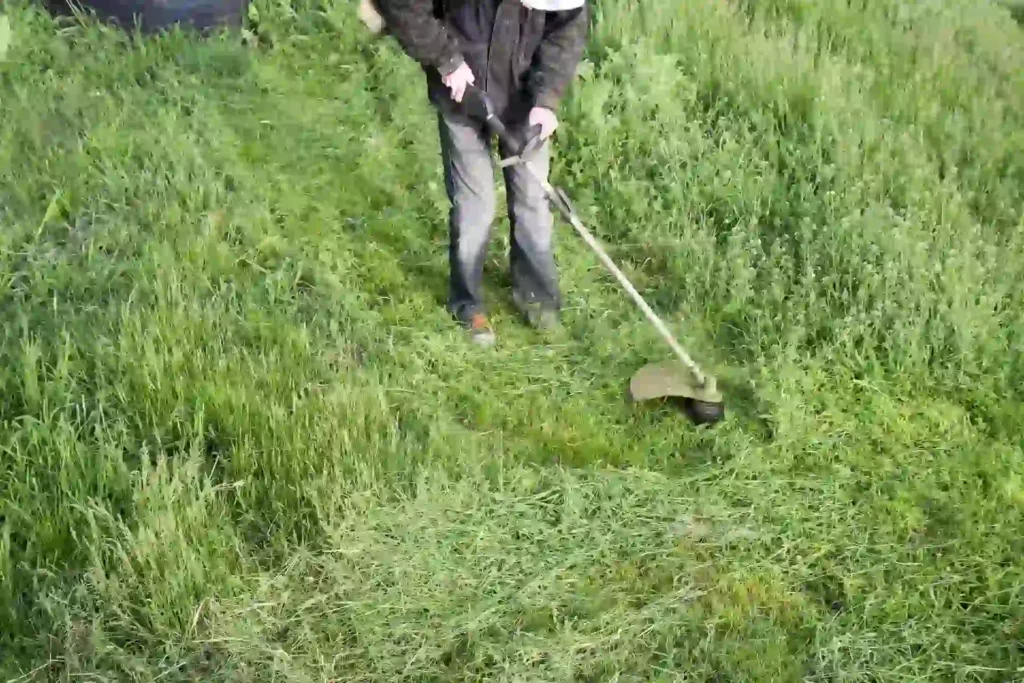
Properly cutting ornamental grass keeps your plants healthy and makes the task easier. This is the simple method that consistently produces positive results.
Using your hands, gather the entire clump together or secure it loosely halfway up with a rope. This method of bundling keeps everything confined and improves the cleanliness of cutting. Use a power trimmer or sharp hedge shears to cut the entire bundle 4–6 inches above the ground.
Hand pruners are good for tiny grasses. For larger specimens to effectively navigate the dense vegetation, motorised equipment is required. Wear gloves at all times since grass blades can be surprisingly sharp and cause injuries similar to paper cuts.
WHEN TO DIVIDE ORNAMENTAL GRASSES
Success with ornamental grasses depends on knowing when to divide them. Depending on the type of grass, the timing will vary, but your plants will give you clear signals.
Signs Your Grasses Need Division
The doughnut effect, which occurs when the centre of your grass clump dies off and leaves a hollow ring, is the most noticeable symptom. Although certain quickly growing types require division sooner, this usually occurs after three to five years.
Smaller leaves, less flowering, or clumps that topple over rather than stand erect are other indicators. Through clump rejuvenation, division revitalises ornamental grasses that have lost their vitality.
The Ideal Time to Divide by Season
Warm-season grasses should be divided as soon as new growth appears in the early spring. As the soil warms, separated parts will have the full growth season to establish. In most climates, April through early May is ideal.
When cool-season grasses are actively growing, they should be divided in the early fall or early spring. Because cooler temps lessen transplant stress, fall division is frequently used.
In the sweltering summer months, avoid dividing grasses.
How Frequently Should You Divide Ornamental Grass?
Every three to five years, most ornamental grasses need to be divided. This differs by species, though. While slower kinds can go five to seven years between divisions, fast growers, such as ribbon grass, may require attention every two to three years.
Strict timetables are less important than your observation. No matter how long it’s been since the last division, it’s important to act when you see deteriorating performance or the unmistakable hollow core.
DO ORNAMENTAL GRASSES NEED TO BE FED?
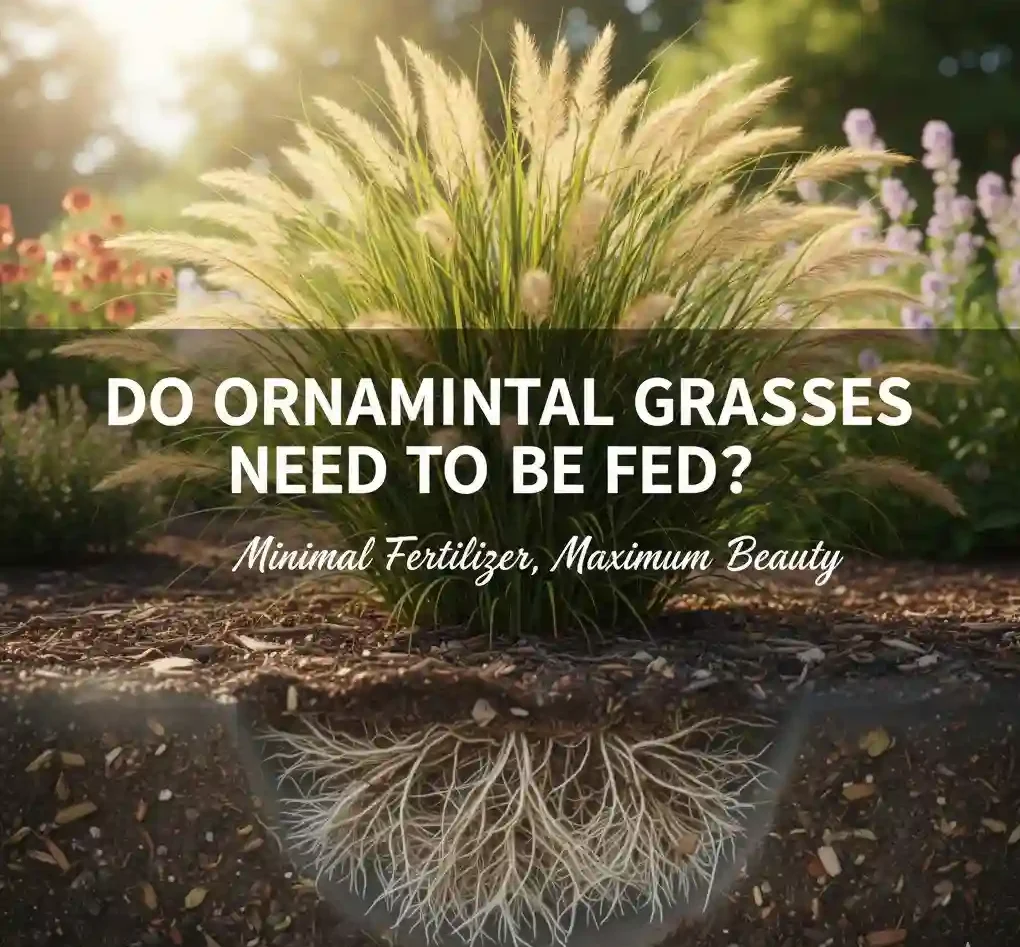
In terms of feeding, ornamental grasses require very little care. Overfertilizing really makes matters worse rather than better.
The majority of ornamental grasses do well without consistent fertilizing. They actually thrive on lean nutrients and have evolved to flourish in comparatively low soils. Fertilizer overuse results in weak, floppy growth that needs to be staked.
When growth starts in early spring, apply a little amount of balanced, slow-release fertilizer if you must fertilize. It is sufficient to apply 10-10-10 fertilizer once at half the rate suggested on the package.
Improved soil preparation is beneficial for recently separated grasses. For better soil structure and long-term, gentle feeding, work compost into the planting hole. This method encourages establishment without producing the overabundance of growth that fertilizer causes.
ARE ORNAMENTAL GRASSES DROUGHT TOLERANT?
Once established, ornamental grasses’ ability to withstand drought is one of their greatest benefits. But in this case, “once established” is crucial.
After their first year of life, the majority of ornamental grasses adapt well to dry environments. They can obtain moisture that other plants cannot because of their deep root systems. They are therefore ideal for low-maintenance gardens and water-wise landscaping.
Controlling Moisture in New Divisions
Throughout their initial growing season, freshly divided grasses require constant watering. If there isn’t enough rainfall, water thoroughly twice a week. They eventually become drought-tolerant because heavy soaking promotes the growth of deep roots.
Most ornamental grasses only require additional water during prolonged droughts after they have established themselves. They are great options for environmentally friendly landscaping because of their innate resistance to drought.
Certain types are more resilient to drought than others. Japanese forest grass requires constant watering, whereas blue fescue and fountain grass are quite drought-tolerant. Learn about the water requirements of your particular kind.
Tools You’ll Need
Dividing ornamental grasses is a lot simpler and less frustrating when you have the proper tools. Before you begin, you should collect the following:
Crucial Instruments:
- Garden fork or sharp spade
- For big, well-established clumps, a reciprocating saw, or pruning saw
- Hatchet or garden knife
- Sharp pruners or loppers
- A wheelbarrow for transporting separated pieces
- Heavy-duty gloves to guard against sharp edges
Helpful but optional:
- Tarp for gathering trash
- Use a thread or a rope to bundle big bunches.
- Hose or watering can
- Compost to prepare the soil
Some gardeners cut through the thick root ball of very large or elderly clumps with a reciprocating saw or even a chainsaw. Some grasses grow extremely thick, woody centres that are almost impossible to cut by hand, so don’t feel bad about using power tools.
Step-by-Step Division Process
Now it’s time to get to work. To successfully divide and grow ornamental grasses, follow these procedures.
Get Your Grass Ready
Cut your grass back to 6 to 8 inches above the ground if you haven’t previously. This cut makes the plant easier to work with and helps you see what you’re doing. Water the plant well one or two days before you divide it. It’s easier to work with dirt that is moist than soil that is bone-dry.
Remove the Root Ball
Start by digging around the whole clump, about 6 to 8 inches away from the stems that you can see. The roots of ornamental grass stretch much further than you may think. To cut through the roots, put your shovel in vertically and then go around the whole edge.
Break apart the Clump
This is where things get real. You can pull little clumps apart by hand or with two garden forks that are back-to-back. Put the forks in the middle of the cluster and pull the handles apart.
It takes greater force to break up bigger, older clumps. Cut through the root ball with a sharp spade, pruning saw, or even a hatchet. Try to make divisions that are at least 6 to 8 inches in diameter. Bigger sections grow faster.
Get the planting areas ready
While you have the original clump out, make the soil in that area better. To make the soil fresh again, add compost or old manure. This soil prep provides your division the best chance of success when you replant it.
Make holes for your divisions that are the same depth as the root ball but twice as wide. You want to put the grass at the same level it was growing previously, not deeper.
Put Your Divisions in the Ground
Put each division in its hole and fill it back in with the improved soil. Gently firm the dirt around the roots to get rid of air pockets, but don’t pack it down too much.
Make a tiny basin around each plant to catch water. This basin sends water to the root zone, which is where it’s needed most.
Give it a good watering
Water each fresh division deeply and slowly. The root zone should have moist soil all the way through. This first watering is very important because it settles the soil around the roots and gives them the moisture they need to get over transplant shock.
Put down mulch and keep an eye on it.
Put 2 to 3 inches of organic mulch around each division, but don’t let it contact them. Mulch keeps moisture in the soil, keeps weeds down, and keeps the soil temperature stable.
Keep an eye on your divisions throughout the growing season. It’s normal for the plant to become yellow or grow more slowly at first; it’s investing energy into developing its roots.
Can You Divide Ornamental Grasses Without Digging Them Up?
Yes, in some cases.
For smaller clumps:
- Insert a sharp spade into the center
- Remove a section without lifting the whole plant
This method works best for young grasses and saves time, but it’s not ideal for large, woody clumps.
Why Choose Us
Knowledge, patience, and an additional set of expert hands are needed to maintain a beautiful environment. At Robert’s Complete Care are aware that not every homeowner has the time or physical capacity to perform activities like separating ornamental grasses.
Our staff has years of knowledge with plant care, timing, and procedures that guarantee the success of your landscape. We can assist you with anything from general plant care to thorough landscape care to grass division.
Additionally, we provide comprehensive care for all of your landscaping plants with our professional Lawn Care and Maintenance Whittier services. We handle your landscape with the same attention we would give our own, from appropriate pruning methods to soil health and insect control.
Conclusion
One of the easiest and best methods to keep your landscape healthy, full, and attractive is to learn how to divide ornamental grasses. If you do it at the right time and take care of it properly, dividing grasses increases ventilation, helps them grow back, stops the hollow centre or doughnut effect, and makes it easier to spread without having to buy new plants.
Contact us Robert’s Complete Care for dependable, hands-on landscape care you can trust. Our skilled crew knows how to properly divide ornamental grasses, prepare the soil, and keep landscapes healthy all year long.
Call us today to set up a meeting and let our experts help you keep your outside space healthy.
FAQs
How often should you split ornamental grasses?
Most grasses need to be divided every three to five years, depending on how fast they grow and how healthy they are.
What equipment do I need to cut ornamental grasses?
You normally only need a spade, pruning shears, gloves, and a sharp cutting tool for thick roots.
Should you trim the grass before splitting them?
Yes. Cutting back makes it easier to divide and protects new growth.
Can you split up ornamental grasses without digging them up?
Yes, for small groups. You should completely dig out grasses that are too big or too tall.
When is the ideal time to cut ornamental grasses into pieces?
Warm-season grasses should be planted in the spring, and cool-season grasses should be planted in early spring or autumn.